

Strange Molecular Signal Could Be the Strongest Hint of Alien Life Yet
Scientists may have uncovered a hidden chemical pattern that could help identify alien life beyond Earth.
For decades, researchers have searched distant planets and moons for specific molecules linked to life. But a new study suggests the real breakthrough may come from detecting the underlying patterns in how those molecules are arranged, rather than the molecules alone.
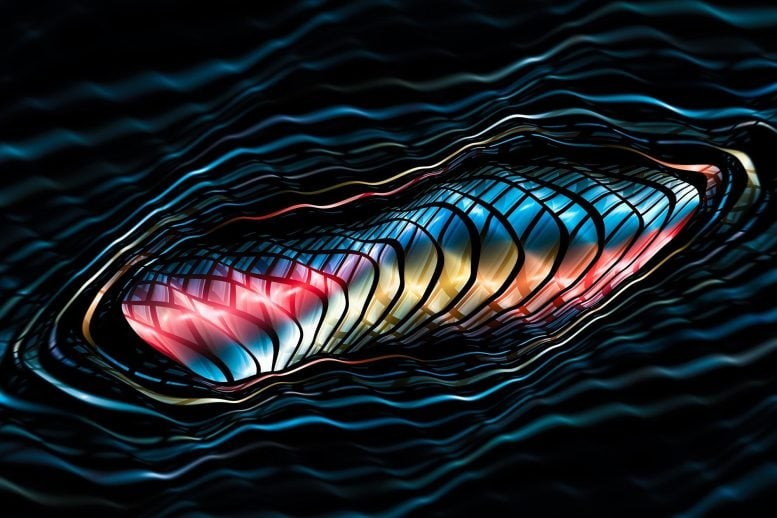
Figure 1. Scientists Discover Molecular Patterns That Could Reveal Alien Life
A new study published in Nature Astronomy suggests that living systems leave behind unique statistical patterns in organic molecules that differ from patterns formed through nonliving chemical processes. Figure 1 shows Scientists Discover Molecular Patterns That Could Reveal Alien Life.
Researchers say the findings show that life is defined not only by the molecules it creates, but also by the way those molecules are organized. “Life also produces an organizational principle that we can detect using statistics,” explained Fabian Klenner, co-author of the study.
Hidden Chemical Signatures May Reveal Life
Researchers found that amino acids in living systems tend to be more varied and evenly balanced than those created through nonliving chemical reactions. Fatty acids showed the opposite behavior, with abiotic chemistry producing more uniform patterns than biological systems.
The team says the study is the first to show that life’s broader chemical organization can be detected through statistical analysis instead of relying on a single specialized instrument. This means the method could potentially be applied to data already collected by current and future space missions exploring worlds like Mars, Europa, and Enceladus.
Scientists have long struggled to interpret organic molecules because compounds linked to life, such as amino acids and fatty acids, can also form naturally without biology. These molecules have been found in meteorites and recreated in laboratory simulations of space environments, making their discovery alone insufficient proof of life.
“Astrobiology is fundamentally a forensic science,” explained Gideon Yoffe, lead author of the study. Researchers must piece together limited clues from rare and costly space missions to determine whether biological processes may be involved.
Scientists Use Ecology-Based Statistics to Search for Extraterrestrial Life
To address the challenge of identifying alien life, researchers adapted a statistical approach commonly used in ecology. Ecologists measure biodiversity through “richness,” the number of species present, and “evenness,” how evenly those species are distributed within an environment.
Lead author Gideon Yoffe first encountered these methods while studying statistics and data science during his doctoral work, where diversity metrics were used to uncover hidden patterns in complex datasets, including studies of ancient human cultures.
The team then applied the same statistical principles to extraterrestrial chemistry. By analyzing nearly 100 existing datasets containing amino acids and fatty acids from microbes, soils, fossils, meteorites, asteroids, and laboratory-created samples, the researchers found that biological materials consistently showed unique organizational patterns that distinguished them from nonliving chemistry.
Ancient Fossils Still Preserve Chemical Signs of Life
Researchers were surprised by how consistently the statistical method could separate biological samples from nonliving ones, even though the approach itself was relatively simple. The analysis also revealed a spectrum of biological preservation, ranging from well-preserved materials to heavily degraded samples.
According to Fabian Klenner, the technique not only distinguished life from nonlife but also detected different levels of alteration over time [1]. Even ancient and degraded samples retained traces of their original biological organization. Fossilized dinosaur eggshells examined in the study, for instance, still carried detectable statistical signatures connected to past biological activity.
The researchers caution that no single method can definitively prove the existence of extraterrestrial life. Any future discovery would require multiple independent lines of evidence interpreted within the geological and chemical context of another world.
Still, the team believes the new statistical framework could become an important tool for future missions exploring planets and moons beyond Earth. Combined with other detection techniques, the method may strengthen the case for identifying possible signs of alien life.
Reference:
- https://scitechdaily.com/this-strange-molecular-signature-may-be-the-best-clue-yet-to-alien-life/
Cite this article:
Janani R (2026), Strange Molecular Signal Could Be the Strongest Hint of Alien Life YetStrange Molecular Signal Could Be the Strongest Hint of Alien Life Yet, AnaTechMaz, pp.862
Recent Post
-
NASA’s Psyche Spacecraft Prepares for an Extremely Close Flyby of Mars
NASA’s Psyche is preparing for a dramatic close flyby of Mars to....
-
James Webb Telescope Uncovers the Universe’s Hidden Cosmic Web in Remarkable Detail
Using the James Webb Space Telescope, astronomers have...
-
NASA’s Psyche Probe Set for an Extremely Close Flyby of Mars
NASA’s Psyche spacecraft is gearing up for a daring flyby of Mars to gain a crucial speed boost on its long...
-
Stubborn Mars Rock Clung to NASA’s Curiosity Rover
NASA’s Curiosity Rover accidentally pulled a rock loose from the Martian surface and then spent several...
-

Scientists Say the Brain Can Keep Improving at Any Age
A new long-term study suggests that brain health can continue improving throughout life through....
-
Strange Molecular Signal Could Be the Strongest Hint of Alien Life Yet
Scientists may have uncovered a hidden chemical pattern that could help identify alien life beyond....
-
Europe Introduces a Major Competitor to SpaceX’s Starship Program
A DLR analysis indicates that while Starship could shape the...
-
Researchers Discover a Surprisingly Practical Method to Mine Asteroids for Mars Missions
Asteroids drifting through space may one day supply the metals....

NASA’s Roman Telescope May Uncover the Milky Way’s Missing Neutron Stars
Astronomers believe the Milky Way should contain vast numbers of...
-
NASA’s Roman Space Telescope Moves Closer to Launch
NASA’s Nancy Grace Roman Space Telescope is moving closer to launch and could soon begin an...
-

Scientists Develop Revolutionary Supermaterial That Could Replace Plastic
Scientists have developed a new method for producing bacterial....
-
NASA’s Hubble Captures Unexpected Comet Breakup in Space
In a rare and fortunate observation, NASA’s Hubble Space...
-
Scientists Detect Possible Dark Matter Signature in a Black Hole Collision
Researchers have developed a new method that could use black...
-
NASA’s Hubble Unexpectedly Captured a Comet Breaking Apart
In a remarkable stroke of chance, NASA’s Hubble Space Telescope captured a comet breaking apart...