

Scientists Trace Mysterious Clouds Near the Milky Way’s Supermassive Black Hole to an Unexpected Source
New observations and computer simulations from a research team led by Max Planck Institute for Extraterrestrial Physics reveal that a massive binary star system near the center of the Milky Way is producing mysterious gas clouds that may help feed the supermassive black hole Sagittarius A*.
The galactic center is one of the most extreme and crowded regions in the galaxy, filled with stars, gas, and dust moving under the powerful gravitational influence of Sagittarius A*. Astronomers study this environment to better understand how matter behaves near black holes and how black holes gather the material that sustains their activity.
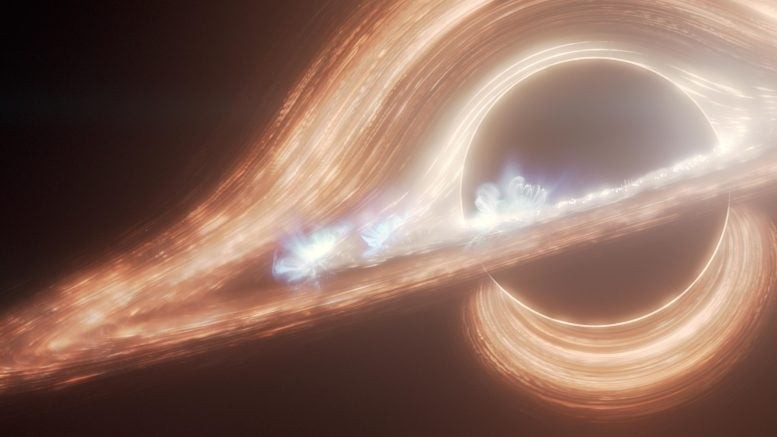
Figure 1. Massive Binary Star May Be Feeding the Milky Way’s Supermassive Black Hole
Over the last two decades, infrared observations have uncovered several compact and unusually dense gas clouds close to Sagittarius A*. Scientists suspected these clumps could play an important role in channeling material toward the black hole, but their origin had remained a mystery until now. Figure 1 shows Massive Binary Star May Be Feeding the Milky Way’s Supermassive Black Hole.
The Mysterious “G-Clouds” Near the Milky Way’s Core
Astronomers first discovered a compact cloud of ionized gas known as G2 in 2012 near Sagittarius A*. The cloud contains several Earth masses of material and glows in hydrogen and helium light, a signature of hot gas mixed with dust. G2 follows an elongated orbit around the black hole and trails behind a faint stream of material known as G2t.
After reanalyzing older observations, researchers identified another similar object, G1, traveling along a nearly matching path. Scientists proposed that G1, G2, and G2t are likely dense clumps embedded within the same larger gas stream. Because gas brightness increases dramatically with density, even small fluctuations can make the material appear as separate compact clouds. Later observations revealed yet another condensed clump forming from G2’s trailing material, creating what researchers now describe as the G1–2–3 streamer — a connected structure of gas flowing through the Galactic Center.
Models suggest that if one of these clumps falls toward the black hole about once every decade, carrying roughly the mass of Earth, it could provide enough material to sustain the current activity of Sagittarius A*. Understanding how these unusual gas clumps form may therefore be key to explaining how the Milky Way’s central black hole continues to feed.
Astronomers Search for the Origin of the Mysterious G-Clouds
Astronomers have explored several explanations for the mysterious gas clouds near Sagittarius A*, including stellar winds from massive stars, explosive nova events, and material torn apart by the black hole’s gravity. To test these ideas, an international research team led by Max Planck Institute for Extraterrestrial Physics used the advanced infrared spectrographs SINFONI and ERIS, both equipped with adaptive optics technology for highly detailed observations.
By analyzing the hydrogen Brackett-γ emission line, the researchers reconstructed the positions and velocities of the clouds G1, G2, and G2t. Their results showed that all three objects follow remarkably similar orbits, sharing nearly identical shapes and orientations around the black hole. Scientists say the odds of three unrelated objects naturally ending up on such closely matched trajectories are extremely small, strongly suggesting that the clouds all originated from the same source.
Massive Binary Star Identified as the Source of the G-Clouds
By tracing the motion of the gas streamer backward through space and radial velocity measurements, researchers identified a likely origin for the mysterious G-clouds: IRS 16SW, a massive contact binary star located within the clockwise disk of young stars orbiting Sagittarius A*. Scientists found that the small differences between the G-cloud orbits can be naturally explained by the binary star system’s own movement through space.
Hydrodynamical simulations further support this idea [1]. The models show that gas clumps can form when powerful stellar winds from the two stars collide with surrounding material, creating a shock region between them. Gas then accumulates, becomes compressed, and eventually breaks off into separate clumps that drift inward toward the black hole — closely matching the behavior observed in the G1–2–3 gas streamer.
The findings suggest that massive stars near the center of the Milky Way may steadily supply material to Sagittarius A* through their powerful stellar winds. As these winds form dense gas clumps that drift inward, they could provide a continuous source of fuel for the black hole.
The discovery connects stellar evolution, gas dynamics, and black hole feeding into a single process, revealing how star formation and black hole activity may remain closely linked even within our own galaxy.
Reference:
- https://scitechdaily.com/scientists-uncover-the-surprising-source-of-strange-clouds-near-the-milky-ways-supermassive-black-hole/
Cite this article:
Janani R (2026), Scientists Trace Mysterious Clouds Near the Milky Way’s Supermassive Black Hole to an Unexpected Source, AnaTechMaz, pp.859
Recent Post
-
NASA’s Psyche Spacecraft Prepares for an Extremely Close Flyby of Mars
NASA’s Psyche is preparing for a dramatic close flyby of Mars to....
-
James Webb Telescope Uncovers the Universe’s Hidden Cosmic Web in Remarkable Detail
Using the James Webb Space Telescope, astronomers have...
-
NASA’s Psyche Probe Set for an Extremely Close Flyby of Mars
NASA’s Psyche spacecraft is gearing up for a daring flyby of Mars to gain a crucial speed boost on its long...
-
Stubborn Mars Rock Clung to NASA’s Curiosity Rover
NASA’s Curiosity Rover accidentally pulled a rock loose from the Martian surface and then spent several...
-

Scientists Say the Brain Can Keep Improving at Any Age
A new long-term study suggests that brain health can continue improving throughout life through....
-
Strange Molecular Signal Could Be the Strongest Hint of Alien Life Yet
Scientists may have uncovered a hidden chemical pattern that could help identify alien life beyond....
-
Europe Introduces a Major Competitor to SpaceX’s Starship Program
A DLR analysis indicates that while Starship could shape the...
-
Researchers Discover a Surprisingly Practical Method to Mine Asteroids for Mars Missions
Asteroids drifting through space may one day supply the metals....
NASA’s Roman Telescope May Uncover the Milky Way’s Missing Neutron Stars
Astronomers believe the Milky Way should contain vast numbers of...
-
NASA’s Roman Space Telescope Moves Closer to Launch
NASA’s Nancy Grace Roman Space Telescope is moving closer to launch and could soon begin an...
-

Scientists Develop Revolutionary Supermaterial That Could Replace Plastic
Scientists have developed a new method for producing bacterial....
-
NASA’s Hubble Captures Unexpected Comet Breakup in Space
In a rare and fortunate observation, NASA’s Hubble Space...
-
Scientists Detect Possible Dark Matter Signature in a Black Hole Collision
Researchers have developed a new method that could use black...
-
NASA’s Hubble Unexpectedly Captured a Comet Breaking Apart
In a remarkable stroke of chance, NASA’s Hubble Space Telescope captured a comet breaking apart...