

NASA’s Hubble Captures Unexpected Comet Breakup in Space
In a rare and fortunate observation, NASA’s Hubble Space Telescope captured a comet breaking apart in near real time. The chance of witnessing such an event at the exact right moment is extremely low, making the discovery especially valuable for scientists studying the evolution of icy bodies in the solar system. The findings were published in Icarus.
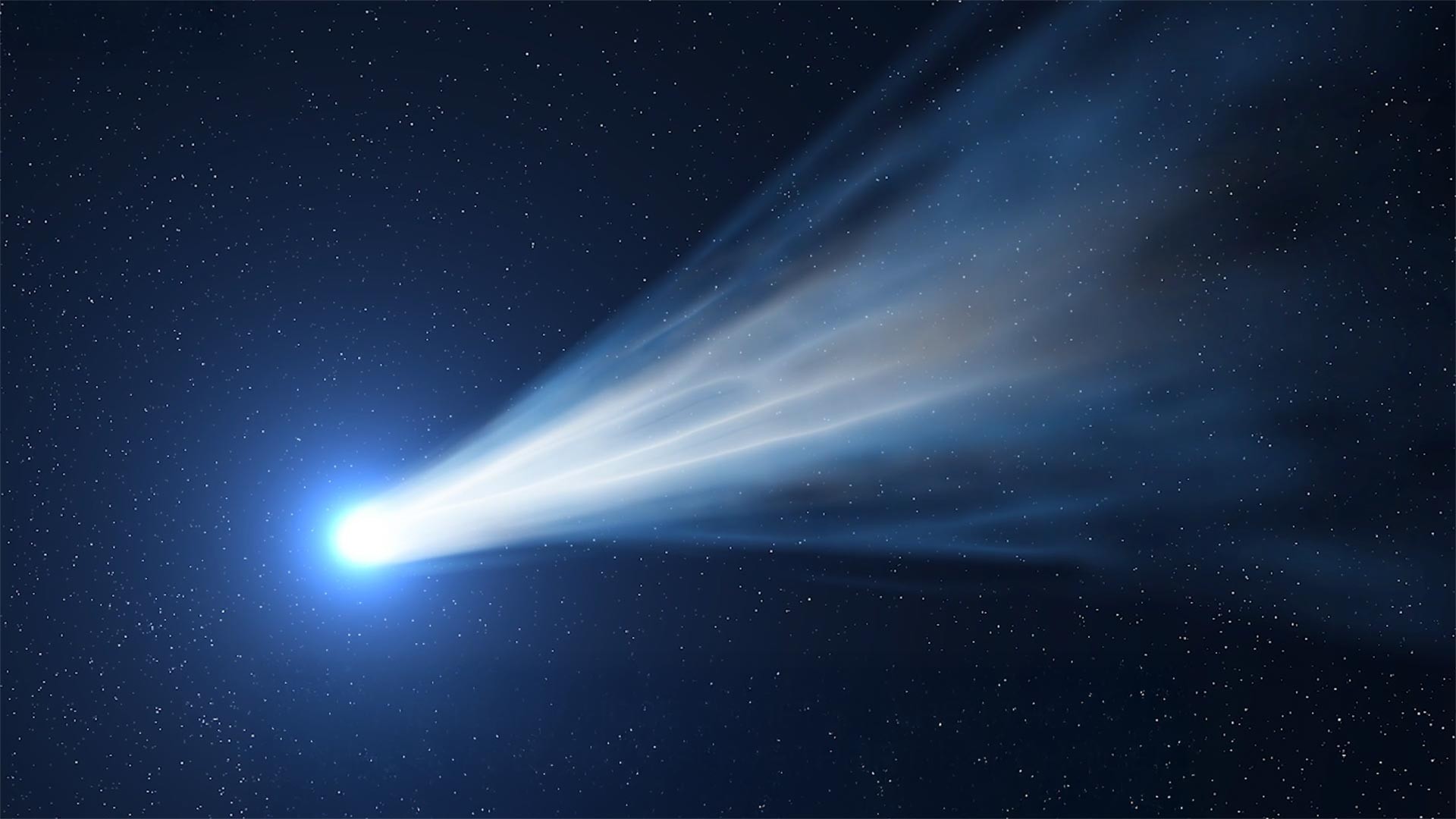
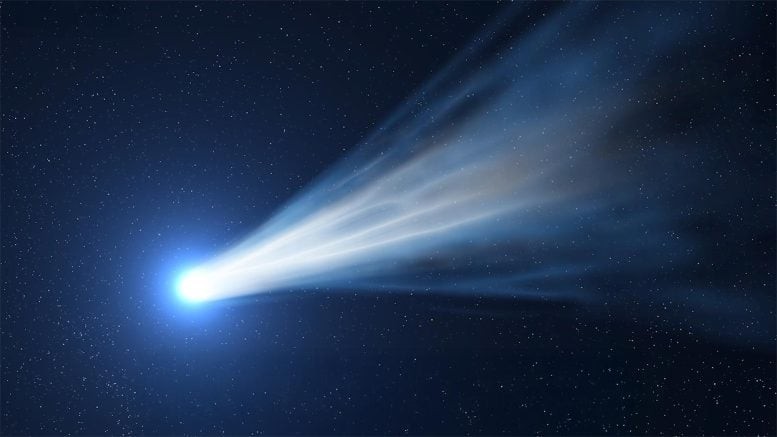
Figure 1. Hubble Serendipitously Captures Comet Mid-Disintegration After Years of Searches
The comet, designated C/2025 K1 (ATLAS) and distinct from the interstellar object 3I/ATLAS, was not originally part of the Hubble observation plan. It was selected as a replacement target after the intended comet could not be observed due to technical limitations. Figure 1 shows Hubble Serendipitously Captures Comet Mid-Disintegration After Years of Searches.
According to co-investigator John Noonan of Auburn University, the discovery was largely accidental. He explained that the team had to quickly choose a new target after their original plan fell through, and serendipitously observed the comet just as it began to break apart—an extremely rare and unexpected event.
Scientists Confirm Comet Has Broken Apart
Noonan only realized the comet had broken apart after examining Hubble’s images the following day. He noticed multiple fragments in the data, even though the team had only planned to observe a single comet, indicating an unexpected and significant event.
Researchers had long aimed to capture a comet disintegrating using Hubble, submitting several proposals over the years, but had repeatedly missed the opportunity due to the unpredictable timing of such events.
Principal investigator Dennis Bodewits noted the irony of the discovery, explaining that despite years of targeting such phenomena, the team ultimately observed a routine comet unexpectedly breaking apart during a standard observation.
Bodewits explained that comets are remnants from the early formation of the solar system, made of ancient “primordial” material. However, they are not unchanged over time, as they have been altered by heating from the Sun and exposure to cosmic radiation.
Because of this, scientists face an important question when studying comets: whether their current composition reflects original conditions from the early solar system or changes that occurred over time. Observing a comet breaking apart can help reveal its untouched interior, offering a glimpse of material that has remained largely unaltered since the solar system’s formation.
Hubble Observes Several Fragments of a Breaking Comet
Hubble observed comet K1 breaking into at least four distinct fragments, each surrounded by its own coma of gas and dust. The telescope’s high-resolution imaging allowed clear separation of the pieces, unlike ground-based observations that only showed faint, overlapping points of light.
The breakup occurred roughly a month after the comet’s closest approach to the Sun, when it passed inside Mercury’s orbit and experienced intense heat and stress—conditions that often trigger fragmentation in long-period comets like K1. Before breaking apart, the comet was estimated to be about 5 miles wide.
Researchers believe the fragmentation began around eight days before Hubble captured the event. The telescope recorded three short exposures over November 8–10, 2025, during which one of the fragments was also seen splitting further, revealing ongoing disintegration.
A Mystery Surrounding Comet Brightness
Using Hubble’s high-resolution imaging, researchers were able to trace the comet fragments backward in time to reconstruct when the object was still intact, helping them build a detailed timeline of its breakup [1]. During this analysis, they encountered an unexpected question: why did the comet take time to brighten after splitting apart? Scientists had expected a rapid increase in brightness once fresh ice was exposed.
Several explanations are being considered. One idea is that a dry dust layer must first form over exposed ice before it can be lifted away, while another suggests that heat gradually penetrates the surface, building pressure that later ejects dust in bursts. Researchers note that Hubble observed the comet just days after fragmentation—much sooner than typical—offering a rare glimpse into these early stages of disruption and revealing new clues about surface processes.
The comet also shows unusual chemistry, including a relatively low carbon content compared with typical comets. Further spectroscopic studies using Hubble’s instruments may help clarify its composition and origins. Now located about 250 million miles from Earth in the constellation Pisces, the fragmented comet is moving away from the solar system and is not expected to return.
Reference:
- https://scitechdaily.com/nasas-hubble-accidentally-witnesses-a-comet-shattering-in-space/
Cite this article:
Janani R (2026), NASA’s Hubble Captures Unexpected Comet Breakup in Space, AnaTechMaz, pp.868
Recent Post
-
NASA’s Psyche Spacecraft Prepares for an Extremely Close Flyby of Mars
NASA’s Psyche is preparing for a dramatic close flyby of Mars to....
-
James Webb Telescope Uncovers the Universe’s Hidden Cosmic Web in Remarkable Detail
Using the James Webb Space Telescope, astronomers have...
-
NASA’s Psyche Probe Set for an Extremely Close Flyby of Mars
NASA’s Psyche spacecraft is gearing up for a daring flyby of Mars to gain a crucial speed boost on its long...
-
Stubborn Mars Rock Clung to NASA’s Curiosity Rover
NASA’s Curiosity Rover accidentally pulled a rock loose from the Martian surface and then spent several...
-

Scientists Say the Brain Can Keep Improving at Any Age
A new long-term study suggests that brain health can continue improving throughout life through....
-
Strange Molecular Signal Could Be the Strongest Hint of Alien Life Yet
Scientists may have uncovered a hidden chemical pattern that could help identify alien life beyond....
-
Europe Introduces a Major Competitor to SpaceX’s Starship Program
A DLR analysis indicates that while Starship could shape the...
-
Researchers Discover a Surprisingly Practical Method to Mine Asteroids for Mars Missions
Asteroids drifting through space may one day supply the metals....

NASA’s Roman Telescope May Uncover the Milky Way’s Missing Neutron Stars
Astronomers believe the Milky Way should contain vast numbers of...
-
NASA’s Roman Space Telescope Moves Closer to Launch
NASA’s Nancy Grace Roman Space Telescope is moving closer to launch and could soon begin an...
-
Scientists Develop Revolutionary Supermaterial That Could Replace Plastic
Scientists have developed a new method for producing bacterial....
-
NASA’s Hubble Captures Unexpected Comet Breakup in Space
In a rare and fortunate observation, NASA’s Hubble Space...
-
Scientists Detect Possible Dark Matter Signature in a Black Hole Collision
Researchers have developed a new method that could use black...
-
NASA’s Hubble Unexpectedly Captured a Comet Breaking Apart
In a remarkable stroke of chance, NASA’s Hubble Space Telescope captured a comet breaking apart...