

NASA’s Psyche Probe Set for an Extremely Close Flyby of Mars
NASA’s Psyche spacecraft is gearing up for a daring flyby of Mars to gain a crucial speed boost on its long journey to the mysterious metal-rich asteroid Psyche. On May 15, the spacecraft will pass just 2,800 miles (4,500 kilometers) above the Martian surface at nearly 12,333 mph (19,848 kph). By harnessing Mars’ gravity, Psyche will accelerate and adjust its trajectory toward one of the solar system’s most unusual worlds.
Launched on October 13, 2023, NASA’s Psyche spacecraft uses solar-electric propulsion powered by xenon gas to steadily increase its speed during the mission. The upcoming Mars gravity assist will help conserve fuel while providing the extra momentum needed for its journey. Such flybys also give engineers and scientists valuable opportunities to test onboard systems and calibrate scientific instruments before Psyche arrives at its target asteroid.
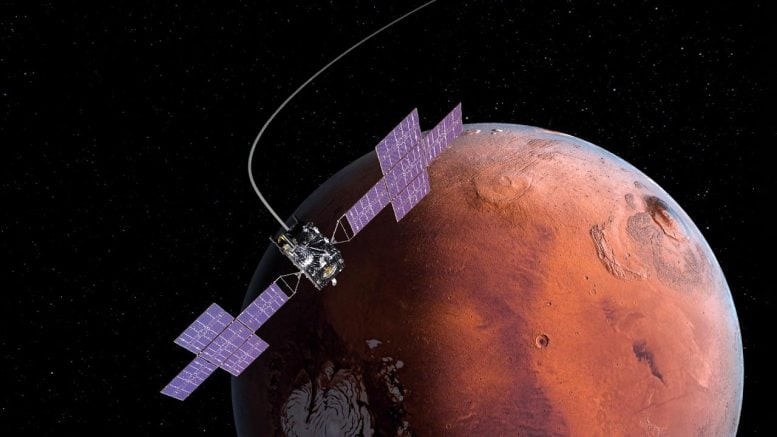
Figure 1. Psyche’s High-Speed Mars Flyby Could Reveal Stunning New Views
NASA’s Psyche Spacecraft to Observe Mars During Close Flyby
During its Mars flyby, NASA’s Psyche spacecraft will use its multispectral imager to capture thousands of observations of the Red Planet. The data and images gathered will help mission teams refine the techniques needed when Psyche begins orbiting its target asteroid in 2029. Ahead of the encounter, the spacecraft has already started returning early images, including raw views released on May 7 that show Mars as a tiny speck of light against a distant starfield. Engineers plan to enhance the flyby images by adjusting brightness and contrast, with hopes of producing a dramatic time-lapse of the event in the coming weeks. Figure 1 shows Psyche’s High-Speed Mars Flyby Could Reveal Stunning New Views.
On May 15, 2026, NASA’s Psyche spacecraft will sweep just 2,800 miles (4,500 kilometers) above Mars while traveling at roughly 12,328 mph (19,840 kph). The close encounter will provide a vital gravity assist, helping propel the spacecraft toward the asteroid Psyche in the main asteroid belt.
To get ready for the maneuver, mission engineers performed a trajectory correction burn on February 23, firing the spacecraft’s thrusters for 12 hours to fine-tune its course and slightly boost its speed ahead of the Mars flyby.
Sarah Bairstow, Psyche’s mission planning lead at NASA’s Jet Propulsion Laboratory, said the spacecraft is now precisely on course for its Mars flyby, with its flight computer fully programmed for all planned activities throughout May. She added that the encounter will provide the mission’s first chance to calibrate Psyche’s imager using a large planetary target rather than tiny distant objects, while also allowing the spacecraft’s other scientific instruments to collect valuable observations.
Rare Crescent-Shaped Views of Mars Captured During Flyby
As Psyche approaches Mars, the planet will appear far different from the familiar fully lit red globe often seen in photographs. Because the spacecraft is arriving from Mars’ night side, it will initially observe only a thin sunlit crescent stretching across the planet. Scientists say the unusual viewing geometry will provide both stunning imagery and valuable calibration opportunities for the mission’s instruments. After the flyby, Psyche will also capture near “full Mars” views, giving researchers a rare chance to compare lighting conditions and improve imaging performance.
Researchers are especially interested in whether Psyche might detect a faint dusty ring surrounding Mars, created by tiny impacts on its moons, Phobos and Deimos, that send particles drifting into space. Depending on lighting conditions, some of this dust could become visible in processed images from the spacecraft. Psyche’s imager will also practice searching for tiny satellites around Mars, helping prepare for future searches for possible moonlets orbiting the asteroid Psyche. Meanwhile, the spacecraft’s other instruments may collect additional science data, including measurements of Mars’ magnetic environment and changes in cosmic radiation during the encounter.
Mission leaders emphasize that the flyby’s primary goal is to use Mars’ gravity to accelerate and redirect the spacecraft toward the asteroid Psyche. Still, the event offers a major opportunity to test and calibrate the spacecraft’s scientific instruments before it reaches its final destination in the asteroid belt.
NASA engineers will track the flyby using radio signals exchanged between Psyche and the agency’s Deep Space Network [1]. By analyzing subtle Doppler shifts in the signals, controllers can quickly confirm the spacecraft’s updated trajectory after the gravity assist. Several spacecraft already operating around Mars — including orbiters and rovers from NASA and the European Space Agency — will also support the event with observations and navigation data. Comparing those measurements with Psyche’s own observations will help scientists refine instrument calibration and improve planning for future Mars missions.
Reference:
- https://scitechdaily.com/nasas-psyche-spacecraft-is-about-to-fly-shockingly-close-to-mars/
Cite this article:
Janani R (2026), AI Symptom Checkers Found to Have Dangerous Weakness, Study Warns, AnaTechMaz, pp.858
Recent Post
-
NASA’s Psyche Spacecraft Prepares for an Extremely Close Flyby of Mars
NASA’s Psyche is preparing for a dramatic close flyby of Mars to....
-

James Webb Telescope Uncovers the Universe’s Hidden Cosmic Web in Remarkable Detail
Using the James Webb Space Telescope, astronomers have...
-
NASA’s Psyche Probe Set for an Extremely Close Flyby of Mars
NASA’s Psyche spacecraft is gearing up for a daring flyby of Mars to gain a crucial speed boost on its long...
-
Stubborn Mars Rock Clung to NASA’s Curiosity Rover
NASA’s Curiosity Rover accidentally pulled a rock loose from the Martian surface and then spent several...

-

Scientists Say the Brain Can Keep Improving at Any Age
A new long-term study suggests that brain health can continue improving throughout life through....
-

Strange Molecular Signal Could Be the Strongest Hint of Alien Life Yet
Scientists may have uncovered a hidden chemical pattern that could help identify alien life beyond....
-

Europe Introduces a Major Competitor to SpaceX’s Starship Program
A DLR analysis indicates that while Starship could shape the...
-
Researchers Discover a Surprisingly Practical Method to Mine Asteroids for Mars Missions
Asteroids drifting through space may one day supply the metals....

NASA’s Roman Telescope May Uncover the Milky Way’s Missing Neutron Stars
Astronomers believe the Milky Way should contain vast numbers of...
-
NASA’s Roman Space Telescope Moves Closer to Launch
NASA’s Nancy Grace Roman Space Telescope is moving closer to launch and could soon begin an...
-

Scientists Develop Revolutionary Supermaterial That Could Replace Plastic
Scientists have developed a new method for producing bacterial....
-
NASA’s Hubble Captures Unexpected Comet Breakup in Space
In a rare and fortunate observation, NASA’s Hubble Space...
-

Scientists Detect Possible Dark Matter Signature in a Black Hole Collision
Researchers have developed a new method that could use black...
-

NASA’s Hubble Unexpectedly Captured a Comet Breaking Apart
In a remarkable stroke of chance, NASA’s Hubble Space Telescope captured a comet breaking apart...