

Scientists Revamp a Classic Material for Next-Generation Quantum Technology
Reengineered Crystal Unveils Surprising Behavior for Faster Information Transfer
Researchers led by Penn State University have discovered that a modified form of a well-known material could advance quantum computing and improve energy efficiency in modern data centers.
The material, Barium titanate, first identified in 1941, is known for its strong electro-optic properties in bulk (three-dimensional) form. Such materials play a crucial role in linking electrical and optical systems by converting electron-based signals into photon-based signals, enabling efficient interaction between electricity and light.
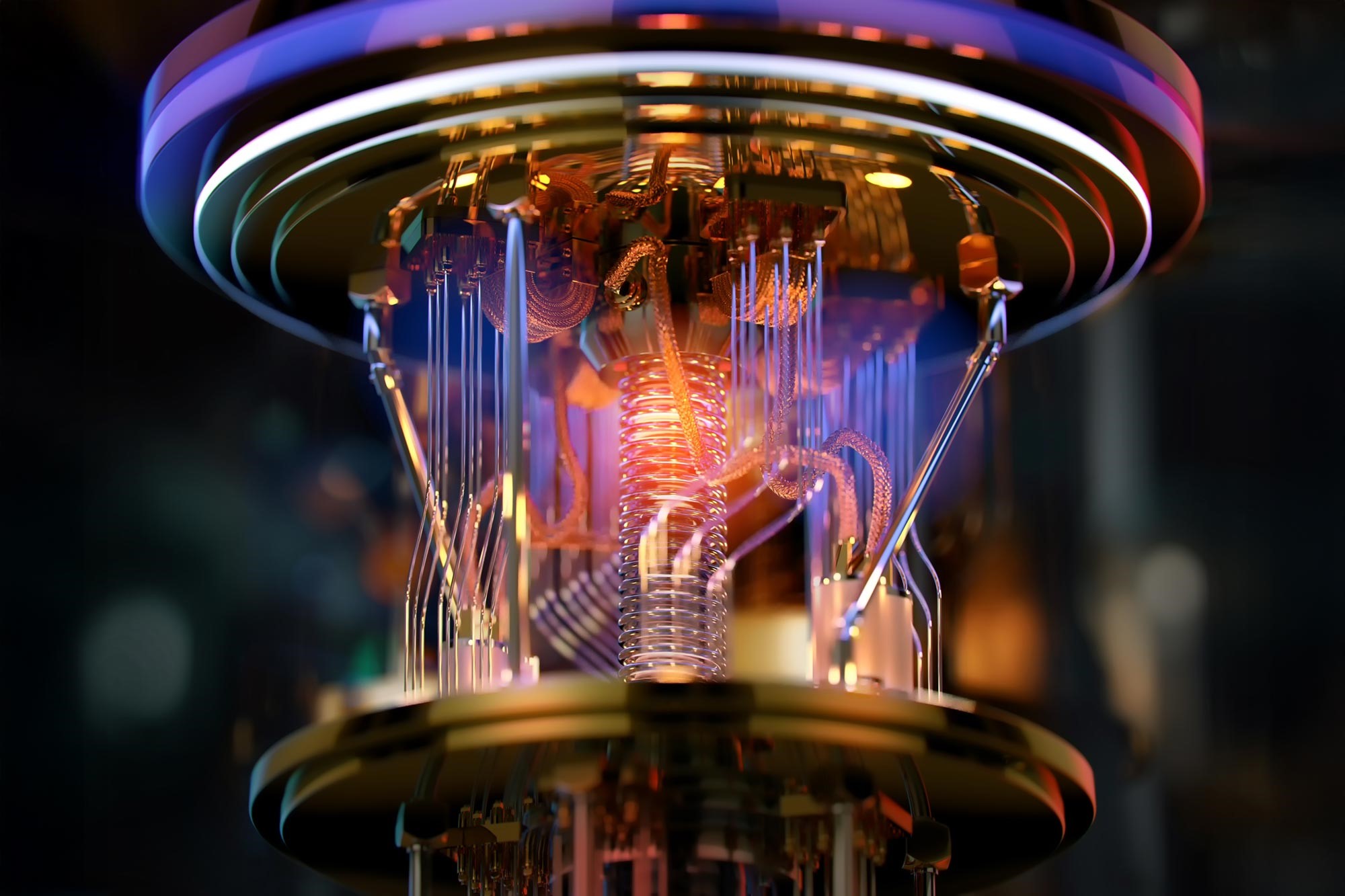
Figure 1. Classic Material Enhanced at the Nanoscale
Although Barium titanate offers strong electro-optic properties, it has not become the preferred material for devices such as modulators, switches, and sensors. Instead, Lithium niobate gained wider adoption due to its superior stability and ease of manufacturing, despite having comparatively lower performance.
According to Venkat Gopalan, reshaping barium titanate into ultrathin, strained films could unlock its full potential. While the material has long been regarded as highly promising in theory—particularly for its exceptional electro-optic response in bulk single crystals at room temperature—it has struggled to achieve commercial success.
The team demonstrated that by carefully applying strain at the nanoscale, this classic material can exhibit entirely new and unexpected properties, opening the door to capabilities that were previously considered unattainable.
Performance Improvements and Real-World Applications
Venkatraman Gopalan explained that the redesigned material improves the efficiency of converting electronic signals into optical signals by more than an order of magnitude compared to earlier results achieved at cryogenic temperatures—conditions typically required for quantum systems based on superconducting circuits.
In quantum networks, converting information into light is essential for transmitting data over long distances through fiber-optic systems at room temperature. This capability is also highly relevant for modern data centers supporting artificial intelligence and online services, where energy consumption—especially for cooling—is substantial. Integrating optical connections could significantly reduce these energy demands while improving overall efficiency.
Photons can transmit information with significantly less heat generation than electrons traveling through conventional wiring, making them a more energy-efficient medium for data transfer.
According to Aiden Ross, integrated photonic technologies are becoming increasingly appealing for large-scale data centers, particularly as demand grows with the rapid adoption of AI. By using photons instead of electrons, these systems can transmit multiple streams of data simultaneously while minimizing heat buildup. This approach could reduce the need for extensive cooling infrastructure and improve overall efficiency in data processing and communication systems.
Designing a Metastable Phase
To achieve their results, the researchers fabricated ultrathin films of Barium titanate measuring about 40 nanometers thick—thousands of times thinner than a human hair. By growing these films on a different crystal substrate, they forced the atoms into an alternative arrangement, creating a metastable phase that does not naturally occur in the material’s bulk form.
Venkatraman Gopalan explained that metastable phases can exhibit unique properties absent in stable structures. In this case, while the stable form of barium titanate loses much of its electro-optic performance at low temperatures—posing challenges for quantum systems using superconducting qubits—the engineered metastable phase maintained and even enhanced its performance.
Albert Suceava illustrated this concept with an analogy: although materials naturally prefer their lowest-energy state, like a ball rolling downhill, a metastable phase is like holding the ball in place. It remains in this higher-energy configuration only because external conditions stabilize it, allowing the material to exhibit new and useful properties until disturbed.
Implications for the Future of Quantum Communication
Beyond improving data center efficiency, this research addresses a key challenge in quantum computing—transferring information between separate machines. Current systems rely on microwave signals, which are effective for on-chip communication but lose strength over long distances, making them unsuitable for building large-scale quantum networks [1]. As explained by Albert Suceava, enabling communication between distributed quantum computers will require converting information into light, such as infrared wavelengths used in fiber-optic networks, which can travel efficiently over long distances.
Sankalpa Hazra highlighted that this thin-film design strategy could be extended to a wide range of materials. The team plans to apply their approach beyond Barium titanate to explore even higher-performing systems.
According to Venkatraman Gopalan, this breakthrough demonstrates how rethinking the design of a well-established material can unlock new capabilities. With a deeper understanding of this approach, the researchers are optimistic that other, less-explored materials could surpass the already impressive performance achieved with barium titanate.
References:
- https://scitechdaily.com/scientists-reinvent-a-classic-material-to-help-power-the-future-of-quantum-tech/
Cite this article:
Janani R (2026), Scientists Revamp a Classic Material for Next-Generation Quantum Technology, AnaTechMaz, pp.495
Recent Post
-

Quantum Circuits Harbor a Hidden Flaw—And It Could Change Everything
This raises a crucial question: if every step in a quantum circuit is...

Atomic Chains Convert Electric Fields into Detectable Quantum Signals
Researchers at Nanyang Technological University (NTU) have...
Scientists Uncover Quantum Boost for Energy Transfer at the Nanoscale
A newly uncovered mechanism is reshaping how scientists...

Researchers in the US Unveil Material That Can Toggle Between Quantum States
Researchers in the United States have confirmed the existence of a unique...
Silicon-Based Quantum Processor Achieves Full Logical Functionality
In a significant advance for quantum technology, researchers have developed...
-

“World-First Quantum Navigation Trial on UK Train Aims to Replace GPS”
The United Kingdom has taken a major step toward next-generation rail...
-

Next-Gen Navigation: NASA-Tested Quantum Tech Could Replace GPS Satellites
A compact quantum sensor no larger than a quart of milk...
-

Few-Shot Android Malware Detection Gets a Quantum Boost
A new study is pushing the boundaries of cybersecurity by combining quantum computing...
-

Custom Vector Lasing Powered by Möbius-Like Quasi-BICs
Researchers have developed a new method to generate vectorial laser beams...
-
US Scientists Create Noise-Free Phonon Lasers for Quantum Sensing
A team of researchers from the University of Rochester...
-
From 1,000 to 5 Qubits: Quantum Leap Paves the Way for Real-World Computing
Researchers at the California Institute of Technology, working...
-

“Quantum Leap: New Method Could Cut the Number of Qubits Needed”
A team of Australian researchers has unveiled a novel approach to quantum...
-
World First as Silica Nanorotor Hits Quantum Ground State of Rotation
At the macroscopic level, motion never truly stops—objects vibrate and rotate due to thermal energy. As...

New Quantum Discovery Could Lead to Self-Powered Electronics
Researchers have discovered a method to control a quantum phenomenon in advanced materials...
Scientists Revamp a Classic Material for Next-Generation Quantum Technology
Researchers led by Penn State University have discovered that a...