

From 1,000 to 5 Qubits: Quantum Leap Paves the Way for Real-World Computing
Researchers at the California Institute of Technology, working alongside startup Oratomic, have unveiled a new approach that could dramatically reduce the number of qubits required for fault-tolerant quantum computing potentially accelerating the path to practical machines.
According to the team, a fully functional quantum computer might operate with just 10,000 to 20,000 qubits, a sharp drop from earlier estimates that ran into the millions. The breakthrough stems from a novel quantum error-correction architecture designed to minimize the number of redundant qubits needed to detect and fix errors—one of the biggest hurdles in building reliable quantum systems.
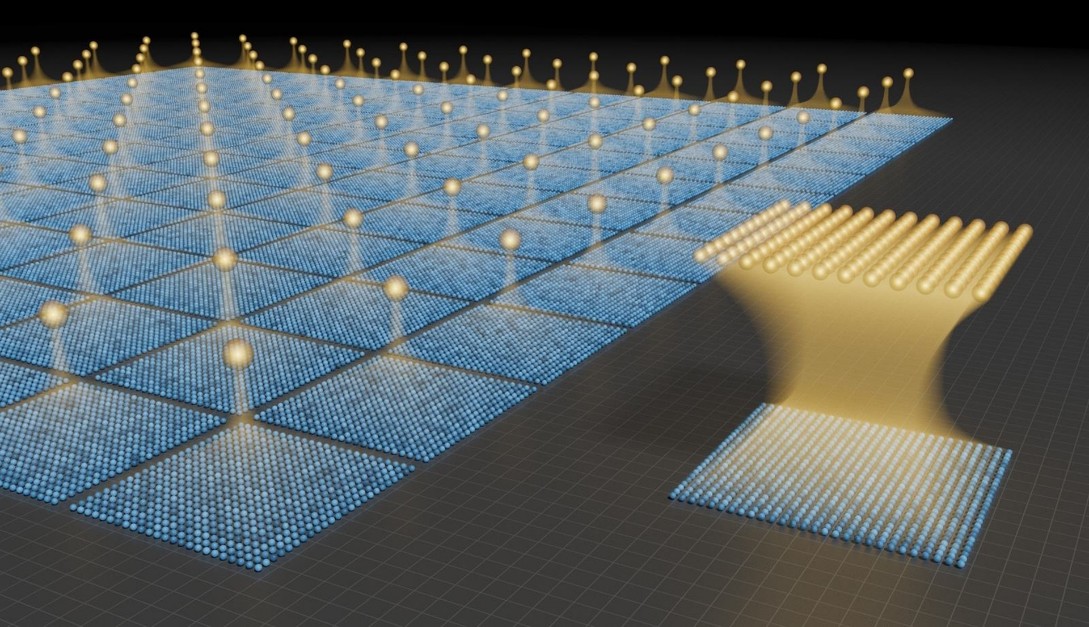
Figure 1. Shor's Algorithm Can Break Modern Cryptographic Schemes.
Quantum computers rely on qubits, which are extremely sensitive and prone to noise. Traditional methods often require around 1,000 physical qubits to produce a single stable logical qubit, making large-scale systems complex and resource-intensive. Figure 1 shows Shor’s algorithm can break modern cryptographic schemes.
Fewer Qubits, Faster Progress
To address this, the researchers turned to neutral atom systems, where individual atoms act as qubits and are arranged using laser-based optical tweezers. Unlike other platforms, these atoms can be moved and interconnected across long distances.
As explained by Manuel Endres, optical tweezers allow atoms to be repositioned within the array and directly entangled with others, even across significant distances. This flexibility enables the use of high-rate error-correction codes, where each physical qubit can support multiple logical qubits [1]. In some cases, a single logical qubit may require as few as five physical qubits—an enormous efficiency gain.
This method builds on rapid progress in neutral atom technology, with experimental systems already demonstrating arrays of more than 6,000 qubits. Unlike conventional approaches such as surface codes—where qubits interact mainly with nearest neighbors—neutral atom arrays support long-range connections, improving both processing efficiency and scalability.
Implications for Security
The advance could also have major consequences for cybersecurity. More efficient quantum systems would be capable of breaking widely used encryption methods like RSA and elliptic curve cryptography far sooner than expected.
Such machines could run Shor’s algorithm, developed by Peter Shor, which can factor large numbers exponentially faster than classical computers.
Veteran quantum computing researcher John Preskill noted that qubit count has long been seen as the primary barrier to fault-tolerant systems, but this new work could reshape that perspective.
Reference:
- https://interestingengineering.com/innovation/quantum-computing-fewer-qubits-breakthrough
Cite this article:
Keerthana S (2026), From 1,000 to 5 Qubits: Quantum Leap Paves the Way for Real-World Computing, AnaTechMaz, pp.491
Recent Post
-

Quantum Circuits Harbor a Hidden Flaw—And It Could Change Everything
This raises a crucial question: if every step in a quantum circuit is...
Atomic Chains Convert Electric Fields into Detectable Quantum Signals
Researchers at Nanyang Technological University (NTU) have...

Scientists Uncover Quantum Boost for Energy Transfer at the Nanoscale
A newly uncovered mechanism is reshaping how scientists...

Researchers in the US Unveil Material That Can Toggle Between Quantum States
Researchers in the United States have confirmed the existence of a unique...
Silicon-Based Quantum Processor Achieves Full Logical Functionality
In a significant advance for quantum technology, researchers have developed...
-

“World-First Quantum Navigation Trial on UK Train Aims to Replace GPS”
The United Kingdom has taken a major step toward next-generation rail...
-

Next-Gen Navigation: NASA-Tested Quantum Tech Could Replace GPS Satellites
A compact quantum sensor no larger than a quart of milk...
-

Few-Shot Android Malware Detection Gets a Quantum Boost
A new study is pushing the boundaries of cybersecurity by combining quantum computing...
-

Custom Vector Lasing Powered by Möbius-Like Quasi-BICs
Researchers have developed a new method to generate vectorial laser beams...
-
US Scientists Create Noise-Free Phonon Lasers for Quantum Sensing
A team of researchers from the University of Rochester...
-
From 1,000 to 5 Qubits: Quantum Leap Paves the Way for Real-World Computing
Researchers at the California Institute of Technology, working...
-
“Quantum Leap: New Method Could Cut the Number of Qubits Needed”
A team of Australian researchers has unveiled a novel approach to quantum...
-
World First as Silica Nanorotor Hits Quantum Ground State of Rotation
At the macroscopic level, motion never truly stops—objects vibrate and rotate due to thermal energy. As...

New Quantum Discovery Could Lead to Self-Powered Electronics
Researchers have discovered a method to control a quantum phenomenon in advanced materials...
Scientists Revamp a Classic Material for Next-Generation Quantum Technology
Researchers led by Penn State University have discovered that a...