

Quantum Circuits Harbor a Hidden Flaw—And It Could Change Everything
Noise Puts a Limit on Quantum Computing Power
This raises a crucial question: if every step in a quantum circuit is affected by noise, is it still useful to build longer, more complex circuits? Quantum circuits lie at the heart of technologies like quantum computers, which aim to solve problems beyond the capabilities of classical machines.

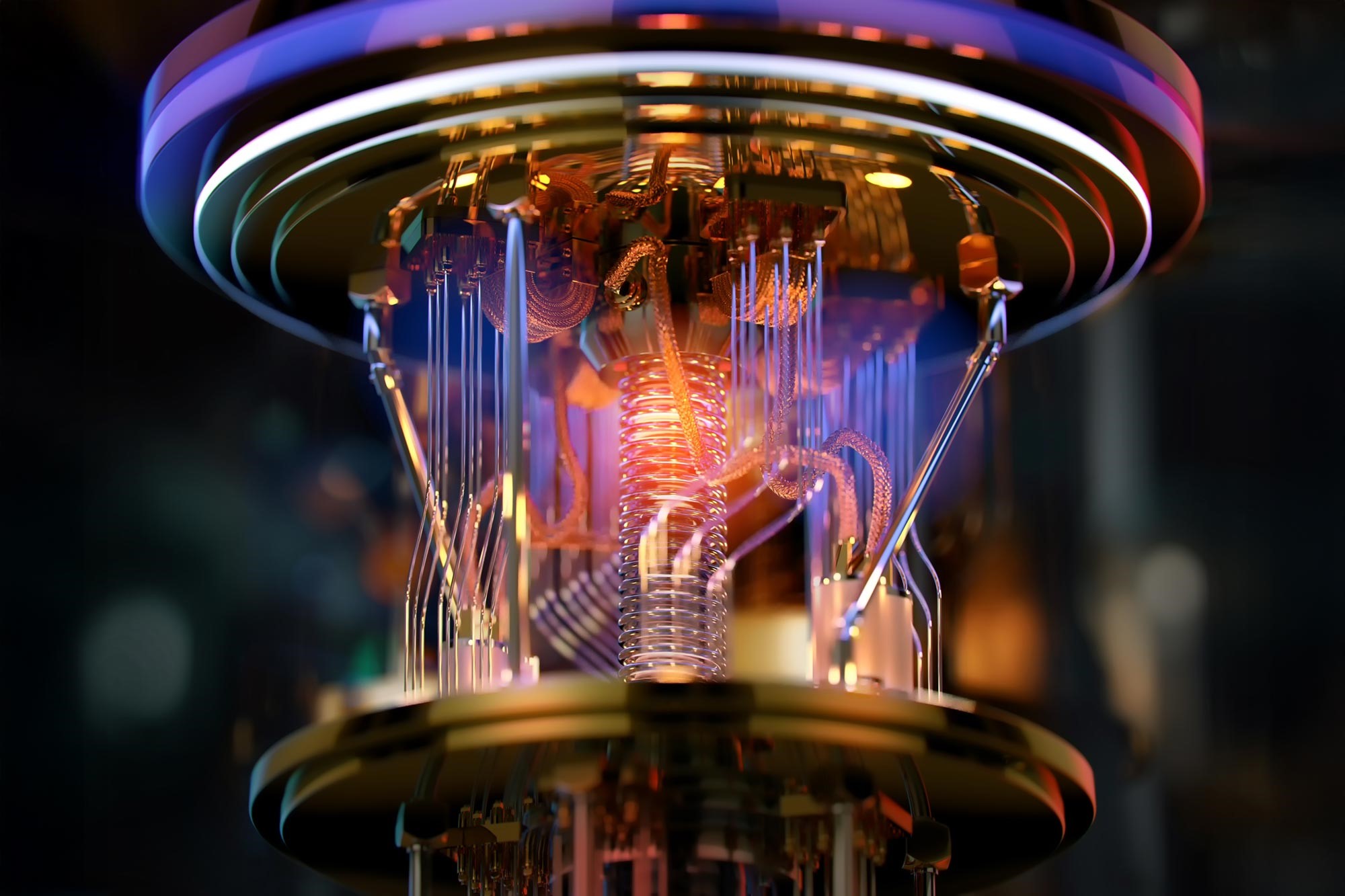
Figure 1. Hidden Flaws in Quantum Circuits Could Change Everything.
A new theoretical study closely examined how noise impacts these systems. The findings reveal that noise imposes a surprisingly strict limit on how deep a quantum circuit can be—that is, how many steps it can execute in sequence. At the same time, noise makes certain parts of these circuits easier to simulate using classical computers. Figure 1 shows Hidden Flaws in Quantum Circuits Could Change Everything.
Why Only the Final Layers Count
To understand noise effects, the researchers analyzed large sets of quantum circuits built from simple two-qubit operations. They modeled realistic conditions where each qubit experiences noise after every step and tracked how each layer’s influence propagates through the circuit.
Their results revealed a striking pattern: in most noisy quantum circuits, only the final steps significantly affect the outcome. Even if a circuit is designed to be very deep, the impact of earlier steps gradually fades as noise accumulates.
It’s similar to a line of falling dominoes where only the last few pieces determine the final result. The earlier ones still fall, but their influence no longer matters.
In practical terms, when a quantum computer estimates properties like energy or a qubit’s state, the result is largely determined by the final layers. Earlier operations effectively “fade from memory” due to noise.
Why Noisy Circuits Still Function
The study also explains why noisy quantum circuits can still be tuned or “trained” for certain tasks. Adjusting the circuit’s parameters can influence the outcome—but mainly because the final layers remain effective, while earlier ones lose their impact.
As a result, a deep noisy circuit behaves much like a shallow one. Adding more layers doesn’t necessarily improve performance, since many of those extra steps contribute little to the final result.
Implications for the Future of Quantum Technology
These findings provide a more realistic view of what current and near-term quantum systems can achieve. Simply increasing circuit depth is unlikely to unlock major advances, especially for tasks involving local measurements.
Instead, meaningful progress will depend on reducing noise or designing circuits that can operate effectively despite it. The study also highlights a key risk: noisy circuits may appear trainable, but only because noise has already reduced their complexity. Assuming noise is harmless could lead to overly optimistic expectations about quantum computing performance.
Source: SciTECHDaily
Cite this article:
Priyadharshini S (2026), Quantum Circuits Harbor a Hidden Flaw—And It Could Change Everything, AnaTechMaz, pp.481
Recent Post
-
Quantum Circuits Harbor a Hidden Flaw—And It Could Change Everything
This raises a crucial question: if every step in a quantum circuit is...

Atomic Chains Convert Electric Fields into Detectable Quantum Signals
Researchers at Nanyang Technological University (NTU) have...

Scientists Uncover Quantum Boost for Energy Transfer at the Nanoscale
A newly uncovered mechanism is reshaping how scientists...

Researchers in the US Unveil Material That Can Toggle Between Quantum States
Researchers in the United States have confirmed the existence of a unique...
Silicon-Based Quantum Processor Achieves Full Logical Functionality
In a significant advance for quantum technology, researchers have developed...
-

“World-First Quantum Navigation Trial on UK Train Aims to Replace GPS”
The United Kingdom has taken a major step toward next-generation rail...
-

Next-Gen Navigation: NASA-Tested Quantum Tech Could Replace GPS Satellites
A compact quantum sensor no larger than a quart of milk...
-

Few-Shot Android Malware Detection Gets a Quantum Boost
A new study is pushing the boundaries of cybersecurity by combining quantum computing...
-

Custom Vector Lasing Powered by Möbius-Like Quasi-BICs
Researchers have developed a new method to generate vectorial laser beams...
-
US Scientists Create Noise-Free Phonon Lasers for Quantum Sensing
A team of researchers from the University of Rochester...
-
From 1,000 to 5 Qubits: Quantum Leap Paves the Way for Real-World Computing
Researchers at the California Institute of Technology, working...
-

“Quantum Leap: New Method Could Cut the Number of Qubits Needed”
A team of Australian researchers has unveiled a novel approach to quantum...
-
World First as Silica Nanorotor Hits Quantum Ground State of Rotation
At the macroscopic level, motion never truly stops—objects vibrate and rotate due to thermal energy. As...

New Quantum Discovery Could Lead to Self-Powered Electronics
Researchers have discovered a method to control a quantum phenomenon...
Scientists Revamp a Classic Material for Next-Generation Quantum Technology
Researchers led by Penn State University have discovered that a...