

US Scientists Create Noise-Free Phonon Lasers for Quantum Sensing
A team of researchers from the University of Rochester and Rochester Institute of Technology has developed an advanced form of phonon laser that could transform future technologies, from ultra-efficient microchips to “unjammable” quantum navigation systems. By engineering a squeezed phonon laser, the scientists have significantly reduced noise—a key limitation that has long hindered the practical use of these devices.
Lasers, first introduced in the 1960s, have become indispensable across industries, powering applications from medical procedures to retail scanning. While conventional lasers manipulate photons—particles of light—researchers have expanded this concept to control phonons, the quantum units of vibration or sound. These phonon-based systems open new frontiers in areas such as quantum physics, gravity research, and next-generation computing.
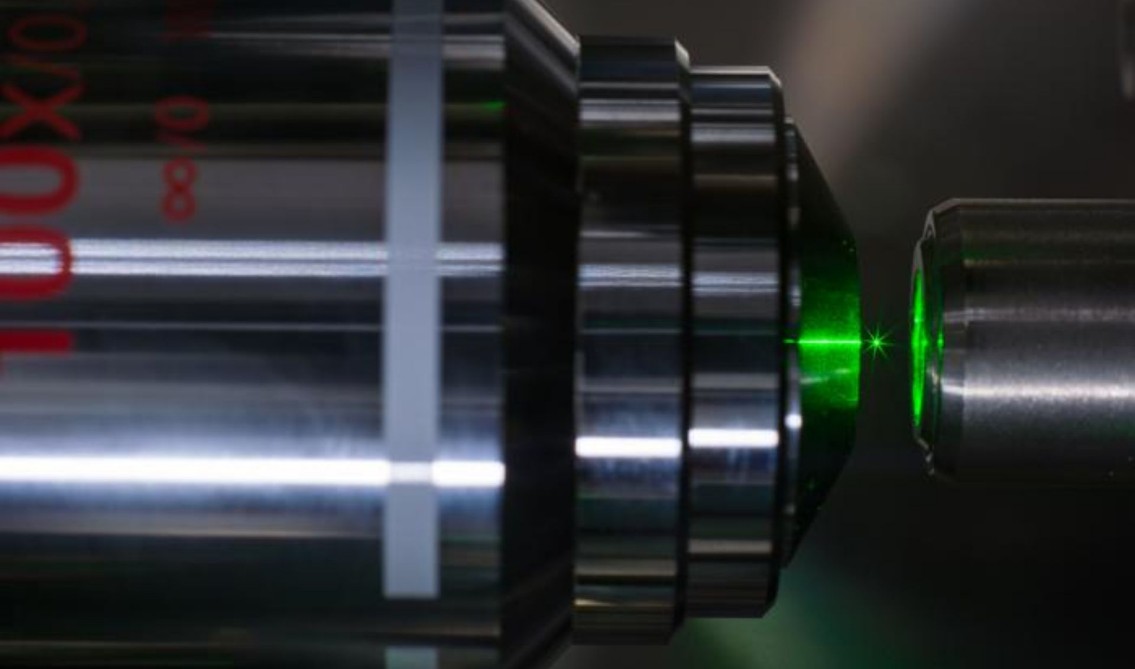
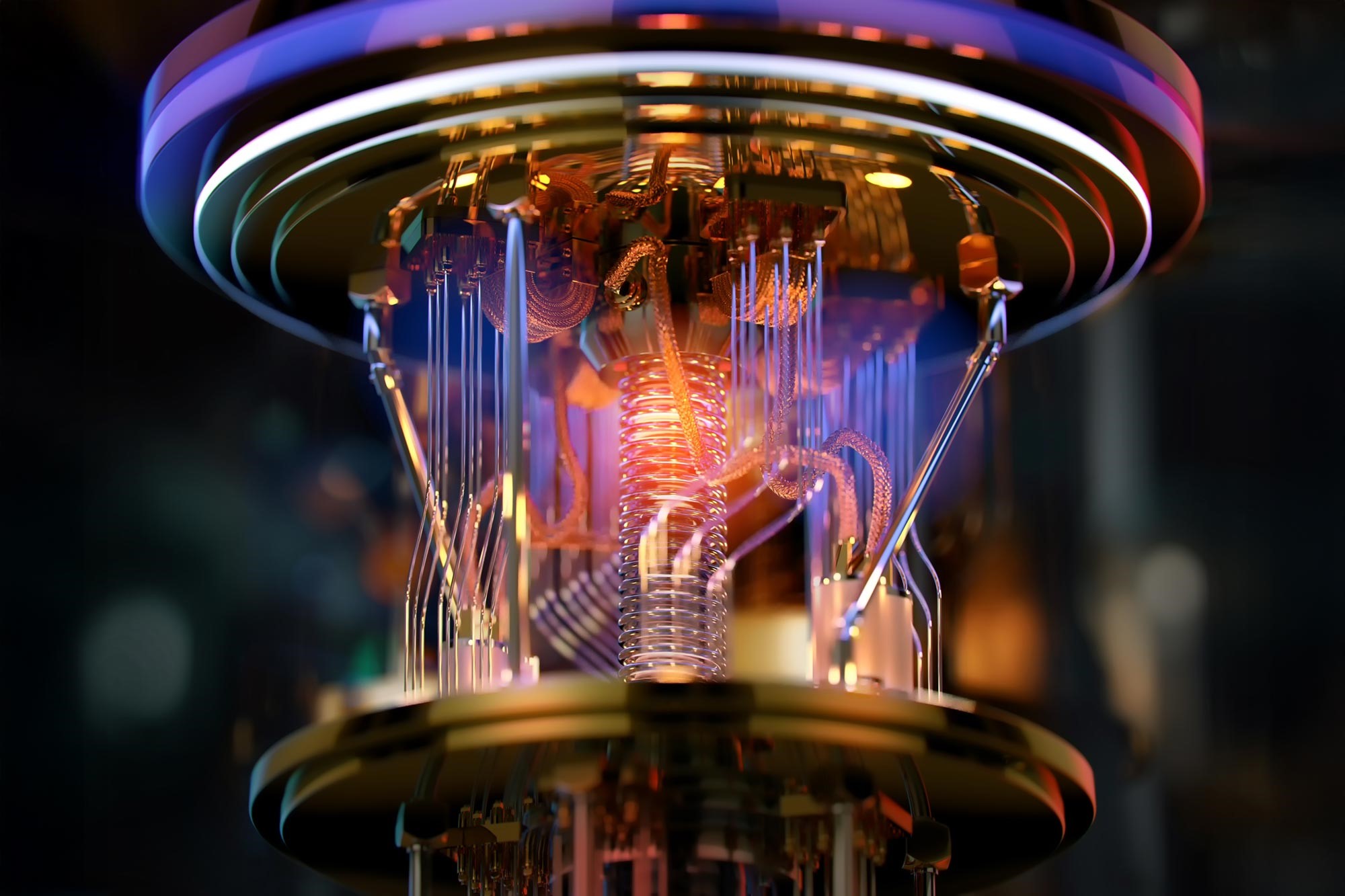
Figure 1. Phonon Lasers are Used to Trap and Levitate Nanoparticles.
Phonons are known as quasiparticles because they represent quantized vibrations within materials, much like photons represent quantized light. First proposed in 1930, the concept has been central to understanding how energy and heat move through solids. Unlike classical waves, phonons also behave like particles, making them essential for studying complex condensed matter systems. Figure 1 shows Phonon lasers are used to trap and levitate nanoparticles.
In earlier work, Nick Vamivakas and his team demonstrated a phonon laser by trapping vibrations in a vacuum using optical tweezers. However, these systems suffered from fluctuations, or noise, which limited their precision and usefulness in sensitive measurements.
The latest breakthrough tackles this challenge directly. By carefully manipulating the phonon laser with light—essentially “pushing and pulling” it in a controlled way—the researchers were able to suppress these fluctuations. This process, known as squeezing, stabilizes the phonon output and dramatically improves measurement accuracy.
The implications are far-reaching [1]. Noise-free phonon lasers could enable highly stable quantum sensors, resilient navigation systems that cannot be easily disrupted, and faster, more energy-efficient microchips compared to current radio-frequency technologies. As research progresses, these innovations may play a key role in advancing quantum technologies and redefining precision measurement systems.
Reference:
- https://interestingengineering.com/science/us-phonon-lasers-unjammable-navigation
Cite this article:
Keerthana S (2026), US Scientists Create Noise-Free Phonon Lasers for Quantum Sensing, AnaTechMaz, pp.490
Recent Post
-

Quantum Circuits Harbor a Hidden Flaw—And It Could Change Everything
This raises a crucial question: if every step in a quantum circuit is...

Atomic Chains Convert Electric Fields into Detectable Quantum Signals
Researchers at Nanyang Technological University (NTU) have...

Scientists Uncover Quantum Boost for Energy Transfer at the Nanoscale
A newly uncovered mechanism is reshaping how scientists...

Researchers in the US Unveil Material That Can Toggle Between Quantum States
Researchers in the United States have confirmed the existence of a unique...
Silicon-Based Quantum Processor Achieves Full Logical Functionality
In a significant advance for quantum technology, researchers have developed...
-

“World-First Quantum Navigation Trial on UK Train Aims to Replace GPS”
The United Kingdom has taken a major step toward next-generation rail...
-

Next-Gen Navigation: NASA-Tested Quantum Tech Could Replace GPS Satellites
A compact quantum sensor no larger than a quart of milk...
-

Few-Shot Android Malware Detection Gets a Quantum Boost
A new study is pushing the boundaries of cybersecurity by combining quantum computing...
-

Custom Vector Lasing Powered by Möbius-Like Quasi-BICs
Researchers have developed a new method to generate vectorial laser beams...
-
US Scientists Create Noise-Free Phonon Lasers for Quantum Sensing
A team of researchers from the University of Rochester...
-
From 1,000 to 5 Qubits: Quantum Leap Paves the Way for Real-World Computing
Researchers at the California Institute of Technology, working...
-

“Quantum Leap: New Method Could Cut the Number of Qubits Needed”
A team of Australian researchers has unveiled a novel approach to quantum...
-
World First as Silica Nanorotor Hits Quantum Ground State of Rotation
At the macroscopic level, motion never truly stops—objects vibrate and rotate due to thermal energy. As...

New Quantum Discovery Could Lead to Self-Powered Electronics
Researchers have discovered a method to control a quantum phenomenon in advanced materials...
Scientists Revamp a Classic Material for Next-Generation Quantum Technology
Researchers led by Penn State University have discovered that a...