

Next-Gen Navigation: NASA-Tested Quantum Tech Could Replace GPS Satellites
A compact quantum sensor no larger than a quart of milk could soon transform how the world navigates. Developed by Canadian firm SB Quantum, the diamond-based magnetometer is set for launch aboard SpaceX’s Transporter-16 rideshare mission on March 29, 2026, marking a key milestone in the race to modernize global navigation systems.
The mission is part of the Mag Quest Challenge, led by the National Geospatial-Intelligence Agency (NGA), which aims to develop next-generation tools for mapping Earth’s magnetic field. At stake is the future of the World Magnetic Model (WMM)—a critical system used by defense agencies, aviation authorities, and even smartphones for navigation.

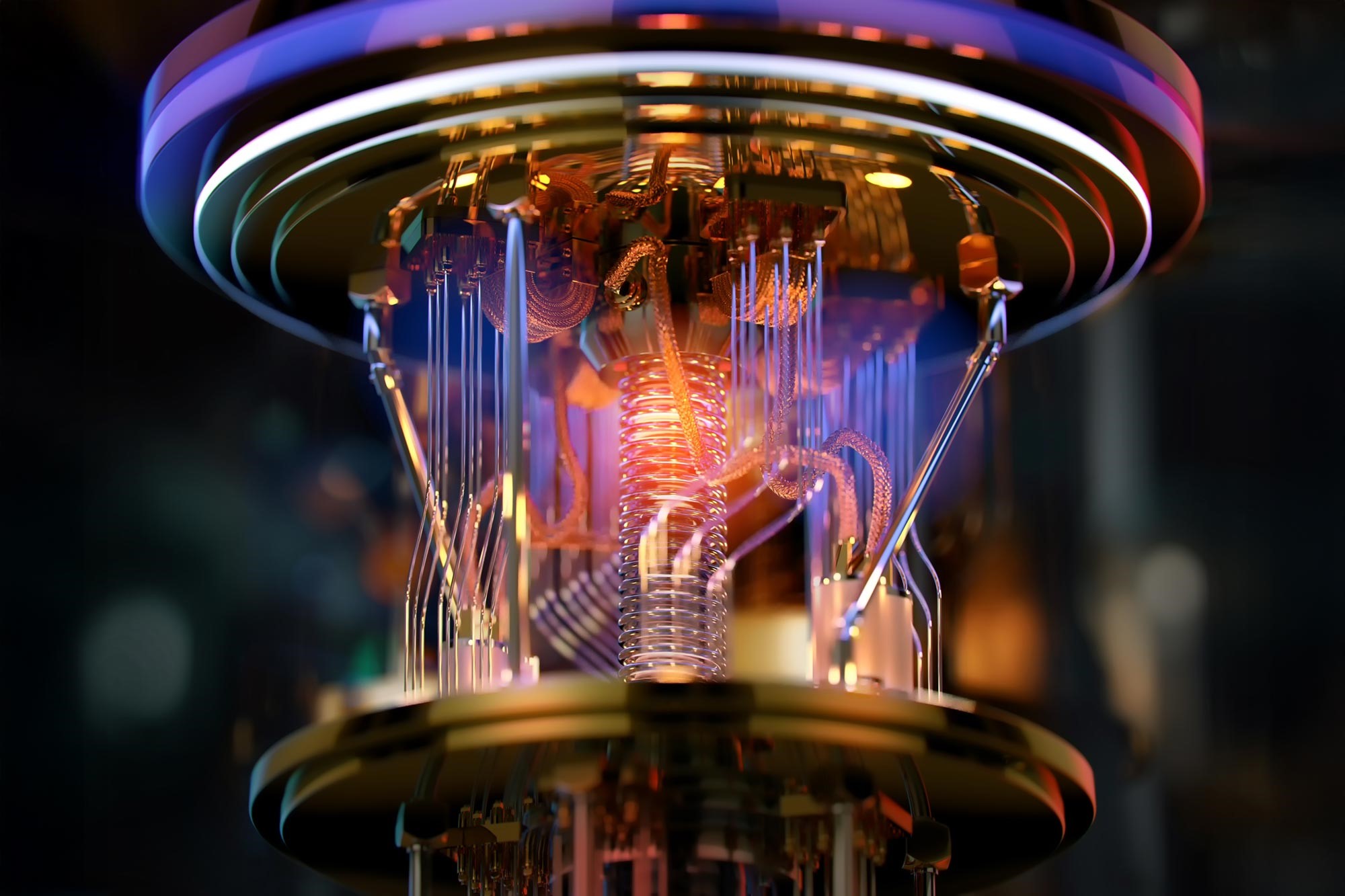
Figure 1. quantum sensors.
Rethinking Magnetic Field Mapping
Currently maintained by the National Geophysical Data Center and the British Geological Survey, the WMM requires frequent updates due to the shifting nature of Earth’s magnetic field. However, the satellites responsible for collecting this data are aging, prompting the need for more advanced and resilient alternatives.
SB Quantum’s solution represents a major leap forward. Unlike traditional systems that rely on large, costly instruments and periodic measurements, its miniaturized quantum magnetometer delivers continuous, high-precision data in real time. The device has already undergone rigorous testing at NASA Goddard Space Flight Center, proving its capability under extreme conditions.
A Resilient Alternative to GPS
Magnetic navigation offers a distinct advantage over conventional GPS systems—it operates independently of satellite signals. This makes it particularly valuable in environments where GPS may be unavailable, disrupted, or intentionally jammed. Figure 1 shows quantum sensors.
According to David Roy-Guay, the technology could redefine navigation across land, air, and sea. Beyond updating the WMM, its applications extend to defense, resource exploration, and public safety—sectors increasingly seeking reliable positioning systems in contested environments.
Collaboration and Future Potential
Launched in 2019, the Mag Quest Challenge has progressed through multiple phases, with only a handful of teams reaching the final stage. SB Quantum has partnered with Spire Global to leverage satellite infrastructure, ground stations, and data analytics capabilities.
The competition, which carries a $2.1 million prize pool, is expected to conclude later this year, helping shape NGA’s future strategy for collecting magnetic field data.
Beyond the competition, SB Quantum is also collaborating with organizations such as the Canadian Department of National Defence and the European Space Agency to expand the use of its miniaturized sensors. These efforts include deployment on unmanned systems and other platforms where conventional sensing technologies fall short.
Toward A GPS-Independent Future
As reliance on satellite navigation grows—and vulnerabilities become more apparent—quantum sensing is emerging as a powerful alternative. With its upcoming space mission, SB Quantum is not just advancing sensor technology but paving the way for a more resilient, precise, and independent global navigation framework.
Reference:
- https://interestingengineering.com/innovation/quantum-sensor-launch-into-space-spacex
Cite this article:
Keerthana S (2026), Next-Gen Navigation: NASA-Tested Quantum Tech Could Replace GPS Satellites, AnaTechMaz, pp.487
Recent Post
-

Quantum Circuits Harbor a Hidden Flaw—And It Could Change Everything
This raises a crucial question: if every step in a quantum circuit is...

Atomic Chains Convert Electric Fields into Detectable Quantum Signals
Researchers at Nanyang Technological University (NTU) have...

Scientists Uncover Quantum Boost for Energy Transfer at the Nanoscale
A newly uncovered mechanism is reshaping how scientists...

Researchers in the US Unveil Material That Can Toggle Between Quantum States
Researchers in the United States have confirmed the existence of a unique...
Silicon-Based Quantum Processor Achieves Full Logical Functionality
In a significant advance for quantum technology, researchers have developed...
-

“World-First Quantum Navigation Trial on UK Train Aims to Replace GPS”
The United Kingdom has taken a major step toward next-generation rail...
-
Next-Gen Navigation: NASA-Tested Quantum Tech Could Replace GPS Satellites
A compact quantum sensor no larger than a quart of milk...
-

Few-Shot Android Malware Detection Gets a Quantum Boost
A new study is pushing the boundaries of cybersecurity by combining quantum computing...
-

Custom Vector Lasing Powered by Möbius-Like Quasi-BICs
Researchers have developed a new method to generate vectorial laser beams...
-
US Scientists Create Noise-Free Phonon Lasers for Quantum Sensing
A team of researchers from the University of Rochester...
-
From 1,000 to 5 Qubits: Quantum Leap Paves the Way for Real-World Computing
Researchers at the California Institute of Technology, working...
-

“Quantum Leap: New Method Could Cut the Number of Qubits Needed”
A team of Australian researchers has unveiled a novel approach to quantum...
-
World First as Silica Nanorotor Hits Quantum Ground State of Rotation
At the macroscopic level, motion never truly stops—objects vibrate and rotate due to thermal energy. As...

New Quantum Discovery Could Lead to Self-Powered Electronics
Researchers have discovered a method to control a quantum phenomenon in advanced materials...
Scientists Revamp a Classic Material for Next-Generation Quantum Technology
Researchers led by Penn State University have discovered that a...