

“Quantum Leap: New Method Could Cut the Number of Qubits Needed”
A team of Australian researchers has unveiled a novel approach to quantum error correction that could dramatically reduce the number of qubits needed to build practical quantum computers—one of the biggest challenges facing the field today.
Led by Dominic Williamson from the University of Sydney, the study introduces a new framework based on gauge theory. The research, supported by IBM, is already influencing long-term strategies for quantum computing, a technology expected to transform industries ranging from cryptography to drug discovery.
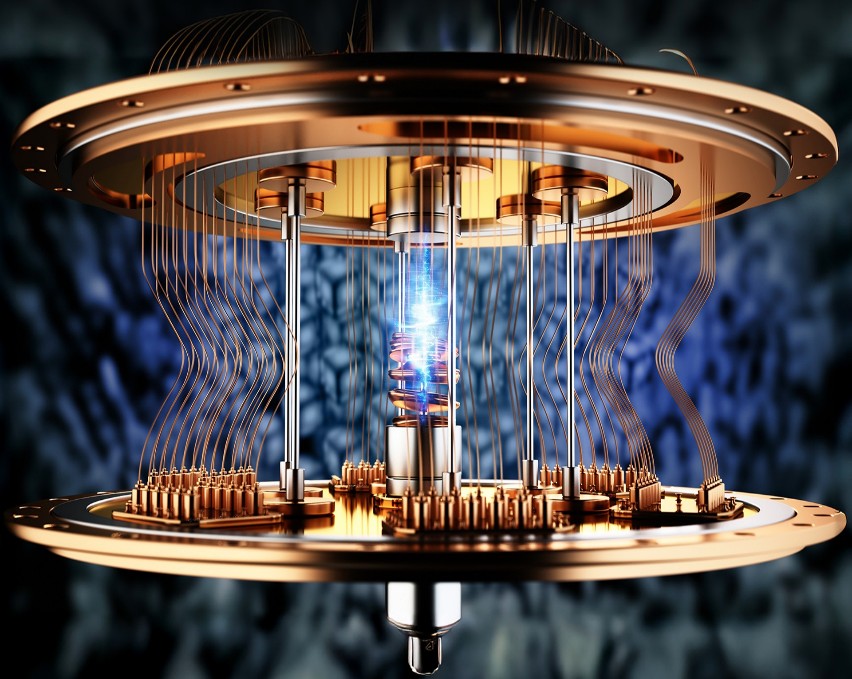
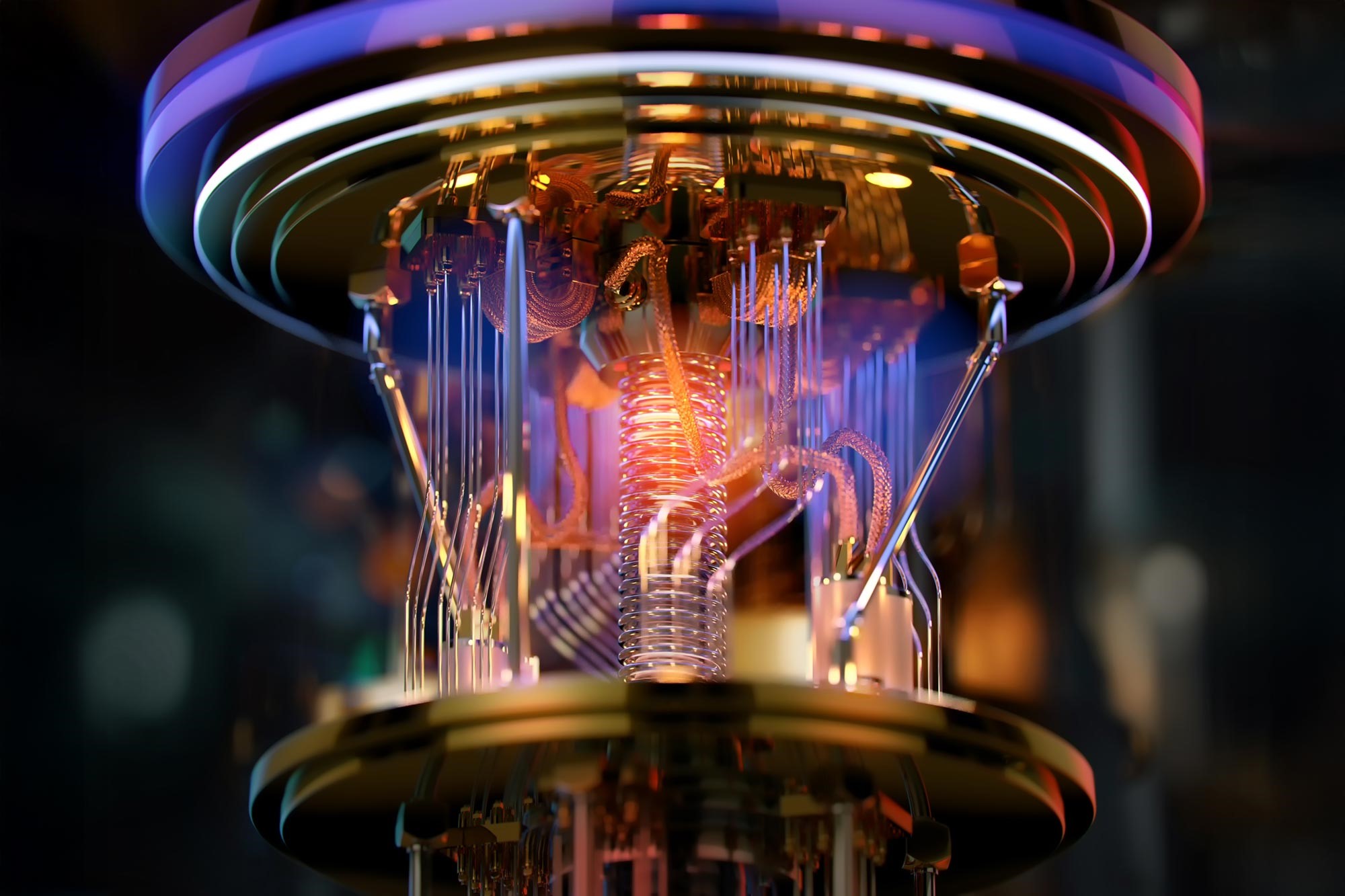
Figure 1. An Illustration of a Quantum Computer Device.
Despite rapid progress, building scalable and fault-tolerant quantum machines remains a major hurdle. At the heart of the issue lies quantum error correction (QEC), a process designed to protect fragile quantum states from noise and environmental interference. Traditional methods, however, require large numbers of additional qubits—making systems complex and resource-intensive. Figure 1 shows an illustration of a quantum computer device.
The new approach offers a smarter alternative. Instead of relying on heavy redundancy, the researchers use gauge theory to track quantum information at a global level. This allows the system to monitor and correct errors without forcing individual qubits into definite states—a process that would otherwise collapse their delicate quantum properties.
Quantum computers operate using qubits, which can exist in multiple states simultaneously thanks to superposition. While this enables powerful computations, it also makes qubits extremely sensitive to disturbances. Even minor interactions with the environment can disrupt calculations, making efficient error correction essential.
Williamson’s team tackled this problem by introducing a structure that links quantum memory with logical processing. By incorporating additional “gauge-like” degrees of freedom, the system can measure global information across the quantum system while preserving local quantum states. In essence, it acts like a distributed quantum memory that keeps track of information without disturbing it.
To ensure scalability, the researchers organized these elements using expander graphs—mathematical structures that allow efficient communication across large systems [1]. The result is a flexible architecture that maintains robust quantum memory while enabling active computation, all without the need for excessive qubit duplication.
Inspired in part by principles from the Standard Model of particle physics, the framework represents a shift in how scientists think about error correction. By focusing on global properties rather than local measurements, it opens the door to more efficient and scalable quantum designs.
If successfully implemented, this method could accelerate the development of practical quantum computers—bringing the technology closer to solving real-world problems that are beyond the reach of classical machines.
Reference:
- https://interestingengineering.com/innovation/quantum-error-correction-slashes-qubits-computers
Cite this article:
Keerthana S (2026), Quantum Leap: New Method Could Cut the Number of Qubits Needed, AnaTechMaz, pp.492
Recent Post
-

Quantum Circuits Harbor a Hidden Flaw—And It Could Change Everything
This raises a crucial question: if every step in a quantum circuit is...
Atomic Chains Convert Electric Fields into Detectable Quantum Signals
Researchers at Nanyang Technological University (NTU) have...

Scientists Uncover Quantum Boost for Energy Transfer at the Nanoscale
A newly uncovered mechanism is reshaping how scientists...

Researchers in the US Unveil Material That Can Toggle Between Quantum States
Researchers in the United States have confirmed the existence of a unique...
Silicon-Based Quantum Processor Achieves Full Logical Functionality
In a significant advance for quantum technology, researchers have developed...
-

“World-First Quantum Navigation Trial on UK Train Aims to Replace GPS”
The United Kingdom has taken a major step toward next-generation rail...
-

Next-Gen Navigation: NASA-Tested Quantum Tech Could Replace GPS Satellites
A compact quantum sensor no larger than a quart of milk...
-

Few-Shot Android Malware Detection Gets a Quantum Boost
A new study is pushing the boundaries of cybersecurity by combining quantum computing...
-

Custom Vector Lasing Powered by Möbius-Like Quasi-BICs
Researchers have developed a new method to generate vectorial laser beams...
-
US Scientists Create Noise-Free Phonon Lasers for Quantum Sensing
A team of researchers from the University of Rochester...
-
From 1,000 to 5 Qubits: Quantum Leap Paves the Way for Real-World Computing
Researchers at the California Institute of Technology, working...
-
“Quantum Leap: New Method Could Cut the Number of Qubits Needed”
A team of Australian researchers has unveiled a novel approach to quantum...
-
World First as Silica Nanorotor Hits Quantum Ground State of Rotation
At the macroscopic level, motion never truly stops—objects vibrate and rotate due to thermal energy. As...

New Quantum Discovery Could Lead to Self-Powered Electronics
Researchers have discovered a method to control a quantum phenomenon in advanced materials...
Scientists Revamp a Classic Material for Next-Generation Quantum Technology
Researchers led by Penn State University have discovered that a...