

New Quantum Discovery Could Lead to Self-Powered Electronics
Researchers have discovered a method to control a quantum phenomenon in advanced materials by harnessing subtle internal features like defects and lattice vibrations.
A recent study reveals that tiny imperfections and internal vibrations within a promising quantum material can be used to regulate an unusual electrical effect. This breakthrough could pave the way for smaller, faster, and more efficient energy-harvesting technologies.

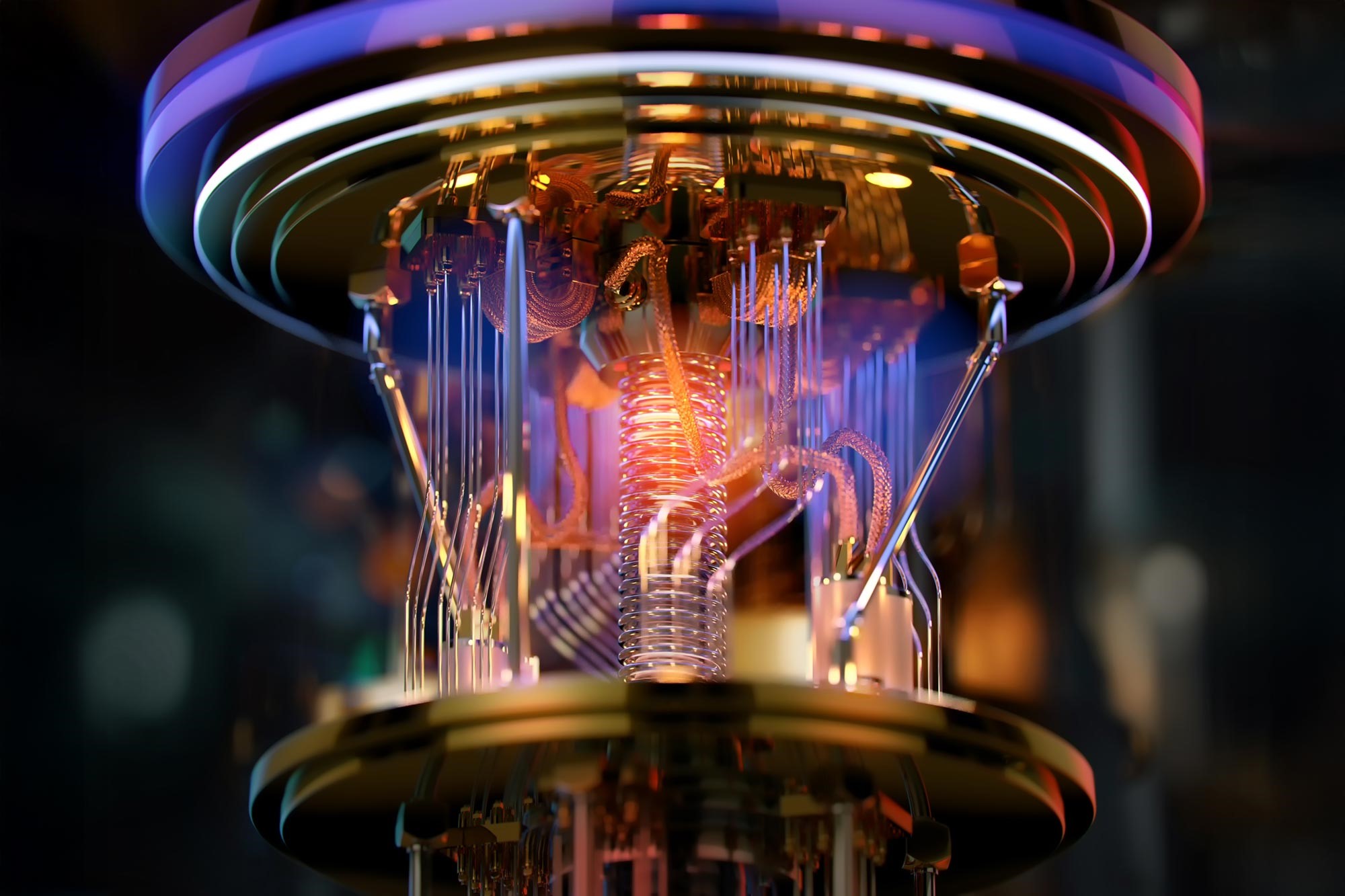
Figure 1. Self-Powered Electronics.
An international team led by Professor Dongchen Qi from the QUT School of Chemistry and Physics, along with Professor Xiao Renshaw Wang from Nanyang Technological University in Singapore, explored the mechanism behind the nonlinear Hall effect (NLHE). Figure 1 shows self-powered electronics.
Unlike the classical Hall effect, this quantum behavior enables alternating electrical signals—such as those from wireless transmissions or ambient sources—to be directly converted into usable direct current, without the need for diodes or bulky components.
“The NLHE is a complex quantum effect in condensed matter physics where a voltage is generated perpendicular to an applied alternating current, even without a magnetic field,” explained Professor Qi.
“This allows us to transform alternating signals directly into direct current, which is essential for powering electronic devices [1]. In theory, this could lead to sensors or chips that operate without batteries by drawing energy from their surroundings.”
Material Behavior and Temperature Effects
The researchers studied a high-quality topological material known for its unique electronic properties and found that the NLHE remains stable even at room temperature. They also observed that both the magnitude and direction of the generated voltage vary with temperature.
At lower temperatures, microscopic defects within the material dominate the effect. As the temperature rises, vibrations in the crystal lattice become more influential, eventually causing the electrical signal to reverse direction.
“By understanding the internal processes within the material, we can design devices that exploit these effects,” said Professor Qi.
“That’s when quantum phenomena move beyond theory and become practical, enabling innovations such as self-powered sensors, wearable electronics, and ultra-fast components for next-generation wireless technologies.”
Reference:
- https://scitechdaily.com/a-strange-quantum-effect-could-power-future-electronics-without-batteries/
Cite this article:
Keerthana S (2026), New Quantum Discovery Could Lead to Self-Powered Electronics, AnaTechMaz, pp.494
Recent Post
-

Quantum Circuits Harbor a Hidden Flaw—And It Could Change Everything
This raises a crucial question: if every step in a quantum circuit is...

Atomic Chains Convert Electric Fields into Detectable Quantum Signals
Researchers at Nanyang Technological University (NTU) have...
Scientists Uncover Quantum Boost for Energy Transfer at the Nanoscale
A newly uncovered mechanism is reshaping how scientists...

Researchers in the US Unveil Material That Can Toggle Between Quantum States
Researchers in the United States have confirmed the existence of a unique...
Silicon-Based Quantum Processor Achieves Full Logical Functionality
In a significant advance for quantum technology, researchers have developed...
-

“World-First Quantum Navigation Trial on UK Train Aims to Replace GPS”
The United Kingdom has taken a major step toward next-generation rail...
-

Next-Gen Navigation: NASA-Tested Quantum Tech Could Replace GPS Satellites
A compact quantum sensor no larger than a quart of milk...
-

Few-Shot Android Malware Detection Gets a Quantum Boost
A new study is pushing the boundaries of cybersecurity by combining quantum computing...
-

Custom Vector Lasing Powered by Möbius-Like Quasi-BICs
Researchers have developed a new method to generate vectorial laser beams...
-
US Scientists Create Noise-Free Phonon Lasers for Quantum Sensing
A team of researchers from the University of Rochester...
-

From 1,000 to 5 Qubits: Quantum Leap Paves the Way for Real-World Computing
Researchers at the California Institute of Technology, working...
-

“Quantum Leap: New Method Could Cut the Number of Qubits Needed”
A team of Australian researchers has unveiled a novel approach to quantum...
-
World First as Silica Nanorotor Hits Quantum Ground State of Rotation
At the macroscopic level, motion never truly stops—objects vibrate and rotate due to thermal energy. As...
New Quantum Discovery Could Lead to Self-Powered Electronics
Researchers have discovered a method to control a quantum phenomenon in advanced materials...
Scientists Revamp a Classic Material for Next-Generation Quantum Technology
Researchers led by Penn State University have discovered that a...