

BlueQubit AI Packs Years of Quantum Expertise Into a Single Prompt
BlueQubit aims to condense years of specialized quantum computing knowledge into a single, easily accessible AI system, addressing one of the biggest obstacles to broader adoption of quantum technologies.
Developing quantum programs typically requires expertise across multiple technical fields, including linear algebra, quantum algorithms, and hardware-specific optimization. BlueQubit AI seeks to simplify this process by translating natural-language user intent into functional quantum code.
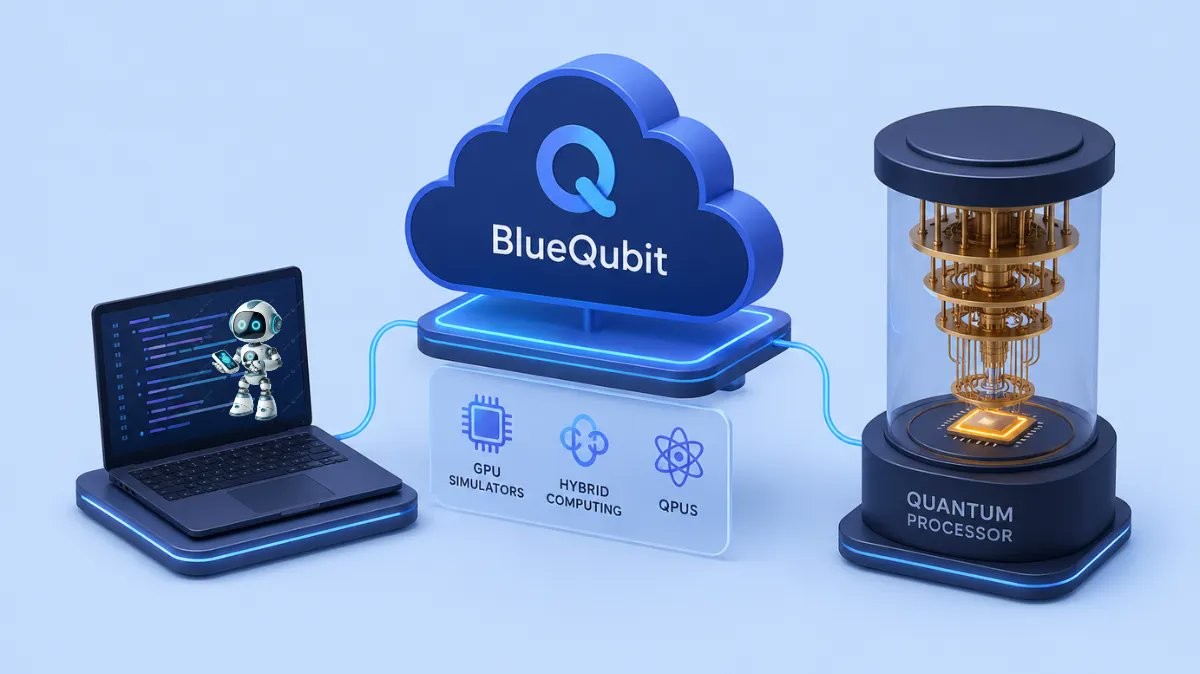
Figure 1. BlueQubit AI Turns Years of Quantum Expertise Into a Single Prompt
Instead of manually building complex programs, users can request tasks such as simulating a circuit on a tensor-network backend using simple prompts. The company describes this approach as a form of “vibe coding” for quantum computing. Figure 1 shows BlueQubit AI Turns Years of Quantum Expertise Into a Single Prompt.
Unlike general-purpose large language models, BlueQubit AI is designed around specific quantum platforms and validated performance benchmarks, allowing it to generate recommendations and code tailored to real quantum computing systems.
BlueQubit Quantum AI Condenses Quantum Computing Expertise Into One Platform
BlueQubit has introduced a new AI system designed to significantly reduce the expertise required to work with quantum computing. Rather than replacing quantum scientists, the platform acts as an intelligent assistant that converts user intent into functional quantum programs while also helping users choose suitable hardware and simulation backends.
The company says the system addresses a major challenge in quantum computing, where developing even moderately advanced applications typically requires deep knowledge of mathematics, algorithms, and hardware-specific constraints. Unlike general-purpose large language models adapted for technical tasks, BlueQubit Quantum AI was built specifically around the full quantum computing stack, integrating algorithms, simulation, hardware, and execution into a unified system.
The assistant can interpret plain-language prompts and generate working quantum code along with explanations for its design decisions. BlueQubit describes this interaction style as “vibe coding for quantum,” where researchers provide goals or intuition while the AI manages the technical implementation details.
The platform is also tightly integrated with BlueQubit’s hybrid computing environment, reducing common setup challenges such as software installation and configuration. According to the company, benchmarking tests show major performance improvements, including one- to two-orders-of-magnitude speed gains over comparable cloud-based state-vector simulators and up to 1,400× faster performance on Pauli path simulations of IBM’s 127-qubit kicked Ising benchmark.
BlueQubit argues that combining the AI coding assistant and execution infrastructure into a single platform removes friction from the development process, enabling faster experimentation and iteration in quantum computing research.
AI-Driven Quantum Programming Through Natural Language
As quantum computing moves closer to practical applications, one of the major challenges remains the high level of expertise needed to build even simple quantum programs. BlueQubit aims to address this issue with BlueQubit AI, a conversational system designed to package years of quantum computing knowledge into an accessible interface.
Instead of requiring users to work directly with complex programming languages and hardware configurations, the platform enables quantum program creation through natural-language prompts, translating user intent into executable quantum code. The company presents this as more than a workflow simplification, describing it as a fundamentally different way of interacting with quantum systems.
BlueQubit notes that while frontier large language models can understand many quantum concepts, they often lack awareness of hardware constraints and execution infrastructure. Its AI assistant is designed with integrated knowledge of algorithms, simulators, and backend systems, allowing it to generate more practical and deployable quantum workflows.
The assistant is also fully integrated into BlueQubit’s hybrid computing environment, reducing setup complexity and removing many of the configuration challenges typically associated with quantum software development.
BlueQubit SDK Benchmarks Show Faster Quantum Simulation Performance
BlueQubit reports major performance improvements with its latest quantum simulation tools, aiming to reduce some of the long-standing computational bottlenecks in quantum research and development.
The company benchmarked its CPU and GPU simulators against platforms including AWS Braket, Quantum Rings, PPS-Qiskit, and PauliPropagation.jl across several simulation methods such as state-vector, matrix product state, and Pauli path simulations.
According to the results, BlueQubit’s GPU backend was the only zero-setup system tested that completed the most demanding simulations within practical wall-clock times, suggesting an advantage for handling highly complex quantum circuits. The company attributes this performance to optimized matrix product state simulation techniques, where GPU acceleration becomes increasingly effective as circuit complexity grows.
BlueQubit argues that progress in quantum R&D has often been slowed more by workflow friction and setup complexity than by the underlying science itself. By integrating an AI assistant directly with its execution environment, the company aims to shorten the gap between idea generation and experimentation, enabling researchers to run more experiments faster while reducing technical barriers for newcomers entering the field.
Hybrid Quantum Platform Enables Faster Research and Testing
BlueQubit is tackling one of the biggest obstacles in quantum computing research: the operational complexity that slows experimentation and development. Rather than offering only an AI assistant, the company has built a fully integrated hybrid environment that combines the BlueQubit SDK, simulators, hardware connectivity, and AI tools within a single platform. This unified setup removes many traditional barriers, including installing CUDA toolkits, configuring GPU drivers, and managing software environments.
The platform is designed to shorten the time between designing a quantum experiment and obtaining results, allowing researchers and developers to iterate more quickly. Recent benchmark results also highlight the performance advantages of this integrated approach.
By tightly coupling AI guidance with available computing infrastructure, BlueQubit aims to provide practical, execution-ready recommendations instead of purely theoretical assistance. The broader goal is to make quantum computing workflows faster, more accessible, and easier to use for both experienced researchers and newcomers to the field.
reference:
- https://quantumzeitgeist.com/bluequbit-ai-prompt-compresses-years/
Cite this article:
Janani R (2026), BlueQubit AI Packs Years of Quantum Expertise Into a Single Prompt, AnaTechMaz, pp.973
Recent Post
-
Japan–US Researchers Create the World’s First Silicon Spintronic Chip
Scientists from Japan and the United States have achieved a....
-

The Next AI Frontier: Systems Capable of Building Better AI
Artificial intelligence may soon play a direct role in creating its own successors, according to new...
-

New AI System Deciphers Laws of Physics to Revolutionize Optical Engineering
Researchers at Chalmers University of Technology have developed a....
-

Scientists Create a Living AI System Powered by Human Brain Cells
Researchers at Princeton University have developed a 3D...
-

AI Symptom Checkers Found to Have Dangerous Weakness, Study Warns
Researchers discovered that when people distrust AI, they tend to....
-

Scientists Use AI To Make Ultrafast Laser Simulations Over 250 Times Faster
Researchers from Stanford University, University of California, Los....
-

Anthropic Acquires AI Developer Tool Startup Stainless, Potentially Cutting Off Rivals Like OpenAI and Google
Stainless is a platform that....
-

Former eBay Employee Launches Fully AI-Driven Marketing Firm With 27 AI Agents
Former eBay employee Linara Bozieva launched an AI-driven....
-
Perplexity AI Users Report Faster Usage Limits as Company Cites Promo Code Abuse
Perplexity AI says some accounts connected to promotional....
-

Funding Surge Hits Indian Agentic AI Startups as Investors Back Autonomous Enterprise Tech
India’s rapidly expanding artificial intelligence ecosystem is.....
-

Google Joins AI Wearables Race with Smart Glasses Launch at I/O 2026
Google has stepped up competition in the AI wearables space by....
-

AI-Powered Blood Test Can Forecast Stroke and Heart Failure Up to 15 Years Ahead
Researchers at the University of Hong Kong’s LKS Faculty of...
-
BlueQubit AI Packs Years of Quantum Expertise Into a Single Prompt
BlueQubit aims to condense years of specialized quantum....
-

Gemini Audio Converts Conversations into Structured JSON Notes
Gemini Audio can transform audio recordings into structured,...
-
New Vera CPU Delivers Major Performance Gains for AI Computing
NVIDIA Vice President of Hyperscale and High-Performance Computing...
-