

AI Symptom Checkers Found to Have Dangerous Weakness, Study Warns
Researchers discovered that when people distrust AI, they tend to provide less detailed symptom information, which may reduce the accuracy of AI-driven healthcare evaluations.
In the future, patients may interact with an AI system before meeting a doctor. Using the information provided, the AI could assess how serious the condition is, determine whether immediate care is needed, and help schedule the appropriate appointment time.
That future may seem far away, but healthcare is already heading in that direction. AI chatbots and digital symptom checkers are increasingly serving as the first step for patients seeking medical guidance, helping them evaluate symptoms before consulting a healthcare professional.
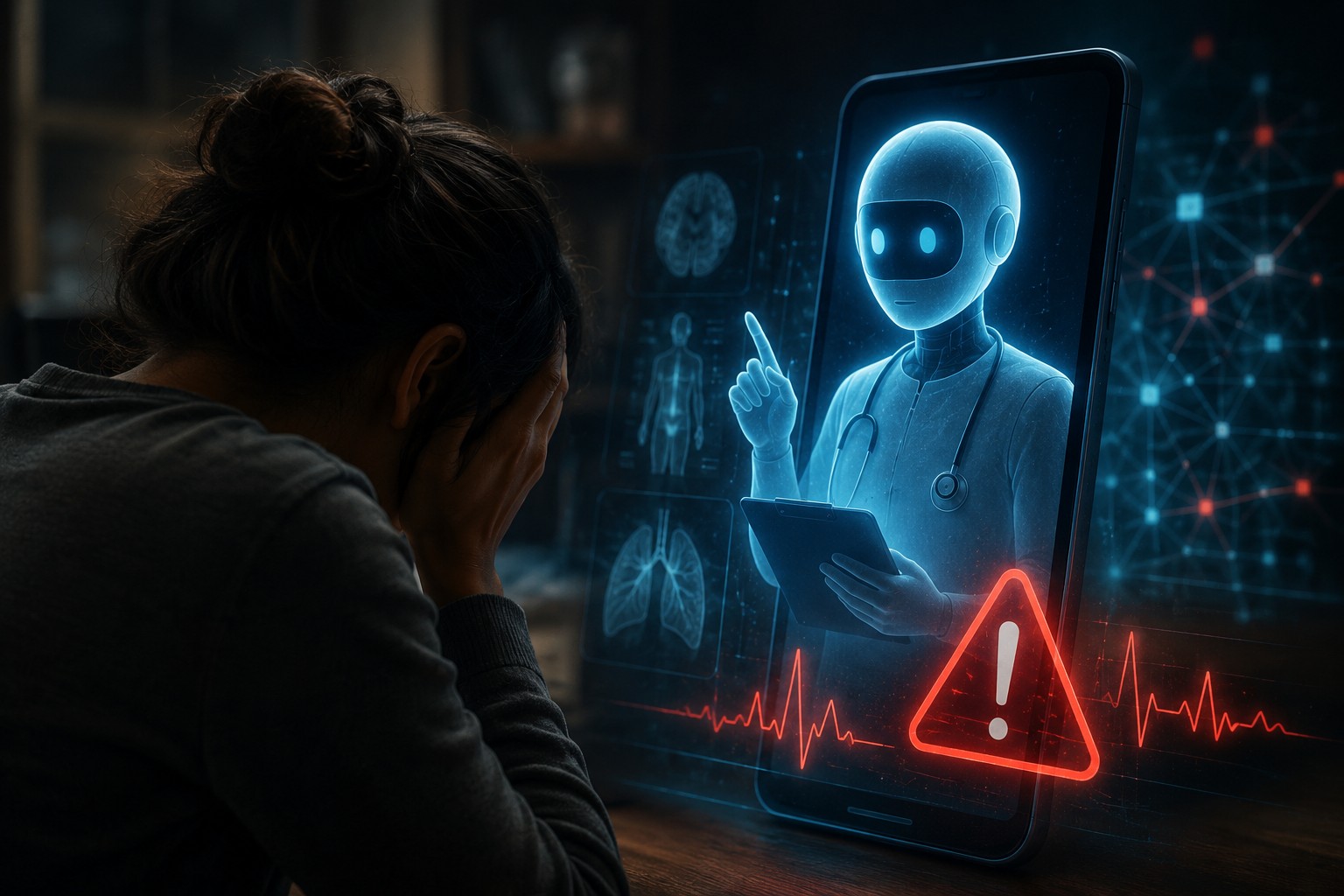
Figure 1. Human Psychology May Limit AI Symptom Checkers
Researchers are now exploring an important question: do people share information differently with AI systems than they do with human doctors? The findings could be significant, since even the most advanced AI tools depend on patients providing clear, detailed, and accurate information to make reliable assessments. Figure 1 shows Human Psychology May Limit AI Symptom Checkers.
Study Uncovers Communication Problems Between Patients and Medical AI
A new study published in Nature Health highlights this growing concern. The research was led by Wilfried Kunde and research associate Moritz Reis, with contributions from scientists at Charité – Universitätsmedizin Berlin, University of Cambridge, Helios Klinikum Emil von Behring, and Vivantes Klinikum Neukölln.
“The 500 participants in the study were asked to write simulated symptom reports for two common conditions — unusual headaches and flu-like symptoms,” Moritz Reis explained. Participants were informed that their reports would be reviewed either by an AI chatbot or by a human doctor. Researchers then assessed how useful the reports were for evaluating medical urgency.
The findings revealed a clear trend: when participants believed they were communicating with AI, their symptom descriptions became less informative and less useful for medical evaluation compared with reports intended for healthcare professionals. The same pattern was observed even among participants who were genuinely experiencing the symptoms described in the study.
Brief Symptom Reports Reduce AI Diagnostic Accuracy
The difference was evident in how much detail participants shared. Symptom reports intended for healthcare professionals averaged 255.6 characters, while reports written for AI chatbots averaged 228.7 characters.
Although the gap of 28 characters may seem small, researchers say it can still significantly affect medical accuracy. Even highly advanced AI systems may provide unreliable advice if important symptom details are missing. The team emphasized that the quality of digital health assessments depends not only on the AI’s capabilities, but also on how thoroughly patients describe their conditions.
Researchers suggest this hesitation may stem from what they call “uniqueness neglect.” According to Wilfried Kunde, many people believe AI systems cannot fully understand the unique details of their personal situation and instead rely mainly on matching standardized patterns.
Trust, Privacy Concerns, and the Problem of “Uniqueness Neglect”
Privacy concerns and doubts about algorithm-based diagnoses may also lead users to provide vague or incomplete information. Moritz Reis explained the issue by noting that when people do not trust a machine to understand their individual situation, they may unconsciously withhold details needed for accurate assistance. As a result, important medical information may never reach the AI system, lowering the quality of its assessment.
The researchers say the study shows that improving AI technology alone is not enough to solve the problem [1]. They believe better user interface design could encourage more effective communication between patients and digital healthcare tools.
To improve symptom reporting, the team recommends giving users clear examples of detailed, high-quality descriptions and designing AI systems that actively ask follow-up questions whenever information is incomplete. Encouraging patients to share fuller symptom details could help reduce misdiagnoses and ease the burden on healthcare systems.
reference:
- https://scitechdaily.com/study-reveals-dangerous-flaw-in-ai-symptom-checkers/
Cite this article:
Janani R (2026), AI Symptom Checkers Found to Have Dangerous Weakness, Study Warns, AnaTechMaz, pp.965
Recent Post
-

Japan–US Researchers Create the World’s First Silicon Spintronic Chip
Scientists from Japan and the United States have achieved a....
-
The Next AI Frontier: Systems Capable of Building Better AI
Artificial intelligence may soon play a direct role in creating its own successors, according to new...
-

New AI System Deciphers Laws of Physics to Revolutionize Optical Engineering
Researchers at Chalmers University of Technology have developed a....
-

Scientists Create a Living AI System Powered by Human Brain Cells
Researchers at Princeton University have developed a 3D...
-
AI Symptom Checkers Found to Have Dangerous Weakness, Study Warns
Researchers discovered that when people distrust AI, they tend to....
-

Scientists Use AI To Make Ultrafast Laser Simulations Over 250 Times Faster
Researchers from Stanford University, University of California, Los....
-
Anthropic Acquires AI Developer Tool Startup Stainless, Potentially Cutting Off Rivals Like OpenAI and Google
Stainless is a platform that....
-

Former eBay Employee Launches Fully AI-Driven Marketing Firm With 27 AI Agents
Former eBay employee Linara Bozieva launched an AI-driven....
-
Perplexity AI Users Report Faster Usage Limits as Company Cites Promo Code Abuse
Perplexity AI says some accounts connected to promotional....
-
Funding Surge Hits Indian Agentic AI Startups as Investors Back Autonomous Enterprise Tech
India’s rapidly expanding artificial intelligence ecosystem is.....
-
Google Joins AI Wearables Race with Smart Glasses Launch at I/O 2026
Google has stepped up competition in the AI wearables space by....
-

AI-Powered Blood Test Can Forecast Stroke and Heart Failure Up to 15 Years Ahead
Researchers at the University of Hong Kong’s LKS Faculty of...
-

BlueQubit AI Packs Years of Quantum Expertise Into a Single Prompt
BlueQubit aims to condense years of specialized quantum....
-

Gemini Audio Converts Conversations into Structured JSON Notes
Gemini Audio can transform audio recordings into structured,...
-
New Vera CPU Delivers Major Performance Gains for AI Computing
NVIDIA Vice President of Hyperscale and High-Performance Computing...
-