

Salt Additive Solves Hidden Water Problem, Boosts Battery Lifespan by 10x
Water was quietly undermining battery performance—until scientists introduced a simple salt fix.By reshaping the molecular structure of water inside batteries, researchers discovered that sulfate salts—particularly zinc sulfate—can stop damaging chemical reactions, dramatically extending battery lifespan by over ten times. This straightforward, scalable breakthrough could redefine the future of green energy storage.
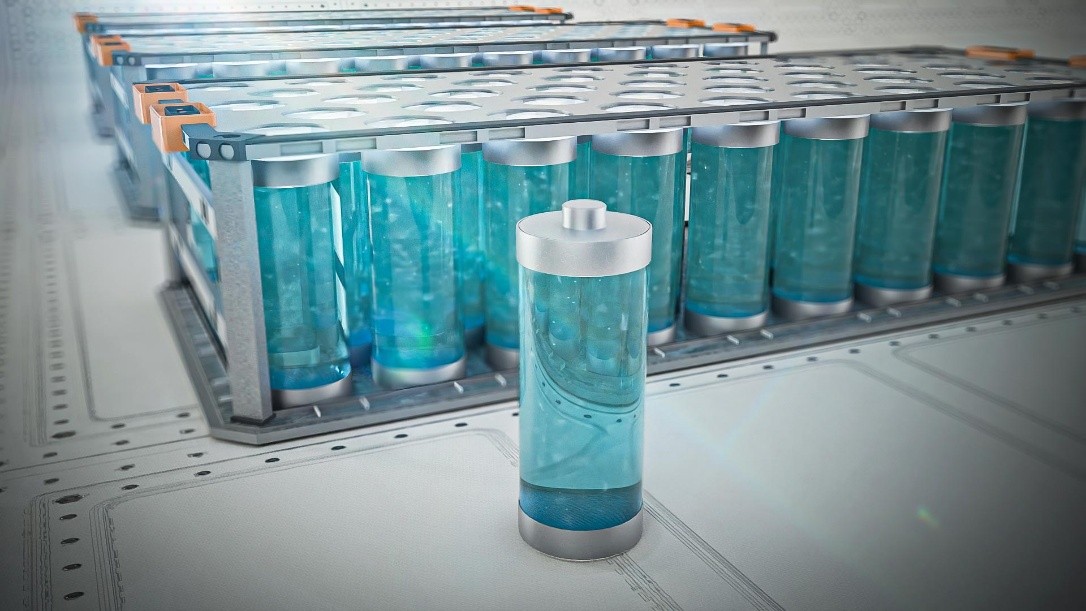
Figure 1. simple salt fix.
KAUST Scientists Crack the Code to Longer-Lasting Aqueous Batteries
A team at King Abdullah University of Science and Technology (KAUST) in Saudi Arabia has pinpointed a molecular flaw that has hindered the development of safer, more affordable aqueous rechargeable batteries. Their findings, published in Science Advances, reveal how water within these batteries contributes to performance degradation and premature failure.
The solution? Adding low-cost sulfate salts like zinc sulfate, which stabilized the internal chemistry and improved battery durability by more than 10x. Figure 1 shows simple salt fix.
The Anode Challenge: Battling Unwanted Reactions
The anode, responsible for energy generation and storage, is especially vulnerable to side reactions—known as parasitic reactions—that eat away at performance over time. These harmful processes are largely driven by water molecules behaving unpredictably.
Water Was the Culprit All Along
The study identified “free water” as a major instigator. These are water molecules that aren’t tightly bound and are more reactive, leading to energy-wasting chemical reactions that degrade the anode.
The introduction of sulfate salts like zinc sulfate acts like a “water glue,” reducing the freedom of these molecules and stabilizing the internal environment [1]. As a result, the number of parasitic reactions drops significantly.
Universal Solution for Next-Gen Batteries
While the study focused on zinc-based aqueous batteries, early tests show the sulfate effect applies to other metal anodes as well. This opens the door to a universal enhancement strategy across various battery types.
Affordable, Scalable, and Future-Ready
“Sulfate salts are inexpensive, widely available, and chemically stable, which makes our approach both scientifically effective and economically feasible,” explained KAUST Research Scientist Yunpei Zhu, who led the experimental work.
With the global push toward clean energy, aqueous batteries are emerging as a leading candidate for large-scale storage, offering a safer and greener alternative to lithium-ion systems. Their market is expected to surpass $10 billion by 2030—an outlook that now looks even brighter thanks to this salt-based innovation.
References:
- https://www.science.org/doi/10.1126/sciadv.adx8413
Cite this article:
Keerthana S (2025), Salt Additive Solves Hidden Water Problem, Boosts Battery Lifespan by 10x, AnaTechMaz, pp.247
Recent Post
-

Researchers Turn Carbon Waste Into High-Value Construction Material
Researchers have developed a low-lead process to convert carbon....
-
AI Hardware Breakthrough: Scientists Build Largest-Ever Spin Waveguide Network
Researchers from the Universities of Münster and Heidelberg, led by....
-

Tiny Structure Defies a Core Principle of Optics
Scientists have overcome a fundamental limitation in optics by using innovative bilayer metagratings...
-
One New Alloy Could Revolutionize Phones, Laptops, and Data Centers
Researchers at the University of Minnesota have introduced a groundbreaking new alloy....
-
X-ray Scans Uncover Buddhist Prayers Hidden Within Tiny Tibetan Scrolls
A delicate antique Buddhist scroll, once part of a traditional Mongolian...
-
AI Unlocks the Future of Batteries — And It’s Not Lithium
Recent discoveries suggest that the future of energy storage may lie in more affordable, safer, and...
-
Salt Additive Solves Hidden Water Problem, Boosts Battery Lifespan by 10x
ater was quietly undermining battery performance—until...
-

New 3D Printing Innovation Paves the Way for Affordable, High-Strength Titanium
Brooke, who was recently awarded a Research Translation Fellowship...
-

quasicrystals: When Matter Plays by Its Own Rules
For decades, quasicrystals—mysterious solids that seem to straddle the line between crystal and...
-

UK to Produce Nuclear Reactor Graphite from Recycled Materials to Reduce Waste
The University of Manchester has secured funding to lead a...
-
Scientists Capture First-Ever Real-Time Look at Electrolytes in Lithium-Sulfur Batteries
For the first time, researchers at Helmholtz-Zentrum Berlin (HZB) ...
-
Slime-Inspired Electrolyte May Improve Lithium-Ion Battery Safety and Recyclability
In a bid to make lithium-ion batteries safer, cleaner, and easier to...
-

New AI Approach Accelerates Calculations to Shield Fusion Reactors from Plasma Heat
A team of US researchers has introduced a groundbreaking...
-
Reinventing Solar: “Black Metal” Device Boosts Power Output 15-Fold
As the world looks for cleaner and more independent energy solutions, researchers have long studied...
-

Flat Band Discovery in Superconductors May Pave the Way for Next-Gen Computing
Kagome metals—materials with distinctive two-dimensional...