

X-ray Scans Uncover Buddhist Prayers Hidden Within Tiny Tibetan Scrolls
A delicate antique Buddhist scroll, once part of a traditional Mongolian nomadic shrine, has been revealed after decades in museum storage. Rather than unrolling it and risking damage, researchers at Germany’s Helmholtz-Zentrum Berlin (HZB) used 3D X-ray tomography combined with AI to examine its contents. Their findings, including the text hidden inside, are described in a study published in the Journal of Cultural Heritage.
For centuries, Mongolian nomads carried only what they and their pack animals could transport, including a gungervaa—a portable Buddhist shrine holding sacred artwork and spiritual objects. Among these were dharanis, tiny silk-wrapped scrolls containing common prayers, typically no larger than 1.9 by 0.7 by 0.7 inches. This tradition was nearly erased during the Soviet-backed Mongolian Revolution of 1921, which led to the destruction of many such artifacts. However, one shrine survived and, despite its unclear origins, was acquired by Germany’s Ethnological Museum of the National Museums in 1932.
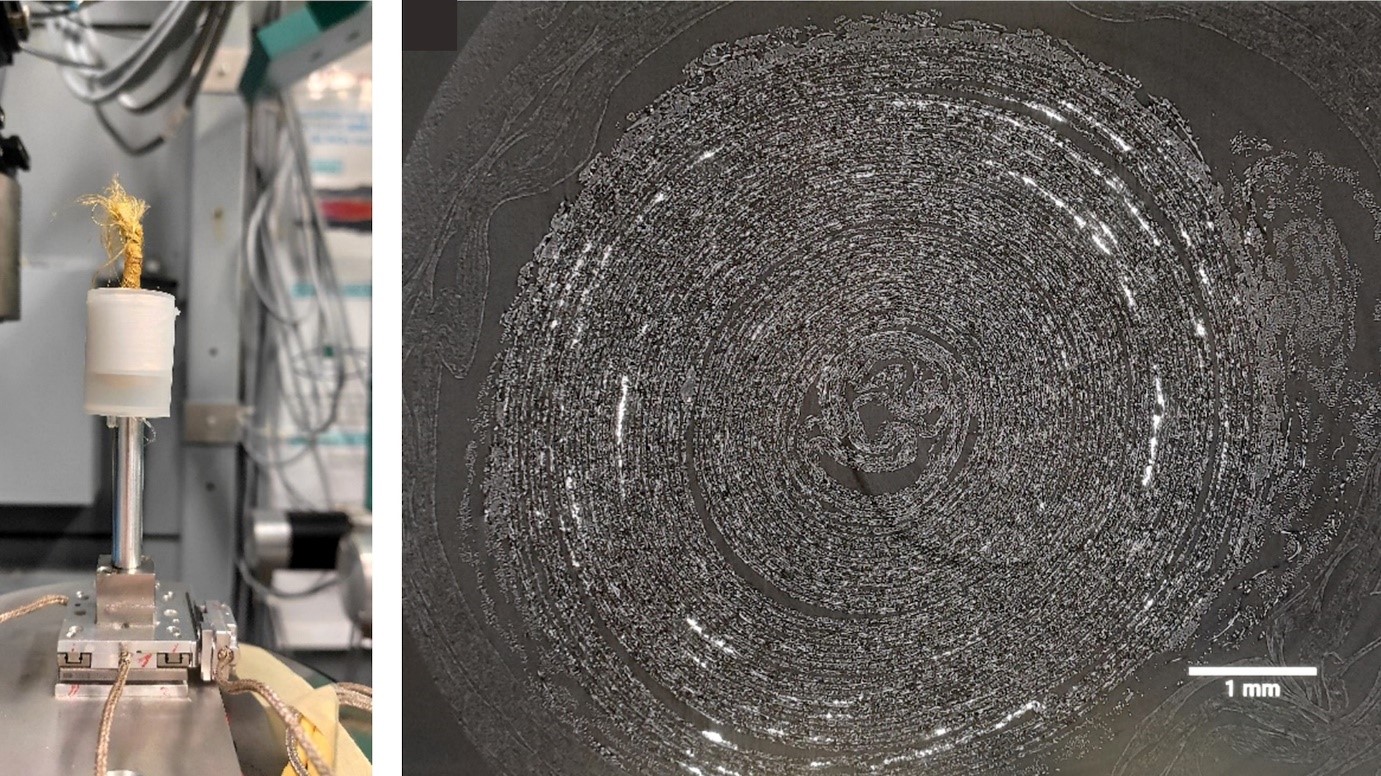
Figure 1. X-rays Uncover Prayers in Tiny Tibetan Scrolls
To the disappointment of conservationists, the shrine is no longer in its original arrangement. It was disassembled for storage, and some pieces were damaged during World War II, while four gilded bronzes and a small painting went missing entirely. Despite these losses, more than 20 items—including fabric flowers, statues, and three small dharanis enclosed in yellow silk bags—remain preserved at the Ethnological Museum. Figure 1 shows X-rays Uncover Prayers in Tiny Tibetan Scrolls.
Sub-Volume Level Scanning Techniques
Until recently, archaeologists had to carefully extract and unroll fragile scrolls to examine them—an approach that posed a high risk of damage. To avoid this, museum researchers instead requested the use of a 3D X-ray topographical scanner from Germany’s Federal Institute for Materials Research and Testing (BAM).
The scanner uses synchrotron tomography, a sophisticated imaging technique that employs hard X-rays to create detailed 3D models of objects at the microscopic level. Though commonly used in engineering and materials science—such as in advanced battery research—it is now being increasingly adopted by preservationists for cultural and archaeological studies.
Scanning the dharanis posed a challenge due to the limited field-of-view of the imaging beamlines. To overcome this, researchers captured the scrolls in multiple “sub-volumes” at various height levels. As noted in the study, each sub-volume consisted of 2,570 projections taken across a 180-degree rotation. These individual scans were then combined to create one comprehensive, high-resolution 3D image.
Contents Revealed Inside the Scrolls
Researchers made another surprising find in one scroll—a section of legible writing where Tibetan characters spell out the Buddhist mantra for universal compassion, “Om mani padme hum” (“praise to the jewel in the lotus”), but written using Sanskrit grammar instead of Tibetan. While X-ray tomography proved invaluable for uncovering such details, the study's authors noted that the technique is still highly labor-intensive and not yet suitable for routine use.
“Still, it presents unique opportunities to virtually unroll or unfold scrolls likely to contain valuable texts,” the researchers noted [1]. The team hopes that as the technology advances, X-ray tomography will play a growing role in collaborative, interdisciplinary research focused on artifacts that are otherwise inaccessible. According to Birgit Kantzenbach, a preservationist at the Ethnological Museum and co-author of the study, this method is essential to conservation efforts. “An object only holds meaning through what people perceive in it—that’s what truly matters,” she stated.
References:
- https://www.popsci.com/technology/tibetan-prayer-scroll-scans/
Cite this article:
Janani R (2025), X-ray Scans Uncover Buddhist Prayers Hidden Within Tiny Tibetan Scrolls, AnaTechMaz, pp. 245
Recent Post
-

Researchers Turn Carbon Waste Into High-Value Construction Material
Researchers have developed a low-lead process to convert carbon....
-

AI Hardware Breakthrough: Scientists Build Largest-Ever Spin Waveguide Network
Researchers from the Universities of Münster and Heidelberg, led by....
-

Tiny Structure Defies a Core Principle of Optics
Scientists have overcome a fundamental limitation in optics by using innovative bilayer metagratings...
-

One New Alloy Could Revolutionize Phones, Laptops, and Data Centers
Researchers at the University of Minnesota have introduced a groundbreaking new alloy....
-
X-ray Scans Uncover Buddhist Prayers Hidden Within Tiny Tibetan Scrolls
A delicate antique Buddhist scroll, once part of a traditional Mongolian...
-

AI Unlocks the Future of Batteries — And It’s Not Lithium
Recent discoveries suggest that the future of energy storage may lie in more affordable, safer, and...
-

Salt Additive Solves Hidden Water Problem, Boosts Battery Lifespan by 10x
ater was quietly undermining battery performance—until...
-

New 3D Printing Innovation Paves the Way for Affordable, High-Strength Titanium
Brooke, who was recently awarded a Research Translation Fellowship...
-

quasicrystals: When Matter Plays by Its Own Rules
For decades, quasicrystals—mysterious solids that seem to straddle the line between crystal and...
-

UK to Produce Nuclear Reactor Graphite from Recycled Materials to Reduce Waste
The University of Manchester has secured funding to lead a...
-

Scientists Capture First-Ever Real-Time Look at Electrolytes in Lithium-Sulfur Batteries
For the first time, researchers at Helmholtz-Zentrum Berlin (HZB) ...
-

Slime-Inspired Electrolyte May Improve Lithium-Ion Battery Safety and Recyclability
In a bid to make lithium-ion batteries safer, cleaner, and easier to...
-

New AI Approach Accelerates Calculations to Shield Fusion Reactors from Plasma Heat
A team of US researchers has introduced a groundbreaking...
-
Reinventing Solar: “Black Metal” Device Boosts Power Output 15-Fold
As the world looks for cleaner and more independent energy solutions, researchers have long studied...
-

Flat Band Discovery in Superconductors May Pave the Way for Next-Gen Computing
Kagome metals—materials with distinctive two-dimensional...