

Tiny Structure Defies a Core Principle of Optics
Scientists have overcome a fundamental limitation in optics by using innovative bilayer metagratings to separate wavelength and angle—two key properties that define light’s behavior. Precise control over both is crucial for many advanced optical technologies.
In periodic systems with repeating structures, a natural dispersion effect causes wavelength and angle to be linked—a phenomenon known as angle-wavelength locking. This means that changing the angle of incoming light usually alters the device’s filtering wavelength. The new approach breaks this constraint, opening the door to more flexible and powerful optical devices.
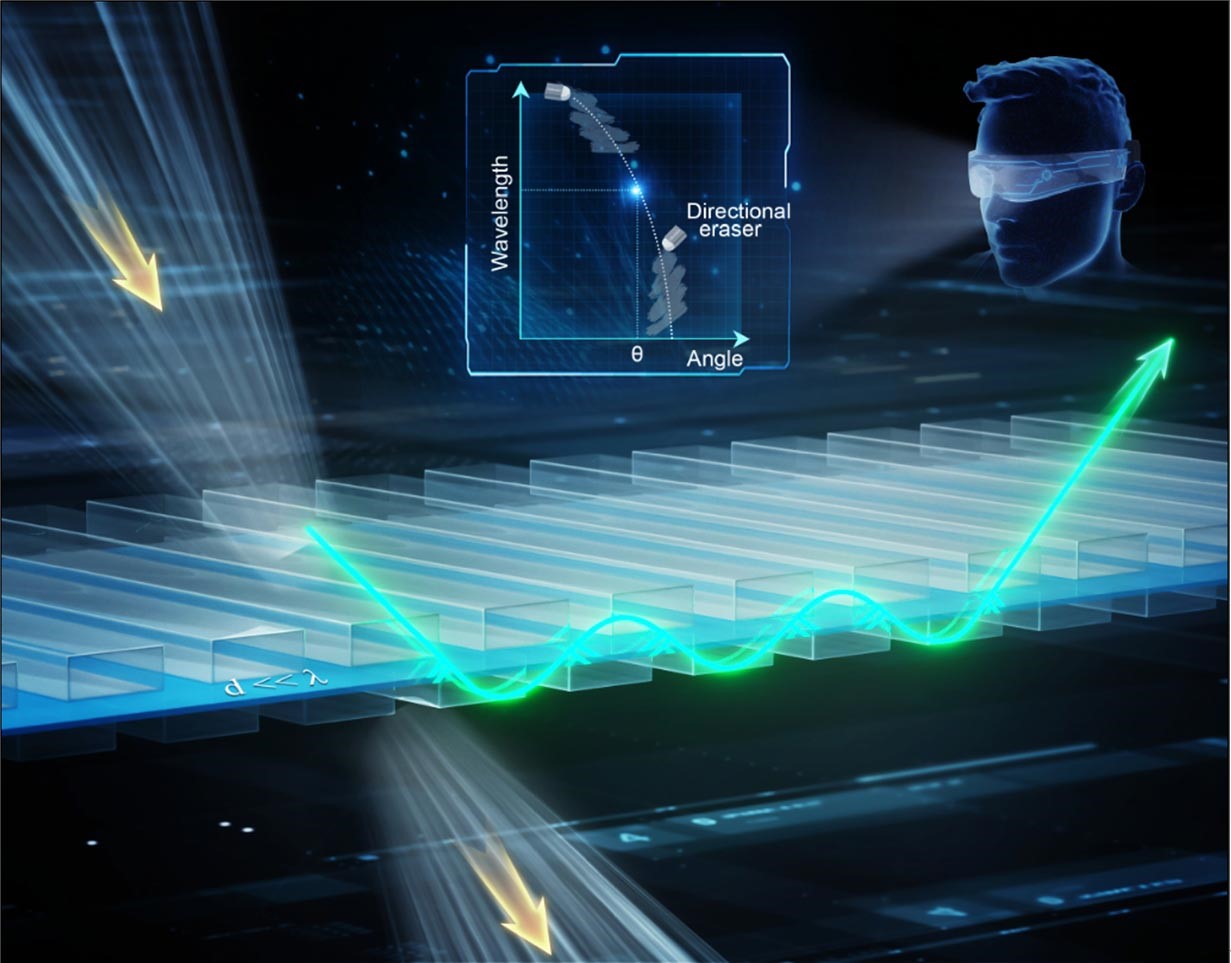
Figure 1. Resonant Reflection Control Using Directional Eraser in Misaligned Metagratings
This tight link between angle and wavelength has long been considered unavoidable, posing serious challenges for technologies that need to adjust each property independently. It creates technical issues such as rainbow-like artifacts in augmented reality (AR) displays, color blurring in wide-field imaging, reduced spectral accuracy in photodetectors due to angular interference, and design limitations for efficient, directionally tuned light sources. Figure 1 shows Resonant Reflection Control Using Directional Eraser in Misaligned Metagratings.
A Breakthrough in Controlling Light Direction
In a recent paper published in eLight, a research team led by Professors Jian-Wen Dong (Sun Yat-sen University) and Lei Zhou (Fudan University) has uncovered a key to breaking the angle-wavelength coupling in optics: the directionality of optical mode radiation. Through detailed theoretical analysis, they created a complete phase diagram for engineering resonant spectra based on radiation directionality, showing that spatial inversion symmetry and highly directional radiation are essential for overcoming angle-wavelength locking.
To achieve this, the team introduced lateral displacement in bilayer metagratings—a design that maintains spatial inversion symmetry but breaks vertical mirror symmetry. This structure enables precise angular control of radiation directionality. Their models predict that resonant reflection only occurs at normal incidence near the central wavelength. They also proposed versatile designs capable of achieving angle and wavelength selectivity independently.
“Radiation directionality acts like a ‘magical eraser,’ letting us suppress light’s spectral features along the dispersion curve,” the researchers explained. “This makes it possible to control angle and wavelength separately, bypassing the constraints of intrinsic dispersion.”
Tackling Fabrication Hurdles
The researchers acknowledged that fabricating bilayer metagratings posed significant challenges, particularly in achieving ultra-flat spacer layers and precise lateral alignment between layers—requirements that demand advanced nanofabrication techniques. To overcome this, they developed a new fabrication method that includes multiple etching steps, indirect thickness measurements, and iterative deposition. A high-precision alignment process enabled the successful creation of high-quality bilayer metagratings operating in the near-infrared range. This technique ensures excellent flatness, tunable thickness, and ~10 nm alignment precision, making it adaptable to different spacer materials and establishing a robust platform for exploring bilayer photonic systems.
With this platform, the team demonstrated that high reflectance occurred only at a specific angle and wavelength. To confirm that this unique behavior resulted from radiation directionality, they conducted angle-resolved optical microscopy and used temporal coupled-mode theory alongside cross-polarization techniques to measure the unidirectional radiation of the resonant modes.
Additionally, the researchers developed millimeter-scale, high-precision bilayer metagratings and achieved high-contrast imaging with simultaneous spatial and spectral selectivity at 0° and 1342 nm. This breakthrough paves the way for compact optical imaging systems and optical computing [1]. The team believes their work not only solves a long-standing optical challenge but also lays the groundwork for future technologies, including AR/VR displays, spectral imaging, thermal emission control, and next-generation semiconductor processes.
References:
- https://scitechdaily.com/one-tiny-structure-just-broke-a-fundamental-rule-of-optics/
Cite this article:
Janani R (2025), Tiny Structure Defies a Core Principle of Optics, AnaTechMaz, pp. 243
Recent Post
-

Researchers Turn Carbon Waste Into High-Value Construction Material
Researchers have developed a low-lead process to convert carbon....
-
AI Hardware Breakthrough: Scientists Build Largest-Ever Spin Waveguide Network
Researchers from the Universities of Münster and Heidelberg, led by....
-
Tiny Structure Defies a Core Principle of Optics
Scientists have overcome a fundamental limitation in optics by using innovative bilayer metagratings...
-

One New Alloy Could Revolutionize Phones, Laptops, and Data Centers
Researchers at the University of Minnesota have introduced a groundbreaking new alloy....
-
X-ray Scans Uncover Buddhist Prayers Hidden Within Tiny Tibetan Scrolls
A delicate antique Buddhist scroll, once part of a traditional Mongolian...
-

AI Unlocks the Future of Batteries — And It’s Not Lithium
Recent discoveries suggest that the future of energy storage may lie in more affordable, safer, and...
-

Salt Additive Solves Hidden Water Problem, Boosts Battery Lifespan by 10x
ater was quietly undermining battery performance—until...
-

New 3D Printing Innovation Paves the Way for Affordable, High-Strength Titanium
Brooke, who was recently awarded a Research Translation Fellowship...
-

quasicrystals: When Matter Plays by Its Own Rules
For decades, quasicrystals—mysterious solids that seem to straddle the line between crystal and...
-

UK to Produce Nuclear Reactor Graphite from Recycled Materials to Reduce Waste
The University of Manchester has secured funding to lead a...
-

Scientists Capture First-Ever Real-Time Look at Electrolytes in Lithium-Sulfur Batteries
For the first time, researchers at Helmholtz-Zentrum Berlin (HZB) ...
-

Slime-Inspired Electrolyte May Improve Lithium-Ion Battery Safety and Recyclability
In a bid to make lithium-ion batteries safer, cleaner, and easier to...
-

New AI Approach Accelerates Calculations to Shield Fusion Reactors from Plasma Heat
A team of US researchers has introduced a groundbreaking...
-
Reinventing Solar: “Black Metal” Device Boosts Power Output 15-Fold
As the world looks for cleaner and more independent energy solutions, researchers have long studied...
-

Flat Band Discovery in Superconductors May Pave the Way for Next-Gen Computing
Kagome metals—materials with distinctive two-dimensional...