

One New Alloy Could Revolutionize Phones, Laptops, and Data Centers
Researchers at the University of Minnesota have introduced a groundbreaking new alloy, Ni₄W, with the potential to significantly transform how electronic devices store and process data.
This alloy can switch magnetic states without relying on external magnets—a breakthrough that could cut energy use across devices from smartphones to data centers. Made from abundant elements and compatible with conventional manufacturing methods, Ni₄W paves the way for faster, more affordable, and energy-efficient electronics.
Next-Generation Computer Memory Promises Speed and Intelligence
Researchers at the University of Minnesota Twin Cities have discovered promising new ways to enhance computer memory, aiming to make it both faster and more energy-efficient.
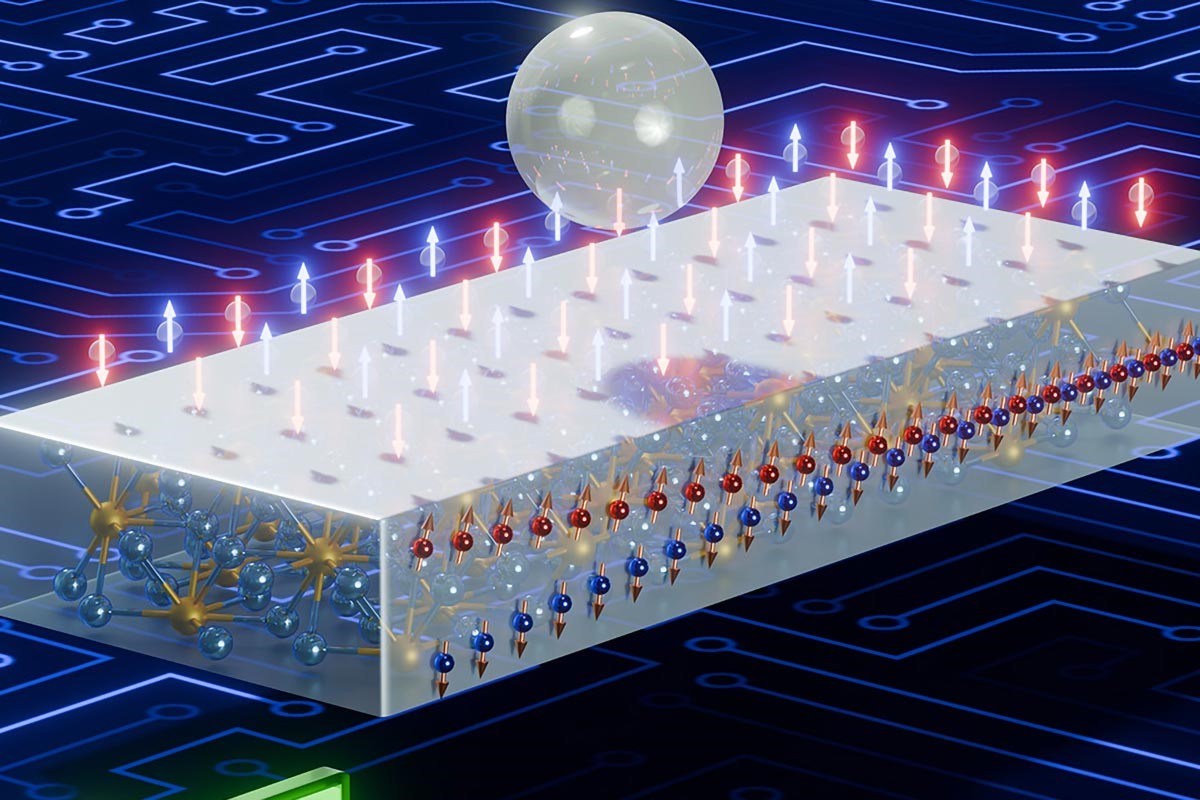
Figure 1. Low-Symmetry Material Generates Strong Spin-Orbit Torque for Next-Gen Memory and Logic
Published in the journal Advanced Materials, their work has also led to a secured patent for the technology. As digital devices continue to evolve, the demand for improved memory systems increases, prompting scientists to investigate alternative materials that could outperform current technologies while consuming far less power. Figure 1. Low-Symmetry Material Generates Strong Spin-Orbit Torque for Next-Gen Memory and Logic.
Ni₄W Alloy Breakthrough Paves the Way for Advanced Electronics
In this study, researchers developed a more efficient way to control magnetization in miniature electronic components using a material called Ni₄W, an alloy of nickel and tungsten. This low-symmetry alloy was shown to produce strong spin-orbit torque (SOT), a crucial mechanism for manipulating magnetism in advanced memory and logic devices.
“Ni₄W lowers the power required to write data, which could lead to significant energy savings in electronic systems,” said Jian-Ping Wang, senior author of the paper and Distinguished McKnight Professor and Robert F. Hartmann Chair in the Department of Electrical and Computer Engineering at the University of Minnesota Twin Cities.
This discovery could reduce electricity consumption across a wide range of devices, from smartphones to data centers, paving the way for more energy-efficient and environmentally sustainable technology.
A New Era of Field-Free Switching
“Unlike traditional materials, Ni₄W can produce spin currents in multiple directions, allowing for ‘field-free’ switching of magnetic states without external magnetic fields [1]. We observed high spin-orbit torque efficiency in Ni₄W alone and when layered with tungsten, highlighting its strong potential for low-power, high-speed spintronic devices,” said Yifei Yang, a fifth-year Ph.D. student in Wang’s group and co-first author of the paper.
Made from common metals and compatible with standard industrial manufacturing, Ni₄W is a low-cost material that appeals to industry partners and could soon be integrated into everyday technologies like smartwatches, smartphones, and more.
Validated Through Theory and Experimentation
“We’re thrilled that our calculations validated both the material choice and the observed spin-orbit torque effects,” said Seungjun Lee, a postdoctoral fellow in ECE and co-first author of the paper.
The team’s next goal is to scale the material down further and integrate it into even smaller devices than in their earlier research.
References:
- https://scitechdaily.com/phones-data-centers-laptops-one-new-alloy-could-supercharge-them-all/
Cite this article:
Janani R (2025), One New Alloy Could Revolutionize Phones, Laptops, and Data Centers, AnaTechMaz, pp. 244
Recent Post
-

Researchers Turn Carbon Waste Into High-Value Construction Material
Researchers have developed a low-lead process to convert carbon....
-

AI Hardware Breakthrough: Scientists Build Largest-Ever Spin Waveguide Network
Researchers from the Universities of Münster and Heidelberg, led by....
-

Tiny Structure Defies a Core Principle of Optics
Scientists have overcome a fundamental limitation in optics by using innovative bilayer metagratings...
-
One New Alloy Could Revolutionize Phones, Laptops, and Data Centers
Researchers at the University of Minnesota have introduced a groundbreaking new alloy....
-
X-ray Scans Uncover Buddhist Prayers Hidden Within Tiny Tibetan Scrolls
A delicate antique Buddhist scroll, once part of a traditional Mongolian...
-

AI Unlocks the Future of Batteries — And It’s Not Lithium
Recent discoveries suggest that the future of energy storage may lie in more affordable, safer, and...
-
Salt Additive Solves Hidden Water Problem, Boosts Battery Lifespan by 10x
ater was quietly undermining battery performance—until...
-

New 3D Printing Innovation Paves the Way for Affordable, High-Strength Titanium
Brooke, who was recently awarded a Research Translation Fellowship...
-

quasicrystals: When Matter Plays by Its Own Rules
For decades, quasicrystals—mysterious solids that seem to straddle the line between crystal and...
-

UK to Produce Nuclear Reactor Graphite from Recycled Materials to Reduce Waste
The University of Manchester has secured funding to lead a...
-
Scientists Capture First-Ever Real-Time Look at Electrolytes in Lithium-Sulfur Batteries
For the first time, researchers at Helmholtz-Zentrum Berlin (HZB) ...
-
Slime-Inspired Electrolyte May Improve Lithium-Ion Battery Safety and Recyclability
In a bid to make lithium-ion batteries safer, cleaner, and easier to...
-

New AI Approach Accelerates Calculations to Shield Fusion Reactors from Plasma Heat
A team of US researchers has introduced a groundbreaking...
-
Reinventing Solar: “Black Metal” Device Boosts Power Output 15-Fold
As the world looks for cleaner and more independent energy solutions, researchers have long studied...
-

Flat Band Discovery in Superconductors May Pave the Way for Next-Gen Computing
Kagome metals—materials with distinctive two-dimensional...