

AI Unlocks the Future of Batteries — and It’s Not Lithium
Recent discoveries suggest that the future of energy storage may lie in more affordable, safer, and sustainable materials—thanks to artificial intelligence. By shifting focus away from lithium and toward elements like magnesium and zinc, researchers are opening the door to powerful new battery technologies.
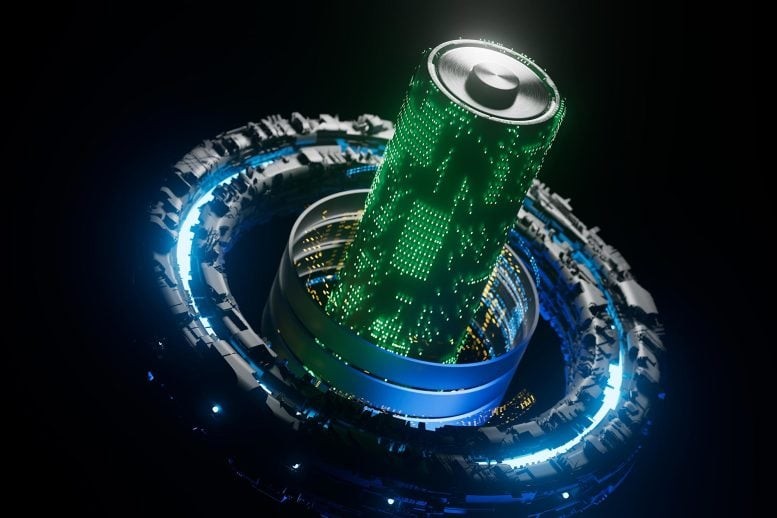
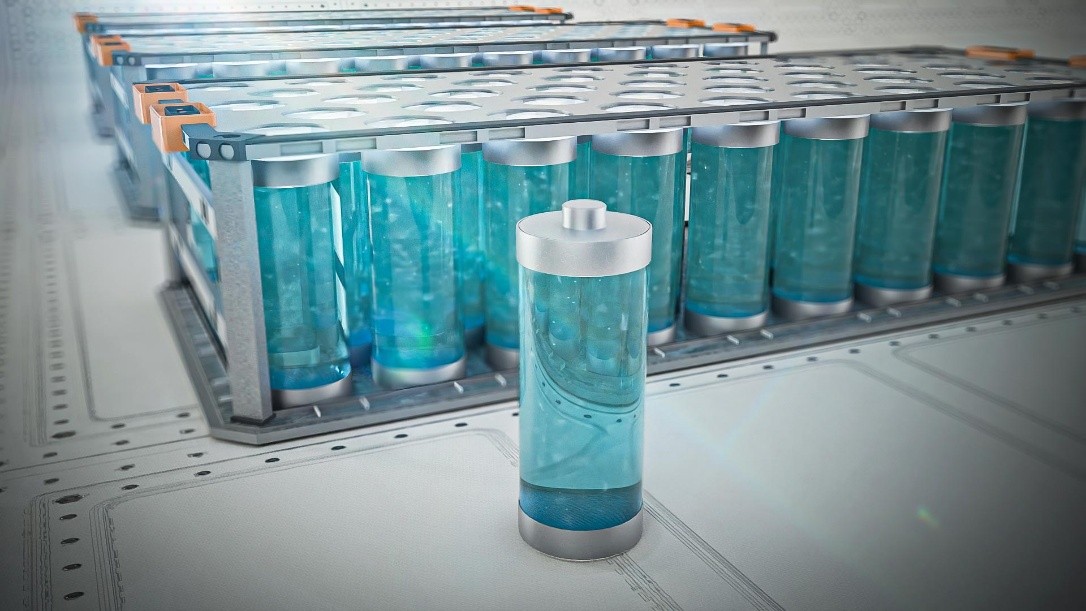
Figure 1. Multivalent-Ion Batteries.
Rethinking Lithium-Ion with AI
At the New Jersey Institute of Technology (NJIT), researchers are leveraging the power of AI to address one of the most pressing challenges in battery technology: finding low-cost, eco-friendly alternatives to lithium-ion batteries. Figure 1 illustate multivalent-ion batteries.
In a study published in Cell Reports Physical Science, a team led by Professor Dibakar Datta used generative AI to identify promising porous materials for the development of multivalent-ion batteries—next-generation systems that rely on abundant elements such as magnesium, calcium, aluminum, and zinc [1]. Unlike traditional lithium-ion batteries, which face growing concerns over cost, supply constraints, and environmental impact, multivalent-ion batteries offer a more sustainable and scalable energy solution.
Why Multivalent-Ion Batteries Matter
What sets multivalent-ion batteries apart is their use of ions that carry two or more positive charges—unlike the single-charge ions in lithium-based systems. This higher charge density gives them the potential to store significantly more energy.
However, there's a trade-off: these multivalent ions are bulkier and carry stronger charges, making it difficult for them to move efficiently through conventional battery materials. That’s where NJIT’s AI approach comes in.
Generative AI: Accelerating Discovery
“The biggest challenge wasn’t a lack of chemistry options—it was the impossibility of testing millions of material combinations,” said Datta. “We turned to generative AI as a fast, systematic method to search that enormous design space and pinpoint materials with real potential.”
Using AI allowed the team to evaluate thousands of possible candidates in a fraction of the time it would take in a traditional lab, speeding up the path toward viable lithium-free battery alternatives.
A Dual-AI Engine: CDVAE Meets LLM
To power this discovery engine, the NJIT team created a dual-AI system combining two advanced tools: the Crystal Diffusion Variational Autoencoder (CDVAE) and a finely tuned Large Language Model (LLM).
The CDVAE was trained on massive datasets of known crystal structures, enabling it to generate entirely new material designs with unique structural features. Meanwhile, the LLM was used to narrow down candidates with the greatest likelihood of thermodynamic stability—an essential factor for materials that can actually be synthesized and scaled for real-world use.
Five Game-Changing Materials Identified
Through this approach, the team identified five novel porous transition metal oxide structures that could revolutionize multivalent-ion battery technology.“These new materials feature large, open channels perfect for transporting the larger multivalent ions efficiently and safely,” Datta explained. “It’s a critical step forward for making these next-gen batteries a reality.”
The materials were validated through quantum mechanical simulations and stability testing, confirming their potential for experimental synthesis and practical application.
Beyond Batteries: A New Model for Materials Discovery
While the immediate application is in advanced battery design, Datta sees the implications as much broader.“This isn’t just about battery chemistry—it’s a new paradigm for discovering materials quickly and at scale,” he said. “Whether it’s clean energy, electronics, or next-gen manufacturing, AI can help us move beyond trial-and-error toward a more intelligent, data-driven approach.”
With promising results in hand, the team plans to work with experimental labs to synthesize and test the new materials, moving one step closer to a future where energy storage is cleaner, cheaper, and no longer dependent on lithium.
References:
- https://scitechdaily.com/ai-just-found-the-future-of-batteries-and-its-not-lithium/
Cite this article:
Keerthana S (2025), AI Unlocks the Future of Batteries — and It’s Not Lithium, AnaTechMaz, pp.246
Recent Post
-

Researchers Turn Carbon Waste Into High-Value Construction Material
Researchers have developed a low-lead process to convert carbon....
-
AI Hardware Breakthrough: Scientists Build Largest-Ever Spin Waveguide Network
Researchers from the Universities of Münster and Heidelberg, led by....
-

Tiny Structure Defies a Core Principle of Optics
Scientists have overcome a fundamental limitation in optics by using innovative bilayer metagratings...
-
One New Alloy Could Revolutionize Phones, Laptops, and Data Centers
Researchers at the University of Minnesota have introduced a groundbreaking new alloy....
-
X-ray Scans Uncover Buddhist Prayers Hidden Within Tiny Tibetan Scrolls
A delicate antique Buddhist scroll, once part of a traditional Mongolian...
-
AI Unlocks the Future of Batteries — And It’s Not Lithium
Recent discoveries suggest that the future of energy storage may lie in more affordable, safer, and...
-
Salt Additive Solves Hidden Water Problem, Boosts Battery Lifespan by 10x
ater was quietly undermining battery performance—until...
-

New 3D Printing Innovation Paves the Way for Affordable, High-Strength Titanium
Brooke, who was recently awarded a Research Translation Fellowship...
-

quasicrystals: When Matter Plays by Its Own Rules
For decades, quasicrystals—mysterious solids that seem to straddle the line between crystal and...
-
UK to Produce Nuclear Reactor Graphite from Recycled Materials to Reduce Waste
The University of Manchester has secured funding to lead a...
-
Scientists Capture First-Ever Real-Time Look at Electrolytes in Lithium-Sulfur Batteries
For the first time, researchers at Helmholtz-Zentrum Berlin (HZB) ...
-
Slime-Inspired Electrolyte May Improve Lithium-Ion Battery Safety and Recyclability
In a bid to make lithium-ion batteries safer, cleaner, and easier to...
-

New AI Approach Accelerates Calculations to Shield Fusion Reactors from Plasma Heat
A team of US researchers has introduced a groundbreaking...
-
Reinventing Solar: “Black Metal” Device Boosts Power Output 15-Fold
As the world looks for cleaner and more independent energy solutions, researchers have long studied...
-

Flat Band Discovery in Superconductors May Pave the Way for Next-Gen Computing
Kagome metals—materials with distinctive two-dimensional...