

Flat Band Discovery in Superconductors May Pave the Way for Next-Gen Computing
Kagome metals—materials with distinctive two-dimensional lattices made of corner-sharing triangles—have long fascinated physicists for their unusual electronic properties. Theoretical models have suggested that these systems could host compact molecular orbitals, or standing-wave patterns of electrons, capable of driving unconventional superconductivity and novel magnetic states through electron correlation effects. In most kagome compounds, however, the so-called flat electronic bands are located too far from active energy levels to significantly influence behavior.
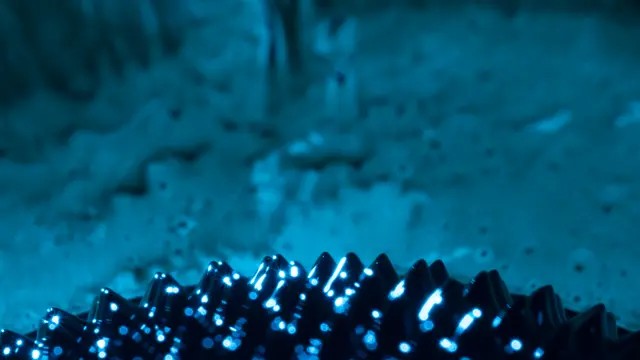
Figure 1. Superconductors.
That picture has now changed. In the chromium-based kagome metal CsCr₃Sb₅, researchers have discovered that the flat bands are directly involved in determining the material’s superconducting and magnetic properties. This makes CsCr₃Sb₅ a rare and powerful platform for probing exotic quantum phenomena. Figure 1shows Superconductors.
The study, published in Nature Communications and led by Rice University physicists Pengcheng Dai, Ming Yi, and Qimiao Si, together with Di-Jing Huang from Taiwan’s National Synchrotron Radiation Research Center, demonstrates that CsCr₃Sb₅ exhibits superconductivity under pressure, with active flat bands shaping its quantum behavior. The findings not only confirm a striking theoretical prediction but also point to a practical route for engineering unconventional superconductivity through chemical and structural tuning.
Experimental proof of kagome lattice control
The work provides some of the clearest evidence yet that the geometry of kagome lattices can precisely dictate electron behavior in solids. Achieving this required exceptionally large, ultra-pure crystals of CsCr₃Sb₅—nearly 100 times bigger than those in earlier studies—produced through an advanced synthesis technique.
Using synchrotron-based tools, the team combined angle-resolved photoemission spectroscopy (ARPES) to map electron standing-wave patterns with resonant inelastic X-ray scattering (RIXS) to detect magnetic excitations linked to those states [1]. Together, these experiments revealed distinct signatures of compact molecular orbitals tied to the flat bands.
Theoretical modeling reinforced the findings, showing how strong electron correlations drive the observed superconducting and magnetic effects. By confirming that flat bands in CsCr₃Sb₅ are active participants rather than passive features, the study opens a new frontier for designing next-generation quantum materials that harness exotic superconductivity and magnetism.
References:
- https://interestingengineering.com/science/flat-bands-in-superconductors-advance-computing
Cite this article:
Keerthana S (2025), Flat Band Discovery in Superconductors May Pave the Way for Next-Gen Computing, AnaTechMaz, pp.255
Recent Post
-

Researchers Turn Carbon Waste Into High-Value Construction Material
Researchers have developed a low-lead process to convert carbon....
-

AI Hardware Breakthrough: Scientists Build Largest-Ever Spin Waveguide Network
Researchers from the Universities of Münster and Heidelberg, led by....
-

Tiny Structure Defies a Core Principle of Optics
Scientists have overcome a fundamental limitation in optics by using innovative bilayer metagratings...
-
One New Alloy Could Revolutionize Phones, Laptops, and Data Centers
Researchers at the University of Minnesota have introduced a groundbreaking new alloy....
-
X-ray Scans Uncover Buddhist Prayers Hidden Within Tiny Tibetan Scrolls
A delicate antique Buddhist scroll, once part of a traditional Mongolian...
-

AI Unlocks the Future of Batteries — And It’s Not Lithium
Recent discoveries suggest that the future of energy storage may lie in more affordable, safer, and...
-
Salt Additive Solves Hidden Water Problem, Boosts Battery Lifespan by 10x
ater was quietly undermining battery performance—until...
-

New 3D Printing Innovation Paves the Way for Affordable, High-Strength Titanium
Brooke, who was recently awarded a Research Translation Fellowship...
-

quasicrystals: When Matter Plays by Its Own Rules
For decades, quasicrystals—mysterious solids that seem to straddle the line between crystal and...
-

UK to Produce Nuclear Reactor Graphite from Recycled Materials to Reduce Waste
The University of Manchester has secured funding to lead a...
-

Scientists Capture First-Ever Real-Time Look at Electrolytes in Lithium-Sulfur Batteries
For the first time, researchers at Helmholtz-Zentrum Berlin (HZB) ...
-
Slime-Inspired Electrolyte May Improve Lithium-Ion Battery Safety and Recyclability
In a bid to make lithium-ion batteries safer, cleaner, and easier to...
-

New AI Approach Accelerates Calculations to Shield Fusion Reactors from Plasma Heat
A team of US researchers has introduced a groundbreaking...
-
Reinventing Solar: “Black Metal” Device Boosts Power Output 15-Fold
As the world looks for cleaner and more independent energy solutions, researchers have long studied...
-
Flat Band Discovery in Superconductors May Pave the Way for Next-Gen Computing
Kagome metals—materials with distinctive two-dimensional...