

Slime-Inspired Electrolyte May Improve Lithium-Ion Battery Safety and Recyclability
In a bid to make lithium-ion batteries safer, cleaner, and easier to recycle, scientists at the Institute of Science Tokyo have developed a novel quasi-solid electrolyte.
The material, dubbed 3D-SLISE (3D-Slime Interface Quasi-Solid Electrolyte), could transform how these batteries are manufactured and disposed of, tackling some of the industry’s most persistent challenges.
Lithium-ion batteries power everything from smartphones to electric vehicles, but their reliance on flammable organic solvents, energy-intensive manufacturing, and complex recycling processes has long raised safety, cost, and environmental concerns.
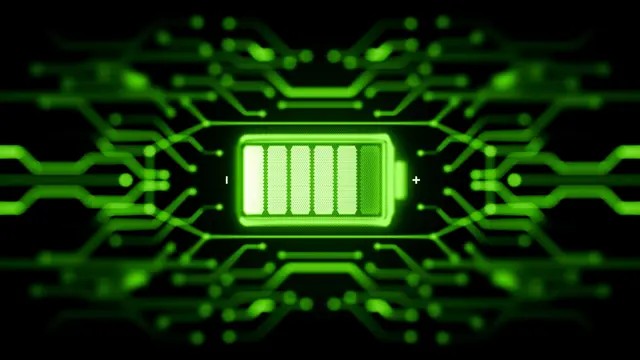
Figure 1. Lithium-Ion Battery.
Fast charging, long lifespan
The new 3D-SLISE technology removes the need for dry rooms, glove boxes, and high-temperature treatment, offering a safer, more energy-efficient production pathway.
The research was led by Specially Appointed Professor Yosuke Shiratori and Associate Professor Shintaro Yasui from the Zero-Carbon Energy Research Institute. Figure 1 shows Lithium-Ion Battery.
Using a borate–water matrix combined with amorphous lithium tetraborate, lithium salt, and carboxymethyl cellulose, the team created a slime-like interface that allows lithium ions to move in all directions.
This three-dimensional ion conduction underpins the electrolyte’s strong performance and versatility. The researchers produced two versions of the slurry: Electrodes and Type S for the quasi-solid e electrolyte layer. Type E slurry was mixed with lithium cobalt oxide for the cathode and lithium titanate for the anode, while Type S was sandwiched between the electrodes.
The resulting 2.35-volt lithium-ion batteries could charge or discharge in just 20 minutes and maintained performance over 400 cycles at room temperature [1]. The electrolyte achieved an ionic conductivity of 2.5 milli-siemens per centimeter and a low activation energy of 0.25 electron volts, enabling efficient operation under ambient conditions.
Crucially, the manufacturing process requires no expensive environmental controls. Slurries are dried naturally at room temperature, making it highly scalable for industry. This approach not only reduces production costs but also shrinks the carbon footprint of battery manufacturing.
Recycling made remarkably simple
3D-SLISE’s water-based composition offers a second, equally important advantage—direct recycling. Because it contains no polyvinylidene di-fluoride binders or toxic solvents, active materials can be recovered by soaking the electrodes in water.
Valuable elements like cobalt can be reclaimed without harsh chemical treatments or high-energy processes, addressing both recycling inefficiency and material scarcity.
“Using this technology, it is possible to directly reclaim valuable elements like cobalt, contributing tonable and reliable supply of critical battery materials,” says Yasui.
This simplicity could help alleviate growing concerns over end-of-life battery waste, particularly as global demand for lithium-ion batteries continues to surge. By making recycling more accessible, the technology also supports a circular battery economy, where materials are reused rather than discarded.
Looking ahead, the researchers believe 3D-SLISE could be applied in portable electronics, stationary energy storage, and potentially even electric vehicles. Its combination of safety, recyclability, and low-impact processing offers a path toward cleaner energy storage without sacrificing performance.
References:
- https://interestingengineering.com/energy/tokyo-3d-slice-safer-recyclable-lithium-ion-batteries
Cite this article:
Keerthana S (2025), Slime-Inspired Electrolyte May Improve Lithium-Ion Battery Safety and Recyclability, AnaTechMaz, pp.252
Recent Post
-

Researchers Turn Carbon Waste Into High-Value Construction Material
Researchers have developed a low-lead process to convert carbon....
-
AI Hardware Breakthrough: Scientists Build Largest-Ever Spin Waveguide Network
Researchers from the Universities of Münster and Heidelberg, led by....
-
Tiny Structure Defies a Core Principle of Optics
Scientists have overcome a fundamental limitation in optics by using innovative bilayer metagratings...
-
One New Alloy Could Revolutionize Phones, Laptops, and Data Centers
Researchers at the University of Minnesota have introduced a groundbreaking new alloy....
-
X-ray Scans Uncover Buddhist Prayers Hidden Within Tiny Tibetan Scrolls
A delicate antique Buddhist scroll, once part of a traditional Mongolian...
-
AI Unlocks the Future of Batteries — And It’s Not Lithium
Recent discoveries suggest that the future of energy storage may lie in more affordable, safer, and...
-
Salt Additive Solves Hidden Water Problem, Boosts Battery Lifespan by 10x
ater was quietly undermining battery performance—until...
-
New 3D Printing Innovation Paves the Way for Affordable, High-Strength Titanium
Brooke, who was recently awarded a Research Translation Fellowship...
-

quasicrystals: When Matter Plays by Its Own Rules
For decades, quasicrystals—mysterious solids that seem to straddle the line between crystal and...
-

UK to Produce Nuclear Reactor Graphite from Recycled Materials to Reduce Waste
The University of Manchester has secured funding to lead a...
-
Scientists Capture First-Ever Real-Time Look at Electrolytes in Lithium-Sulfur Batteries
For the first time, researchers at Helmholtz-Zentrum Berlin (HZB) ...
-
Slime-Inspired Electrolyte May Improve Lithium-Ion Battery Safety and Recyclability
In a bid to make lithium-ion batteries safer, cleaner, and easier to...
-

New AI Approach Accelerates Calculations to Shield Fusion Reactors from Plasma Heat
A team of US researchers has introduced a groundbreaking...
-
Reinventing Solar: “Black Metal” Device Boosts Power Output 15-Fold
As the world looks for cleaner and more independent energy solutions, researchers have long studied...
-

Flat Band Discovery in Superconductors May Pave the Way for Next-Gen Computing
Kagome metals—materials with distinctive two-dimensional...