

Scientists Warn NASA May Be Missing Potential Evidence of Alien Life
Astrobiologists warn that the search for alien life may be constrained by human assumptions and the limitations of current detection tools. Researchers suggest that signs of extraterrestrial organisms could already exist on Mars or distant exoplanets, but scientists may fail to recognize them because existing instruments and search strategies are built around familiar forms of life. A new study published in Nature Astronomy argues that these potential “false negatives” could significantly influence how future space missions are planned and how evidence of life beyond Earth is identified.
For decades, astrobiology has concentrated on avoiding “false positives,” situations where nonliving chemical processes imitate signs of biology. One well-known example was the 1996 claim that a Martian meteorite contained fossilized microbes, a discovery that sparked years of scientific debate. Researchers now argue that the opposite problem may be equally critical: extraterrestrial life could exist, yet remain undetected because scientists are searching for the wrong biosignatures or exploring the wrong environments.
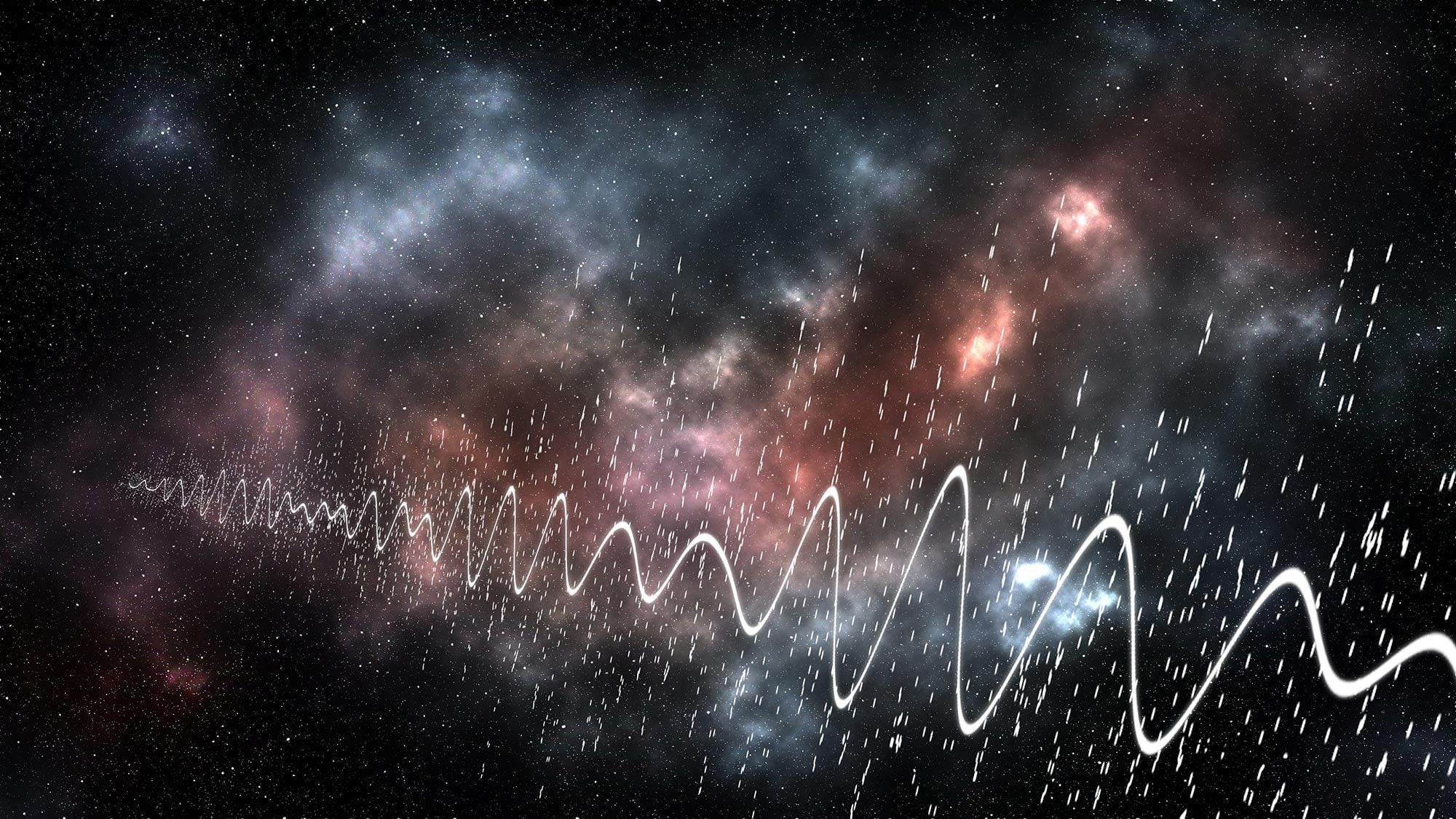
Figure 1. Scientists Warn Alien Life May Already Exist Beyond Earth — But We Could Be Missing the Evidence
Lead author Inge Loes ten Kate, a professor at Utrecht University and University of Amsterdam, says scientists need to pay greater attention to these “false negatives,” which reveal weaknesses in humanity’s ability to recognize life beyond Earth. Figure 1 shows Scientists Warn Alien Life May Already Exist Beyond Earth — But We Could Be Missing the Evidence.
Scientists Question Current Alien Life Detection Methods
Scientists say false negatives in the search for extraterrestrial life can arise from several factors, including poorly preserved biological evidence, faint or concealed signals, and the technical limitations of current instruments. Researchers led by Inge Loes ten Kate argue that future studies should focus more directly on these challenges through laboratory experiments, computer simulations, and field investigations.
Ten Kate explained that while space missions are built to search for signs of life, they rarely account for the possibility of overlooking important evidence. She emphasized that future missions should be guided by clearer scientific questions and testable hypotheses to better define what observations and measurements are needed.
The team also highlighted artificial intelligence as a promising tool for future discoveries. AI-driven pattern recognition systems could identify subtle signals and hidden relationships that human researchers might miss, potentially revealing new clues when multiple observations are analyzed together.
Scientists Warn Search for Alien Life Could Be Missing Critical Clues
Scientists warn that failing to detect existing extraterrestrial life could result in major scientific and political missteps, including abandoning missions, instruments, or environments that may actually harbor living organisms.
Inge Loes ten Kate compared the challenge to searching only at the surface of a rock while missing life hidden underneath it. She emphasized that researchers must more carefully evaluate whether planetary environments can support life and whether subtle patterns on planets or moons could point to concealed biological activity.
Researchers caution that governments and private companies could rush into mining or resource extraction on other worlds before confirming whether microbial life exists there. If hidden extraterrestrial organisms are present, industrial activity could unintentionally destroy them before scientists ever have the chance to detect or study them.
Researchers Highlight Causes Behind False-Negative Alien Life Results
Some false negatives may happen because biological traces are too faint or subtle to detect, even if life is widespread across a planet. In other cases, atmospheric chemistry can conceal possible biosignatures by masking or destroying gases associated with living organisms, making them difficult to identify from afar.
Researchers say these challenges are particularly difficult because scientists often realize the missed signals only after the observations have already been made.
Scientists Warn Search for Alien Life May Be Missing the Obvious
Inge Loes ten Kate says one of the biggest obstacles in the search for extraterrestrial life is that scientists tend to look for life forms and biological signatures that resemble those already known on Earth. She explained that researchers must better understand what kinds of life could exist in specific environments, the conditions required to support them, and how their traces might appear — while recognizing that important clues could still be overlooked.
She highlighted unusual iron-rich minerals discovered on Mars that display oxidation patterns different from nearby rocks [1]. On Earth, similar oxidation is often linked to biological activity, but scientists still cannot determine whether the Martian minerals were created by living organisms or by nonliving chemical reactions.
Ten Kate emphasized that the discovery does not necessarily represent a false negative, but rather a gap in current scientific understanding. She said further research into Martian geochemistry and chemical processes could help scientists better identify and avoid false negatives during future missions.
Reference:
- https://scitechdaily.com/researchers-say-nasa-could-be-overlooking-signs-of-alien-life/
Cite this article:
Janani R (2026), Scientists Warn NASA May Be Missing Potential Evidence of Alien Life, AnaTechMaz, pp.880.
Recent Post
-
Ultra-Faint Dwarf Galaxies May Reveal the Universe’s Earliest Secrets
Ultra-faint dwarf galaxies orbiting the Milky Way may provide....
-
The Coldest Objects in the Galaxy Could Be Alien Megastructures Disguised as Stars
The James Webb Space Telescope has uncovered a dynamic daily ....
-
The Galaxy’s Coldest “Stars” May Actually Be Alien Megastructures
Astronomers are exploring how to detect potential Dyson swarms by searching for unusually cold....
-
NASA’s Psyche Spacecraft Uses Mars for a Powerful Gravity Assist
NASA’s Psyche successfully completed a close flyby of Mars on May 15, using the planet’s gravity as a...
-
Scientists Discover Evidence That Asteroids May Have Sparked Life on Earth
Researchers from the Korea Institute of Geoscience and Mineral....
-
Scientists Successfully Test a High-Power Thruster Designed for Crewed Missions to Mars
NASA’s latest electric propulsion system has broken a U.S.....
-
The Universe’s Most Energetic Particles May Be Stranger Than Scientists Expected
Researchers have found that ultraheavy atomic nuclei...
-
NASA Captures Unusual Solar Radio Burst That Refused to Fade
NASA scientists were stunned after the Sun emitted a strange radio signal that continued broadcasting...
-
Scientists Scan Famous Exoplanet K2-18b for Possible Signs of Alien Life
A major SETI Institute investigation found no evidence of...
Scientists Warn NASA May Be Missing Potential Evidence of Alien Life
Astrobiologists warn that the search for alien life may be constrained..