

NASA’s Psyche Spacecraft Uses Mars for a Powerful Gravity Assist
NASA’s Psyche successfully completed a close flyby of Mars on May 15, using the planet’s gravity as a slingshot to accelerate and redirect its trajectory toward the metal-rich asteroid 16 Psyche.
The spacecraft passed approximately 2,864 miles (4,609 kilometers) above the Martian surface during the maneuver, gaining speed without using onboard fuel. The gravity assist is helping guide the mission toward its final destination in the main asteroid belt between Mars and Jupiter.
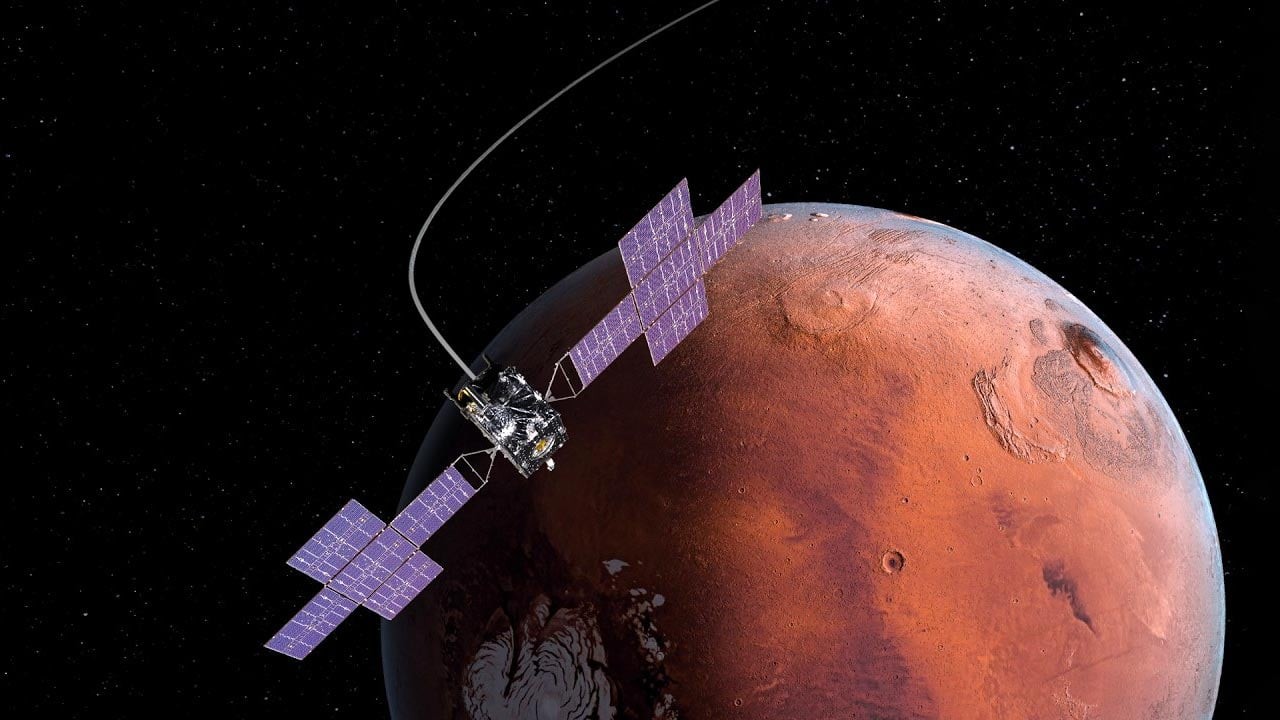
Figure 1. NASA’s Psyche Spacecraft Skims Past Mars for Powerful Gravity Boost
Following the flyby, mission engineers confirmed the spacecraft’s precise trajectory using radio communications exchanged with NASA’s Deep Space Network, the global system used to support deep-space missions. Figure 1 shows NASA’s Psyche Spacecraft Skims Past Mars for Powerful Gravity Boost.
Scientists hope the mission will provide insight into the interior structure of rocky planets such as Earth by studying the unusually metal-rich asteroid. Don Han, navigation lead for Psyche at NASA Jet Propulsion Laboratory, said mission controllers closely monitored Doppler data from NASA’s Deep Space Network during the Mars flyby despite having high confidence in the spacecraft’s trajectory calculations.
The maneuver successfully gave the spacecraft an additional boost of about 1,000 miles per hour and shifted its orbital plane by roughly 1 degree relative to the Sun. According to Han, the spacecraft is now on track to arrive at the metal-rich asteroid 16 Psyche in the summer of 2029.
Rare Crescent Views of Mars Captured During Flyby
In the days leading up to and during the flyby, Psyche activated all of its scientific instruments for calibration tests, including its cameras, magnetometers, and gamma-ray and neutron spectrometer. The encounter with Mars provided both a rehearsal for future asteroid operations and an opportunity to capture unusual observations of the Red Planet.
Because the spacecraft approached Mars at a steep angle relative to the Sun, the planet appeared as a thin illuminated crescent. Images recorded by Psyche’s multispectral imager showed the crescent extending farther around the planet than researchers had anticipated.
Scientists believe this effect was caused by sunlight scattering through Mars’ dusty atmosphere. During closest approach, Psyche transitioned from the planet’s nighttime side into daylight while rapidly imaging the Martian surface below.
Jim Bell, lead imager for Psyche at Arizona State University, said the spacecraft captured thousands of images during its approach to Mars and throughout the close flyby.
According to Bell, the image dataset is helping scientists calibrate the spacecraft’s cameras, evaluate instrument performance, and test early image-processing software that will later be used during operations at the asteroid 16 Psyche. He added that Psyche will continue imaging Mars as the planet gradually recedes into the distance following the flyby.
Bell also serves as lead for the Mastcam-Z imaging system aboard Perseverance. Several other Mars missions supported the calibration campaign by providing complementary atmospheric and surface observations, including Mars Reconnaissance Orbiter, 2001 Mars Odyssey, Curiosity, European Space Agency’s Mars Express, and ExoMars Trace Gas Orbiter.
Testing Spacecraft Instruments Ahead of Asteroid Psyche Arrival
Scientists also collected early calibration data from the other scientific instruments aboard Psyche during its flyby of Mars. Preliminary readings from the spacecraft’s magnetometers may have detected Mars’ bow shock, the region where the solar wind interacts with the planet’s magnetic environment [1]. At the same time, the gamma-ray and neutron spectrometer team gathered rapid measurements that researchers plan to compare with decades of existing Martian observational data.
With the Mars flyby completed, Psyche is preparing to restart its solar electric propulsion system and continue its journey toward the asteroid belt. The spacecraft is currently scheduled to arrive at the metal-rich asteroid 16 Psyche in August 2029.
Reference:
- https://scitechdaily.com/nasas-psyche-spacecraft-just-used-mars-as-a-giant-slingshot/
Cite this article:
Janani R (2026), NASA’s Psyche Spacecraft Uses Mars for a Powerful Gravity Assist, AnaTechMaz, pp.874
Recent Post
-
Ultra-Faint Dwarf Galaxies May Reveal the Universe’s Earliest Secrets
Ultra-faint dwarf galaxies orbiting the Milky Way may provide....
-
The Coldest Objects in the Galaxy Could Be Alien Megastructures Disguised as Stars
The James Webb Space Telescope has uncovered a dynamic daily ....
-
The Galaxy’s Coldest “Stars” May Actually Be Alien Megastructures
Astronomers are exploring how to detect potential Dyson swarms by searching for unusually cold....
-
NASA’s Psyche Spacecraft Uses Mars for a Powerful Gravity Assist
NASA’s Psyche successfully completed a close flyby of Mars on May 15, using the planet’s gravity as a...
-

Scientists Discover Evidence That Asteroids May Have Sparked Life on Earth
Researchers from the Korea Institute of Geoscience and Mineral....
-
Scientists Successfully Test a High-Power Thruster Designed for Crewed Missions to Mars
NASA’s latest electric propulsion system has broken a U.S.....
-

The Universe’s Most Energetic Particles May Be Stranger Than Scientists Expected
Researchers have found that ultraheavy atomic nuclei...
-
NASA Captures Unusual Solar Radio Burst That Refused to Fade
NASA scientists were stunned after the Sun emitted a strange radio signal that continued broadcasting...
-

Scientists Scan Famous Exoplanet K2-18b for Possible Signs of Alien Life
A major SETI Institute investigation found no evidence of...
Scientists Warn NASA May Be Missing Potential Evidence of Alien Life
Astrobiologists warn that the search for alien life may be constrained..