

Scientists Successfully Test a High-Power Thruster Designed for Crewed Missions to Mars
NASA’s latest electric propulsion system has broken a U.S. power record and could reshape future crewed missions to Mars by offering far greater efficiency than traditional chemical rockets. Instead of rapid bursts of thrust, the engine produces continuous, low-force acceleration, allowing spacecraft to build up extremely high speeds while using far less fuel.
In a hypothetical fourth crewed mission aboard the Odyssey, astronauts would initially experience a slow, almost imperceptible departure from Earth as the spacecraft gently accelerates. However, over time the steady thrust would compound, eventually pushing the craft to extraordinary velocities—potentially exceeding 400,000 kilometers (250,000 miles) per hour—making it one of the fastest human-made journeys in history.
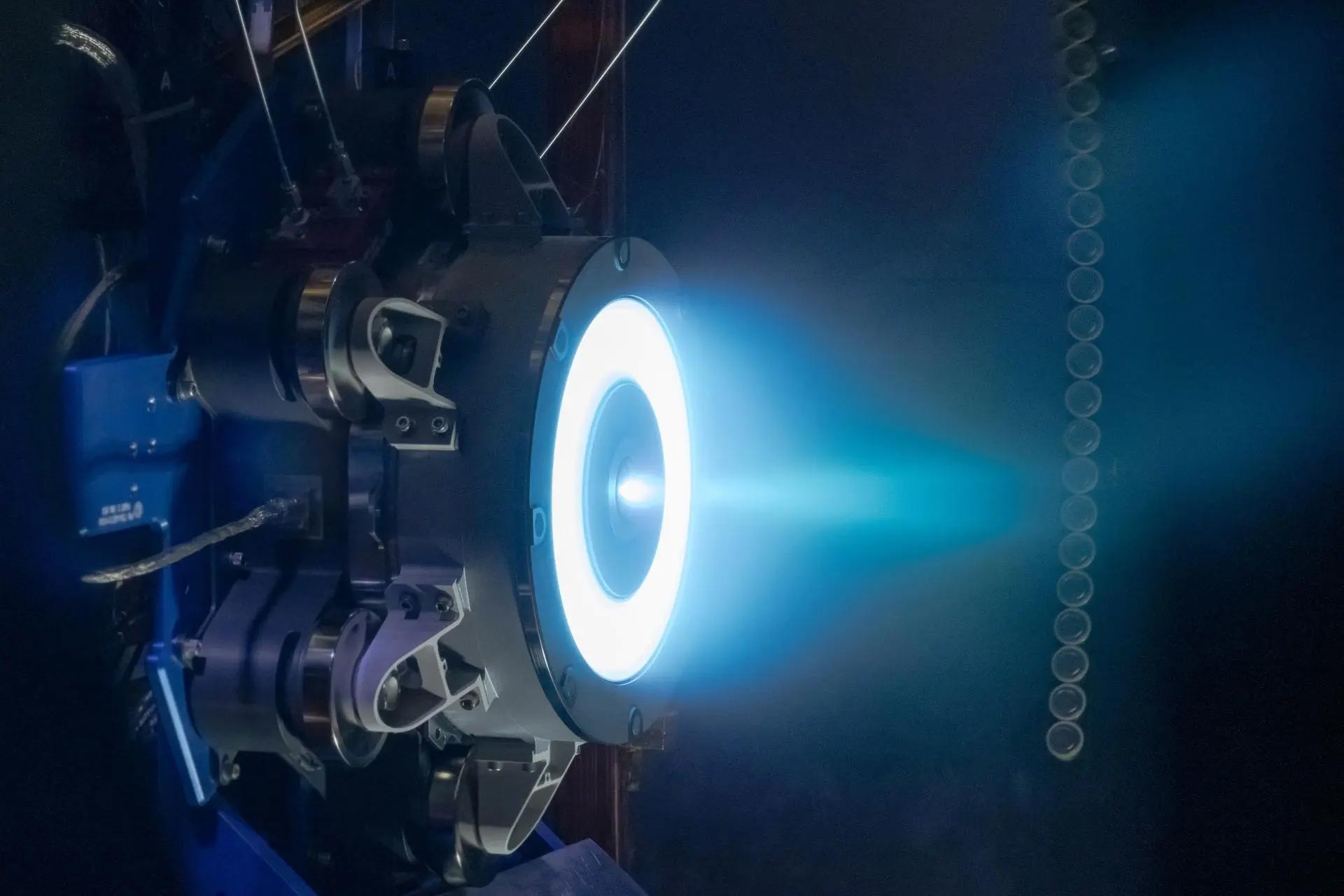
Figure 1. Scientists Test High-Power Thruster Designed for Crewed Mars Missions
Although this vision is still likely a decade or more from reality, NASA is actively developing the technologies needed for faster and more efficient journeys to Mars and beyond. These advances could significantly enhance both human spaceflight and robotic exploration of the outer solar system. Figure 1 shows Scientists Test High-Power Thruster Designed for Crewed Mars Missions.
A key recent development is a new electric propulsion system that has achieved record-breaking performance in tests. Unlike traditional ion engines that typically use xenon gas, this experimental design runs on lithium metal vapor. This shift in fuel type could greatly increase efficiency and thrust, making it a strong candidate for future deep-space missions.
If proven successful, this type of propulsion technology could transform space travel by making missions faster, more fuel-efficient, and more practical, while also enabling far more ambitious exploration beyond Earth’s orbit.
Electric Propulsion Thrusters May Transform Future Mars Missions
NASA’s recent testing has achieved a major milestone, reaching a new U.S. record of 120 kilowatts of power—around 25 times greater than the electric propulsion system used on the Psyche spacecraft, which is currently on its way to asteroid 16 Psyche. While Psyche can reach speeds of up to about 200,000 kph (124,000 mph) near the end of its mission, it already represents one of the most powerful electric propulsion systems in operation today.
Beyond speed, the key advantage of electric thrusters is their efficiency, using up to 90% less fuel than conventional chemical rockets. According to NASA Jet Propulsion Laboratory senior research scientist James Polk, the successful test marks an important breakthrough, confirming that the system works at the intended power levels and providing a strong platform for further development and scaling of the technology.
Challenges in Powering Long-Duration Crewed Missions to Mars
Although 120 kilowatts represents a significant milestone, NASA estimates that a crewed mission to Mars will ultimately require propulsion systems in the range of 2 to 4 megawatts, likely using multiple thrusters operating continuously for more than 23,000 hours (about 2.6 years). These systems would also need to endure extreme temperatures of up to 2,800°C (5,000°F), conditions that recent tests suggest may be achievable.
Such long operational durations are tied to the structure of interplanetary travel, where launch windows between Earth and Mars open only every two years [1]. A typical human mission would involve a 6–9 month journey to Mars, roughly 18 months on the surface waiting for the return window, and another 6–9 months for the trip back.
Because electric propulsion requires far less fuel than chemical rockets, it could make these extended missions more feasible and potentially reshape mission design and travel timelines. While the full impact of this next-generation technology is still uncertain, it represents a key step toward enabling sustained human exploration of Mars and the wider solar system.
Reference:
- https://scitechdaily.com/scientists-just-tested-a-thruster-powerful-enough-for-human-missions-to-mars/
Cite this article:
Janani R (2026), Scientists Successfully Test a High-Power Thruster Designed for Crewed Missions to Mars, AnaTechMaz, pp.876
Recent Post
-
Ultra-Faint Dwarf Galaxies May Reveal the Universe’s Earliest Secrets
Ultra-faint dwarf galaxies orbiting the Milky Way may provide....
-
The Coldest Objects in the Galaxy Could Be Alien Megastructures Disguised as Stars
The James Webb Space Telescope has uncovered a dynamic daily ....
-
The Galaxy’s Coldest “Stars” May Actually Be Alien Megastructures
Astronomers are exploring how to detect potential Dyson swarms by searching for unusually cold....
-
NASA’s Psyche Spacecraft Uses Mars for a Powerful Gravity Assist
NASA’s Psyche successfully completed a close flyby of Mars on May 15, using the planet’s gravity as a...
-

Scientists Discover Evidence That Asteroids May Have Sparked Life on Earth
Researchers from the Korea Institute of Geoscience and Mineral....
-
Scientists Successfully Test a High-Power Thruster Designed for Crewed Missions to Mars
NASA’s latest electric propulsion system has broken a U.S.....
-
The Universe’s Most Energetic Particles May Be Stranger Than Scientists Expected
Researchers have found that ultraheavy atomic nuclei...
-
NASA Captures Unusual Solar Radio Burst That Refused to Fade
NASA scientists were stunned after the Sun emitted a strange radio signal that continued broadcasting...
-
Scientists Scan Famous Exoplanet K2-18b for Possible Signs of Alien Life
A major SETI Institute investigation found no evidence of...
Scientists Warn NASA May Be Missing Potential Evidence of Alien Life
Astrobiologists warn that the search for alien life may be constrained..