

NASA Captures Unusual Solar Radio Burst That Refused to Fade
NASA scientists were stunned after the Sun emitted a strange radio signal that continued broadcasting for 19 consecutive days. First detected in August 2025, the burst initially appeared to be a routine solar event caused by energetic particles interacting with the Sun’s magnetic fields. Normally, these signals last only a few hours or days before fading away.
Instead, the radio burst persisted far longer than expected, shattering the previous record of five days and becoming the longest-known solar radio event ever observed.
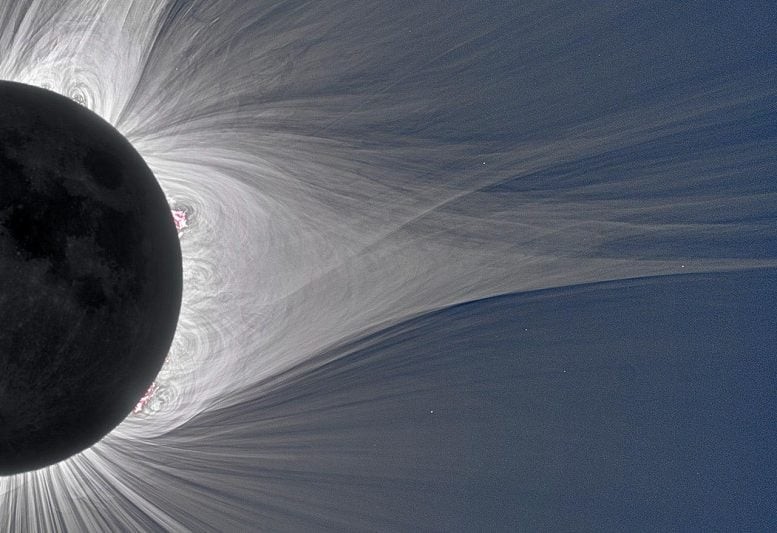
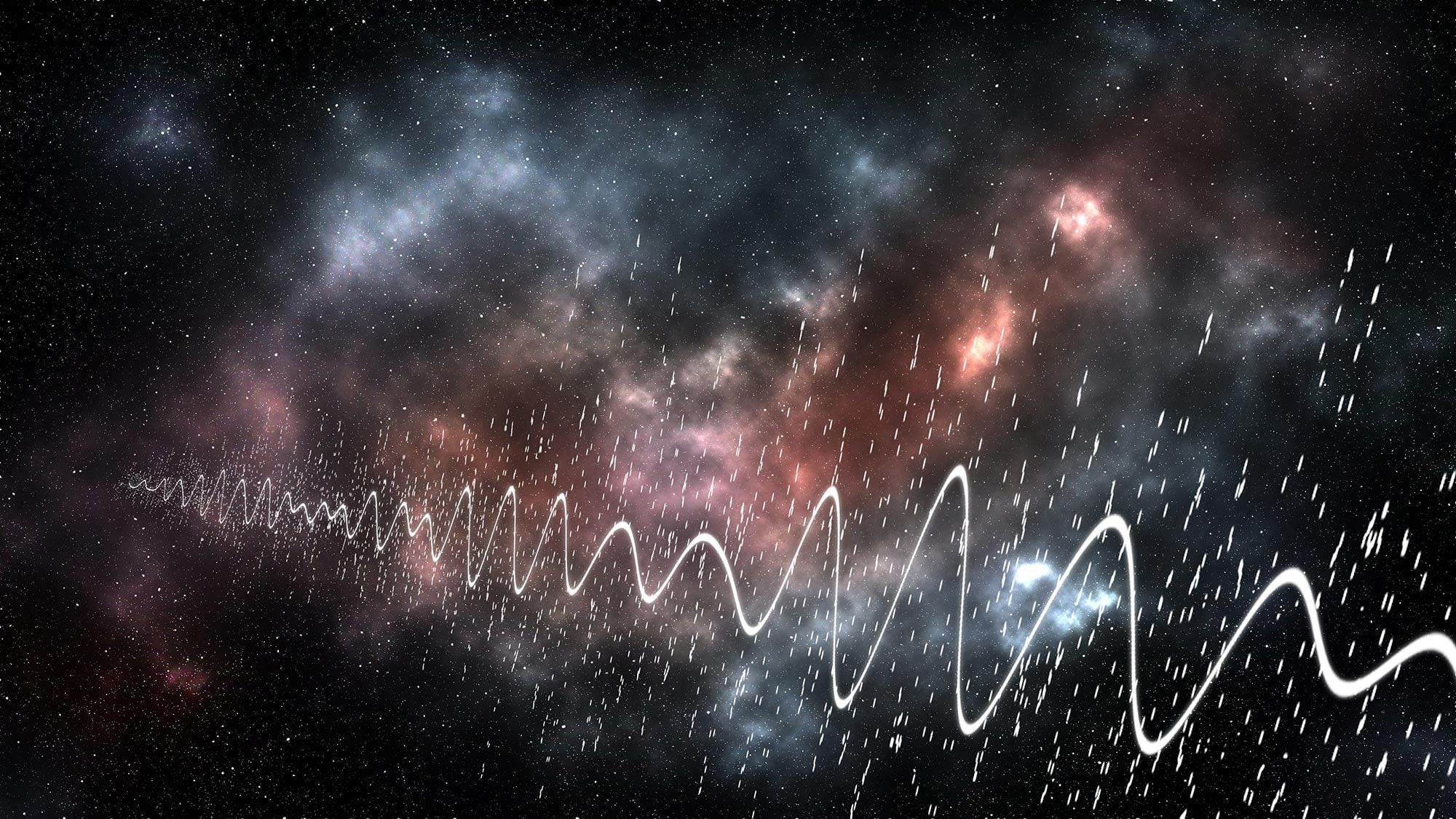
Figure 1. Record-Breaking Solar Radio Burst Linked to Giant Helmet Streamer During 2017 Eclipse
Record-Setting Type IV Solar Burst Stuns Scientists
The strange phenomenon was identified as a Type IV solar radio burst, a rare event associated with clouds of electrons trapped within massive magnetic structures around the Sun. Although the radio waves posed no danger to Earth, the powerful magnetic environments behind them can also trigger intense solar activity capable of interfering with satellites and spacecraft. Figure 1 shows Record-Breaking Solar Radio Burst Linked to Giant Helmet Streamer During 2017 Eclipse.
Researchers closely study these bursts because they provide valuable clues about the conditions that create hazardous space weather. To better understand the event, scientists combined observations from multiple spacecraft across the inner solar system, including NASA’s STEREO, Parker Solar Probe, and Wind missions, along with the joint European Space Agency and NASA Solar Orbiter spacecraft.
Spacecraft Across the Solar System Helped Track the Mysterious Signal
As the Sun rotated, the unusually persistent radio burst gradually came into view of different spacecraft positioned across the solar system. Each mission tracked the signal for several days during its remarkable 19-day duration, giving scientists the ability to combine their observations into a detailed timeline of the event.
Using data from the STEREO mission, researchers also created a new technique to pinpoint the burst’s origin. Their investigation traced the signal back to a huge magnetic structure in the Sun’s atmosphere known as a helmet streamer [1]. Scientists suspect that three coronal mass ejections erupting from the same region helped keep the burst active for almost three weeks. These coronal mass ejections are giant eruptions that hurl plasma and magnetic energy into space.
Findings May Help Scientists Predict Dangerous Space Weather
The findings, published in the journal The Astrophysical Journal Letters, could help scientists better identify and study long-lasting solar radio bursts in the future.
A deeper understanding of these rare events may also improve space weather forecasting, giving researchers better tools to predict solar activity that could disrupt satellites, spacecraft, and other technologies operating beyond Earth.
Reference:
- https://scitechdaily.com/nasa-detects-bizarre-solar-radio-burst-that-wouldnt-stop/
Cite this article:
Janani R (2026), NASA Captures Unusual Solar Radio Burst That Refused to Fade, AnaTechMaz, pp.878
Recent Post
-
Ultra-Faint Dwarf Galaxies May Reveal the Universe’s Earliest Secrets
Ultra-faint dwarf galaxies orbiting the Milky Way may provide....
-
The Coldest Objects in the Galaxy Could Be Alien Megastructures Disguised as Stars
The James Webb Space Telescope has uncovered a dynamic daily ....
-
The Galaxy’s Coldest “Stars” May Actually Be Alien Megastructures
Astronomers are exploring how to detect potential Dyson swarms by searching for unusually cold....
-
NASA’s Psyche Spacecraft Uses Mars for a Powerful Gravity Assist
NASA’s Psyche successfully completed a close flyby of Mars on May 15, using the planet’s gravity as a...
-

Scientists Discover Evidence That Asteroids May Have Sparked Life on Earth
Researchers from the Korea Institute of Geoscience and Mineral....
-
Scientists Successfully Test a High-Power Thruster Designed for Crewed Missions to Mars
NASA’s latest electric propulsion system has broken a U.S.....
-
The Universe’s Most Energetic Particles May Be Stranger Than Scientists Expected
Researchers have found that ultraheavy atomic nuclei...
-
NASA Captures Unusual Solar Radio Burst That Refused to Fade
NASA scientists were stunned after the Sun emitted a strange radio signal that continued broadcasting...
-
Scientists Scan Famous Exoplanet K2-18b for Possible Signs of Alien Life
A major SETI Institute investigation found no evidence of...
Scientists Warn NASA May Be Missing Potential Evidence of Alien Life
Astrobiologists warn that the search for alien life may be constrained..