

Webb Telescope Reveals Wild Weather on Cosmic Brown Dwarfs
WASHINGTON, July 15 (Reuters) – The weather report for the two brown dwarfs—the celestial objects larger than planets but smaller than stars—closest to us is far from pleasant: extremely hot, with a toxic mix of chemicals in the atmosphere and clouds of silicate particles drifting around like a dust storm in the Sahara.
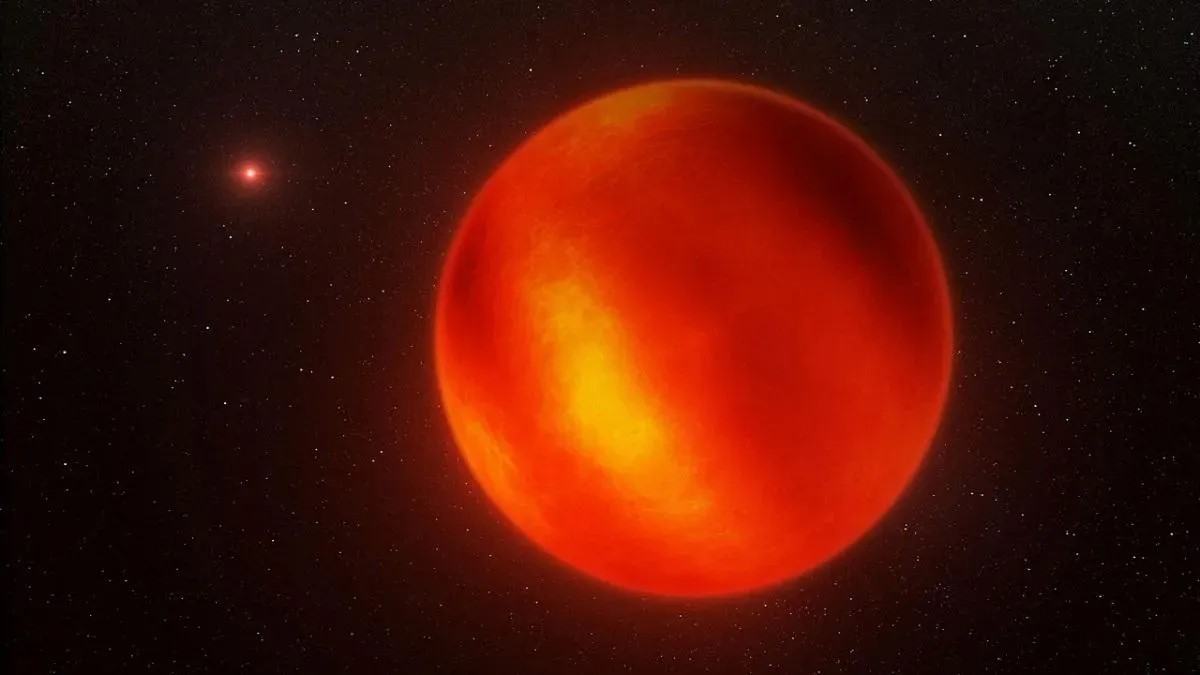
Figure 1. Webb Telescope Reveals Wild Weather on Cosmic Brown Dwarfs.
Figure 1 shows Webb telescope reveals wild weather on cosmic brown dwarfs. Researchers have used observations from the James Webb Space Telescope to closely examine the atmospheric conditions of these brown dwarfs, which orbit each other approximately six light years from Earth, relatively close in cosmic terms. A light-year represents the distance light travels in a year, or about 5.9 trillion miles (9.5 trillion kilometres).
The Webb data offered a three-dimensional view of how weather conditions change over the rotation of the two brown dwarfs—the larger one completing a rotation in seven hours and the smaller one in five hours—revealing multiple layers of clouds at varying atmospheric depths. Both brown dwarfs have atmospheres primarily composed of hydrogen and helium, with trace amounts of water vapor, methane, and carbon monoxide. The temperature at their cloud tops is around 1,700 degrees Fahrenheit (925 degrees Celsius), comparable to the heat of a candle flame.[1]
Astronomer Beth Biller from the University of Edinburgh's Institute for Astronomy, the lead author of the study published in the Monthly Notices of the Royal Astronomical Society, noted, “In this study, we created the most detailed ‘weather maps’ for any brown dwarf to date.” Brown dwarfs are intermediary objects between stars and planets, emitting light due to their intense heat, similar to how embers glow red from high temperatures. This light was captured by Webb, which allowed researchers to observe these objects.
Unlike stars, brown dwarfs do not undergo nuclear fusion in their cores. However, similar to planets, they can have clouds composed of atmospheric precipitates. While Earth's clouds are made of water, those on brown dwarfs are much hotter and likely consist of silicate particles, resembling a very hot Saharan dust storm.[2]
Current theories suggest that brown dwarfs form from large clouds of gas and dust like stars but lack the mass needed to initiate nuclear fusion. Their composition is similar to that of gas giants like Jupiter, with masses up to 80 times that of Jupiter. In contrast, the sun's mass is about 1,000 times that of Jupiter. The two brown dwarfs studied by Webb formed approximately 500 million years ago, with diameters comparable to Jupiter's—one being 35 times more massive than Jupiter and the other 30 times.
Webb’s observations tracked how their light varied as different atmospheric features came into view. "The rapid rotation of both objects drives their weather patterns, and if you could see the cloud-top structure directly, you might observe bands and vortices similar to Jupiter’s Great Red Spot," Biller explained.
Biller also mentioned that future techniques could apply to studying weather on potentially habitable exoplanets. Brown dwarfs are relatively common, with around 1,000 known compared to over 5,000 exoplanets.
Unlike its predecessor, the Hubble Space Telescope, which observes primarily in optical and ultraviolet wavelengths, Webb primarily examines the cosmos in the infrared. “The atmospheres of brown dwarfs are highly complex. Webb represents a significant advance in our understanding of these atmospheres by offering an unprecedented range of wavelengths and sensitivity,” said study co-author Johanna Vos from Trinity College Dublin. “These different wavelengths allow us to observe the atmosphere from very deep to very shallow, providing a comprehensive view of its full extent,” Vos added.
Reference:
- https://www.reuters.com/science/webb-telescope-reveals-wild-weather-cosmic-brown-dwarfs-2024-07-15/
- https://vajiramandravi.com/upsc-daily-current-affairs/prelims-pointers/brown-dwarfs/
Cite this article:
Gokila G (2024), Webb Telescope Reveals Wild Weather on Cosmic Brown Dwarfs, AnaTechMaz, pp. 74
Recent Post
-
Astronomers Have Found the Nearest Black Hole to Earth
A newly discovered black hole, potentially closer to Earth than ...
-
SpaceX Experiences Its First Rocket Failure in A Decade, Resulting in Star link Satellites Left in Low Orbit
On the evening of July 11, a SpaceX Falcon 9 rocket ...
-
China Plans to Deflect a Near-Earth Asteroid In 2030
China is preparing to enter the field of planetary defence....
-
There Really Are Lava Tunnels on The Moon, And Humans May One Day Live in Them
NASA's astronauts have walked on the lunar surface ...
-
China’s New Lunar Far-Side Samples May Clarify Earth’s Dual-Faced Moon
Samples from the Moon’s far side, collected by China’s ...
-
Galactic Pulse: Pulsar Timing Arrays Reveal Long-Period Gravitational Waves
Astrophysicists have detected long-period gravitational ...
-
Moon Festivals, Moon Movies, and a Full Moon Celebrate the 55th Anniversary of Apollo 11 Landing
The cosmos is marking the 55th anniversary of the first lunar l...
-

New Space Storm Alert System Could Protect Earth's Technology
Space storms may soon be predicted with unprecedented accuracy, thanks......
-
This Ambitious New Space Mission Will Intersect with an 'Incoming Asteroid' On A Collision Course with Earth
In an effort to avoid the fate of the dinosaurs, the European Space Agency (ESA) has ...
-
Assembling The Cosmos: Hubble Reveals How Dwarf Galaxies Shape the Largest Galaxies
NGC 5238, a dwarf irregular galaxy captured by the Hubble Space Telescope, reveals a...
-
NASA Has Discovered Pure Sulfur Crystals on Mars for The First Time
In a significant breakthrough, NASA's Curiosity Mars...
-
Why Venus is So Dry
Venus is dry due to water loss to space as atomic hydrogen. In this illustration of the dominant ...
-
Galactic Game Changer: Unveiling the Hidden Satellites of the Milky Way
Researchers have identified two new satellite galaxies of the...
-
Webb Telescope Reveals Wild Weather on Cosmic Brown Dwarfs
WASHINGTON, July 15 (Reuters) – The weather report for the two brown dwarfs—the celestial ...
-
Astronomers Discover a Highly “Eccentric” Planet on Its Path to Becoming a Hot Jupiter
The planet’s extreme orbit provides insights into how massive,...