

This Ambitious New Space Mission Will Intersect with an 'Incoming Asteroid' On A Collision Course with Earth
In an effort to avoid the fate of the dinosaurs, the European Space Agency (ESA) has announced the commencement of a bold new planetary defense mission, the Rapid Apophis Mission for Space Safety (RAMSES). This mission aims to rendezvous with the asteroid 99942 Apophis, which is approximately the size of a cruise liner, and accompany it during its close flyby of Earth in April 2029.
Apophis, measuring approximately 375 meters across, will pass within 32,000 kilometers of Earth's surface on April 13, 2029. This rare event, visible to the naked eye across parts of Europe, Africa, and Asia, will attract global attention. An asteroid of this size making such a close approach happens only once every 5,000 to 10,000 years. Astronomers have ruled out any possibility of Apophis colliding with Earth in the next 100 years (phew). However, its 2029 flyby provides scientists with a unique opportunity to observe a close-quarters flyby for scientific research.
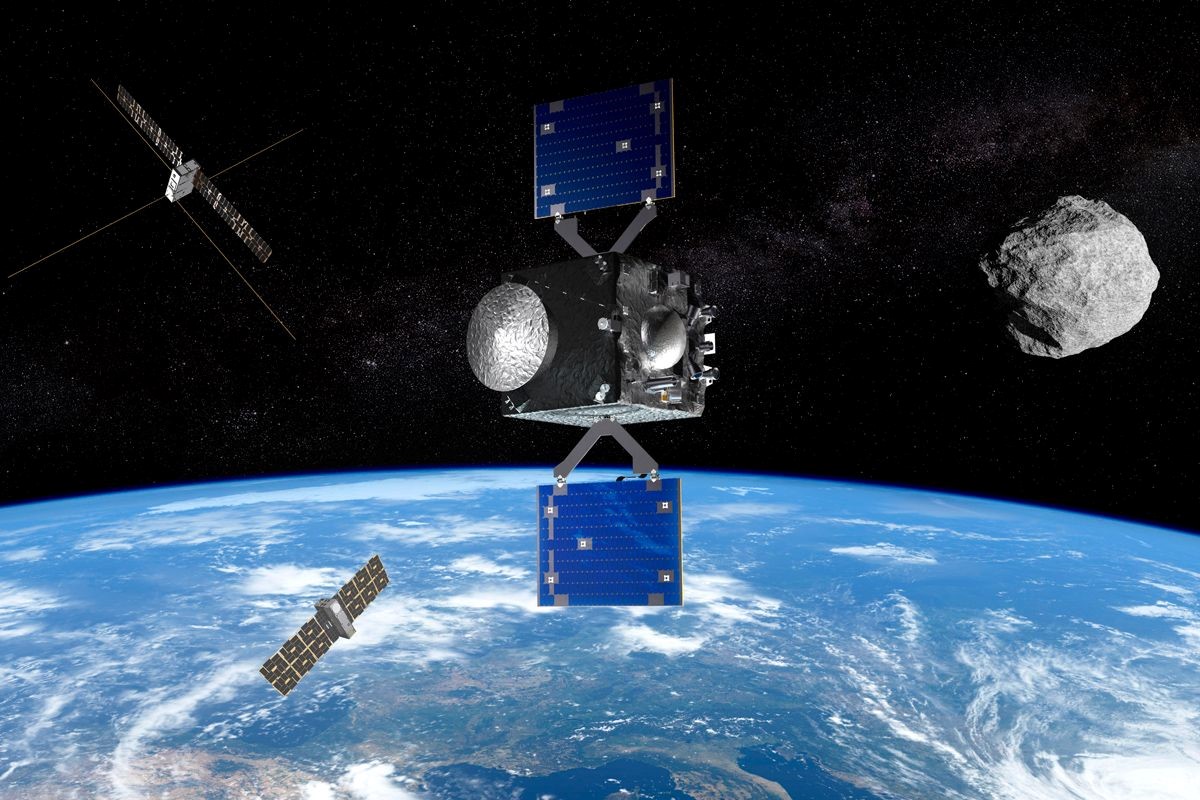
Figure 1. New Mission to Intercept Incoming Asteroid
ESA’s RAMSES spacecraft will arrive at Apophis two months before its closest approach to monitor the asteroid's physical changes caused by Earth's gravitational forces. RAMSES will launch in April 2028 to ensure its arrival at Apophis by February 2029. [1] The mission's objective is to observe and study how Earth's gravity affects Apophis, potentially causing landslides and revealing new material from beneath the asteroid's surface. Figure 1 shows New Mission to Intercept Incoming Asteroid.
Patrick Michel, Director of Research at CNRS at Observatoire de la Côte d'Azur, emphasized the importance of this mission, saying, "There is still so much we have yet to learn about asteroids, but until now, we have had to travel deep into the Solar System to study them and perform experiments ourselves to interact with their surface."
"For the first time ever, nature is bringing one to us and conducting the experiment itself. All we need to do is watch as Apophis is stretched and squeezed by strong tidal forces." Using a suite of scientific instruments, RAMSES will conduct a comprehensive survey of Apophis, analyzing its shape, surface, orbit, rotation, and more. This data will be meticulously examined by scientists aiming to understand asteroid composition and structure, as well as to develop strategies for deflecting potentially hazardous asteroids in the future.
Researchers anticipate that Earth's tidal forces will alter the asteroid's rotational state and potentially trigger quakes and landslides. RAMSES's presence during the flyby is expected to provide a detailed 'before and after' view of how Apophis is affected by its close encounter. RAMSES won’t be alone at Apophis, however—NASA has also redirected its OSIRIS-REx spacecraft, now renamed OSIRIS-APEX, toward the asteroid and is scheduled to arrive about one month after the flyby.
OSIRIS-REx was the first U.S. mission to collect a sample from an asteroid and returned to Earth on September 24, 2023, delivering a capsule containing material from the asteroid Bennu. After successfully releasing the sample capsule, the spacecraft was renamed OSIRIS-APEX and redirected to explore Apophis. “RAMSES will demonstrate that humankind can deploy a reconnaissance mission to rendezvous with an incoming asteroid in just a few years,” said Richard Moissl, head of ESA's Planetary Defense Office.
“This type of mission is a cornerstone of humankind’s response to a hazardous asteroid,” Richard Moissl added. The decision to fully commit to the RAMSES mission will be made at ESA’s Ministerial Council meeting in November 2025.[2] If approved, RAMSES will not only help experts learn how to potentially deflect an asteroid if necessary but also provide crucial scientific insights into the formation and evolution of the Solar System.
Reference:
- https://www.sciencefocus.com/news/ramses-asteroid-space-mission
- https://www.esa.int/Space_Safety/Planetary_Defence/Introducing_Ramses_ESA_s_mission_to_asteroid_Apophis
Cite this article:
Janani R (2024), This Ambitious New Space Mission Will Intersect with an 'Incoming Asteroid' On A Collision Course with Earth, AnaTechMaz, pp. 69
Recent Post
-
Astronomers Have Found the Nearest Black Hole to Earth
A newly discovered black hole, potentially closer to Earth than ...
-
SpaceX Experiences Its First Rocket Failure in A Decade, Resulting in Star link Satellites Left in Low Orbit
On the evening of July 11, a SpaceX Falcon 9 rocket ...
-
China Plans to Deflect a Near-Earth Asteroid In 2030
China is preparing to enter the field of planetary defence....
-
There Really Are Lava Tunnels on The Moon, And Humans May One Day Live in Them
NASA's astronauts have walked on the lunar surface ...
-
China’s New Lunar Far-Side Samples May Clarify Earth’s Dual-Faced Moon
Samples from the Moon’s far side, collected by China’s ...
-

Galactic Pulse: Pulsar Timing Arrays Reveal Long-Period Gravitational Waves
Astrophysicists have detected long-period gravitational ...
-

Moon Festivals, Moon Movies, and a Full Moon Celebrate the 55th Anniversary of Apollo 11 Landing
The cosmos is marking the 55th anniversary of the first lunar l...
-

New Space Storm Alert System Could Protect Earth's Technology
Space storms may soon be predicted with unprecedented accuracy, thanks......
-
This Ambitious New Space Mission Will Intersect with an 'Incoming Asteroid' On A Collision Course with Earth
In an effort to avoid the fate of the dinosaurs, the European Space Agency (ESA) has ...
-
Assembling The Cosmos: Hubble Reveals How Dwarf Galaxies Shape the Largest Galaxies
NGC 5238, a dwarf irregular galaxy captured by the Hubble Space Telescope, reveals a...
-
NASA Has Discovered Pure Sulfur Crystals on Mars for The First Time
In a significant breakthrough, NASA's Curiosity Mars...
-

Why Venus is So Dry
Venus is dry due to water loss to space as atomic hydrogen. In this illustration of the dominant ...
-
Galactic Game Changer: Unveiling the Hidden Satellites of the Milky Way
Researchers have identified two new satellite galaxies of the...
-
Webb Telescope Reveals Wild Weather on Cosmic Brown Dwarfs
WASHINGTON, July 15 (Reuters) – The weather report for the two brown dwarfs—the celestial ...
-

Astronomers Discover a Highly “Eccentric” Planet on Its Path to Becoming a Hot Jupiter
The planet’s extreme orbit provides insights into how massive,...