

Assembling The Cosmos: Hubble Reveals How Dwarf Galaxies Shape the Largest Galaxies
NGC 5238, a dwarf irregular galaxy captured by the Hubble Space Telescope, reveals a complex structure despite its seemingly unremarkable appearance. Situated in the constellation Canes Venatici, about 14.5 million light-years from Earth, it is believed to have experienced a significant interaction with a satellite galaxy, offering valuable insights into galaxy formation and evolution.
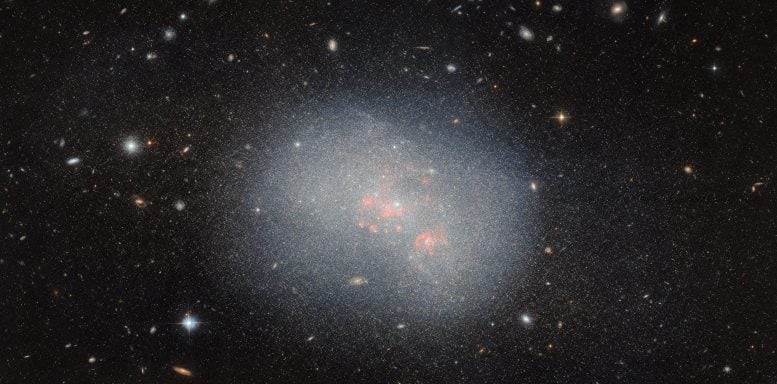
Figure 1. Assembling The Cosmos: Hubble Reveals How Dwarf Galaxies Shape the Largest Galaxies.
In the Hubble Space Telescope image, NGC 5238 appears as a blob-like object, more reminiscent of a large star cluster than a galaxy. However, this appearance masks its intricate structure, which has been extensively studied by astronomers. The Hubble Space Telescope provides detailed views of the galaxy's numerous stars and its associated globular clusters—bright spots both within and around the galaxy, populated by additional stars. Figure 1 shows Assembling the Cosmos: Hubble Reveals How Dwarf Galaxies Shape the Largest Galaxies.
Galactic Encounter Hypothesis
It is hypothesized that NGC 5238 recently—within the last billion years—had a close encounter with another galaxy. The evidence for this theory includes the tidal distortions in NGC 5238's shape, which result from gravitational interactions between two galaxies. Since no nearby galaxy could have caused this disturbance, the suggestion is that a smaller satellite galaxy was absorbed by NGC 5238.[1]
To find traces of this former galaxy, astronomers will closely examine the star population in NGC 5238, with the Hubble Space Telescope being the ideal tool for this task. Indicators to look for include star groups with unusual properties compared to the galaxy's main population, suggesting they originated from a different galaxy, or stars that appear to have formed simultaneously, a sign of a galactic merger. The data used to create this image will help in testing these hypotheses.
Role in Galaxy Evolution
Despite their small size and seemingly unremarkable appearance, dwarf galaxies like NGC 5238 play a crucial role in advancing our understanding of galaxy formation and evolution. A key theory in galaxy evolution suggests a "bottom-up" hierarchical process: initially, star clusters and small galaxies formed from gas and dark matter. Over time, these smaller structures were assembled by gravity into larger galaxy clusters and superclusters, which accounts for the formation and structure of the largest cosmic structures we see today.
Reference:
- https://scitechdaily.com/assembling-the-cosmos-hubble-reveals-how-dwarf-galaxies-shape-the-largest-galaxies/
Cite this article:
Gokila G (2024), Assembling the Cosmos: Hubble Reveals How Dwarf Galaxies Shape the Largest Galaxies, AnaTechMaz, pp. 70
Recent Post
-
Astronomers Have Found the Nearest Black Hole to Earth
A newly discovered black hole, potentially closer to Earth than ...
-
SpaceX Experiences Its First Rocket Failure in A Decade, Resulting in Star link Satellites Left in Low Orbit
On the evening of July 11, a SpaceX Falcon 9 rocket ...
-

China Plans to Deflect a Near-Earth Asteroid In 2030
China is preparing to enter the field of planetary defence....
-
There Really Are Lava Tunnels on The Moon, And Humans May One Day Live in Them
NASA's astronauts have walked on the lunar surface ...
-
China’s New Lunar Far-Side Samples May Clarify Earth’s Dual-Faced Moon
Samples from the Moon’s far side, collected by China’s ...
-
Galactic Pulse: Pulsar Timing Arrays Reveal Long-Period Gravitational Waves
Astrophysicists have detected long-period gravitational ...
-

Moon Festivals, Moon Movies, and a Full Moon Celebrate the 55th Anniversary of Apollo 11 Landing
The cosmos is marking the 55th anniversary of the first lunar l...
-

New Space Storm Alert System Could Protect Earth's Technology
Space storms may soon be predicted with unprecedented accuracy, thanks......
-
This Ambitious New Space Mission Will Intersect with an 'Incoming Asteroid' On A Collision Course with Earth
In an effort to avoid the fate of the dinosaurs, the European Space Agency (ESA) has ...
-
Assembling The Cosmos: Hubble Reveals How Dwarf Galaxies Shape the Largest Galaxies
NGC 5238, a dwarf irregular galaxy captured by the Hubble Space Telescope, reveals a...
-
NASA Has Discovered Pure Sulfur Crystals on Mars for The First Time
In a significant breakthrough, NASA's Curiosity Mars...
-
Why Venus is So Dry
Venus is dry due to water loss to space as atomic hydrogen. In this illustration of the dominant ...
-
Galactic Game Changer: Unveiling the Hidden Satellites of the Milky Way
Researchers have identified two new satellite galaxies of the...
-
Webb Telescope Reveals Wild Weather on Cosmic Brown Dwarfs
WASHINGTON, July 15 (Reuters) – The weather report for the two brown dwarfs—the celestial ...
-

Astronomers Discover a Highly “Eccentric” Planet on Its Path to Becoming a Hot Jupiter
The planet’s extreme orbit provides insights into how massive,...