

3D-Printed Thermal Cloak Makes Objects Invisible to Infrared Cameras
What was once the realm of science fiction is moving closer to reality. Researchers have developed the world's first three-dimensional, omnidirectional thermal cloak capable of concealing objects from infrared cameras regardless of the direction from which they are viewed. Unlike earlier thermal cloaks that only worked in two dimensions or from limited angles, this breakthrough guides heat around an object, making it appear invisible to thermal imaging systems while maintaining a stable temperature inside.
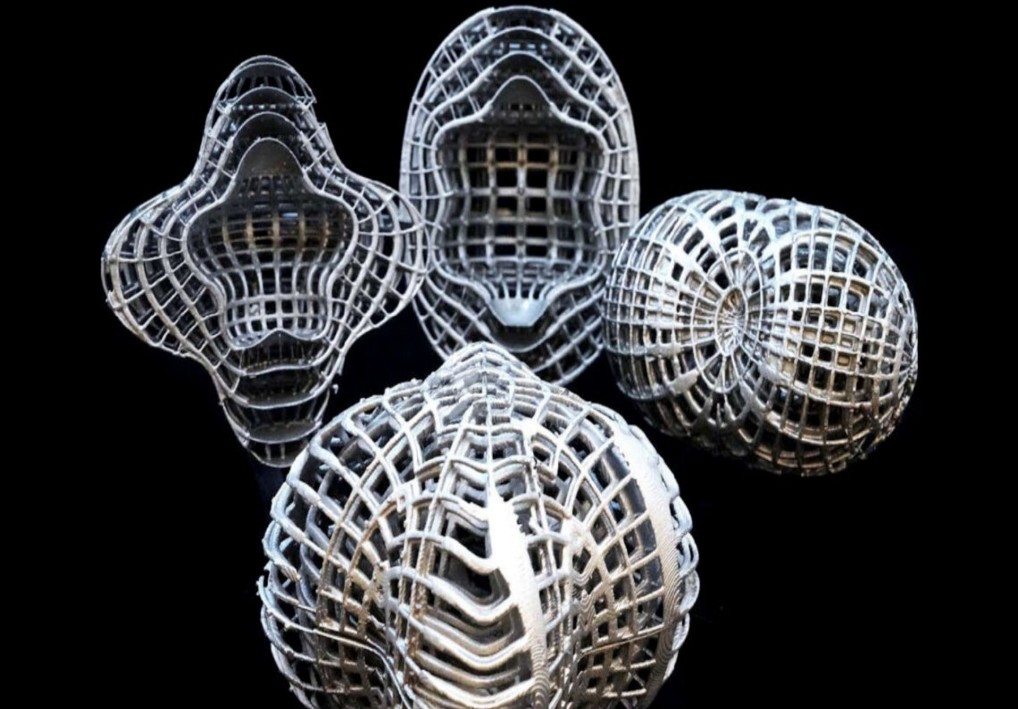
Figure 1. 3D Thermal Invisibility Cloak.
The research team, led by scientists at the University of Illinois Urbana-Champaign in collaboration with the Technical University of Denmark (DTU), designed the cloak by rethinking the fundamental physics of heat transfer. Traditional materials could not achieve the required level of thermal control, so the researchers created a sophisticated 3D-printed lattice structure that precisely directs heat flow. Built from a highly conductive aluminum framework filled with a low-conductivity, rubber-like material, the cloak carefully manipulates thermal conductivity throughout its structure.
Instead of allowing heat to pass through the hidden object, the cloak redirects thermal energy around it, much like water flowing smoothly around a rock before rejoining on the other side. As a result, infrared cameras detect a completely undisturbed heat pattern, making the concealed object effectively disappear from thermal view. Unlike previous technologies, the new design maintains this effect across complex surfaces and from virtually any viewing angle. Figure 1 shows 3D Thermal Invisibility Cloak.
Laboratory testing demonstrated the cloak's remarkable performance under extreme temperature conditions. Infrared imaging showed no visible disturbance in the surrounding heat field, while the interior of the cloaked region remained uniformly protected from external temperature changes. To further demonstrate its versatility, the researchers successfully concealed highly irregular shapes, including a detailed three-dimensional model of a human head.
Beyond its impressive stealth capabilities, the technology could transform several industries [1] . In electronics, the cloak offers a new way to manage heat inside increasingly compact microchips by redirecting damaging hotspots away from sensitive components. In aerospace and defense, it could reduce the thermal signatures of aircraft, drones, military vehicles, and personnel, making them significantly more difficult to detect using heat-seeking sensors or thermal surveillance systems.
The researchers are already looking toward the next generation of thermal cloaking technology. Their goal is to develop intelligent materials capable of sensing internally generated heat and dynamically adjusting their thermal properties in real time. Such adaptive systems could provide even greater protection for advanced electronics, industrial equipment, and future stealth technologies, opening new possibilities for precise thermal management and infrared camouflage.
Reference:
- https://interestingengineering.com/science/thermal-cloak-3d-printed-invisible-infrared-cameras
Cite this article:
Keerthana S (2026), 3D-Printed Thermal Cloak Makes Objects Invisible to Infrared Cameras, AnaTechMaz, pp.484.
Recent Post
-
Fast Holographic 3D Printing Produces Leak-Free Microstructures
Researchers at the University of Utah have developed an ....
-

Researchers Unveil Energy-Saving Display Technology
A research team led by MIT, in collaboration with Samsung, has achieved a major...
-
Pixel by Pixel: MIT Redefines Infrared Camera Technology
Researchers at MIT have developed a programmable infrared chip that could transform the future of thermal....
-
3D-Printed Thermal Cloak Makes Objects Invisible to Infrared Cameras
What was once the realm of science fiction is moving closer to...
-
Revolutionizing Healthcare with Flexible Wireless Polymer Sensors
As chronic diseases continue to rise worldwide, the need for continuous, real-time health monitoring....