

SNU Engineers Introduce Ultra-Thin, Battery-Free Wearable Device
A research team from Seoul National University (SNU), led by Professor Jerald Yoo, has unveiled a major breakthrough in wearable healthcare technology: a battery-free, skin-conforming ECG system called SkinECG. This innovation redefines how physiological signals can be monitored continuously, eliminating one of the biggest limitations of wearable devices—the need for batteries.
Wearable health technologies have become essential tools for tracking vital signs in real time, particularly for cardiovascular monitoring. Electrocardiogram (ECG) sensors play a crucial role in detecting conditions like arrhythmias, but their reliance on batteries has restricted their design, comfort, and long-term usability. SkinECG overcomes this challenge by combining ambient energy harvesting with a novel body-coupled wireless power transfer system, enabling uninterrupted monitoring without bulky power sources.
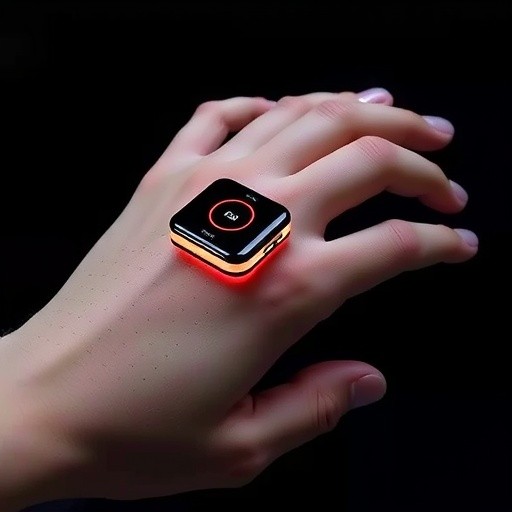
Figure 1. Battery-Free Wearable Device.
Traditional wearable devices often struggle with a mismatch between where energy can be efficiently harvested and where sensors need to be placed. For example, ECG sensors must sit on the chest for accurate readings, while energy harvesters—such as solar or motion-based systems—work best on more exposed body parts like arms or legs. SkinECG resolves this issue through an advanced system known as the Orthogonal Energy Harvesting Network (O-EHN). This setup allows energy collected from multiple body-worn units to be wirelessly transferred to a chest-mounted ECG sensor, ensuring consistent power delivery regardless of placement.
What sets this system apart is its use of the human body itself as a transmission medium. Instead of relying on conventional wireless power transfer through the air—which suffers from signal loss due to absorption by body tissues—SkinECG delivers energy along the surface of the skin. This body-coupled approach significantly improves efficiency while maintaining a thin, flexible, and unobtrusive design. Figure 1 shows battery-free wearable device.
Safety remains a core focus of the technology. The system operates within electromagnetic exposure levels comparable to everyday environments, meeting strict safety standards. Tests have shown that the sensor can function entirely on harvested energy, removing the need for batteries or wired connections and greatly enhancing comfort and wearability.
Beyond solving the power-location mismatch, SkinECG is designed for scalability and compatibility with existing energy harvesting technologies [1]. This opens the door for a wide range of applications in wearable healthcare, particularly for continuous monitoring outside clinical settings.
The technology’s potential extends well beyond cardiac care. Its underlying principles can be adapted for other biosignal measurements, including muscle activity (EMG) and brain signals (EEG). As demand grows for compact, long-lasting wearable and implantable medical devices, SkinECG offers a foundational solution to one of the field’s most persistent challenges.
Reference:
- https://bioengineer.org/snu-researchers-create-battery-free-skin-conforming-wearable-technology/
Cite this article:
Keerthana S (2026), SNU Engineers Introduce Ultra-Thin, Battery-Free Wearable Device, AnaTechMaz, pp.457
Recent Post
-

Ditch the Clutter: This Mini PC Does the Job of Three Devices
The ViewDock Gen2 is pushing the boundaries of what a mini-PC can be—combining solid performance,...
-

“Hydrogen-Retrofit Dash 8 Could Serve 90% of Today’s Flight Routes”
Dutch start-up Conscious Aerospace is ramping up development of a ...
-

Researchers Create Twisting Light Vortex for Advanced Quantum Technologies
A new breakthrough in photonics has enabled scientists to create a ...
-

Revolutionary BNCT Technique Could Transform Cancer Treatment
In the ongoing fight against aggressive brain cancers like glioblastoma, a promising new...
-
Tiny Everyday Carry Tool Packs a 67-Layer Damascus Steel Knife and Bottle Opener into Your Keychain
The Z6 is equipped with a 67-layer Damascus steel blade,...
-

What to Read This Week: Katrina Manson’s Chilling Look Inside Project Maven
Israel’s military is already using artificial intelligence to select ...
-
SNU Engineers Introduce Ultra-Thin, Battery-Free Wearable Device
A research team from Seoul National University (SNU), led by Professor Jerald Yoo, has unveiled....
-

World’s Largest Floating Wind Turbine Goes Online, Set to Power 24,000 Homes
The massive turbine uses a semi-submersible platform with...
-

Advanced Memory Technology Promises Major Battery Life Boost
Researchers at Institute of Science Tokyo have developed an ultra-small memory device that...
-

New Brain-Guided Hearing System Succeeds in First Human Testing
Scientists at Columbia University’s Zuckerman Institute have unveiled a breakthrough...
-

New Laser Acoustic Imaging Technique Aims to Make Surgery Safer
A new imaging technology combining lasers, sound waves,...
-

AI Supercharges Ultrafast Laser Simulations, Boosting Speed by 250x
Scientists have created a powerful deep-learning model...
-

Next-Gen Resin Supports 10 Rounds of Precision 3D Reprinting
Scientists in Japan have developed a recyclable UV-sensitive resin that can be melted down and...
-
Artificial Eyes Created by U.S. Researchers Boost Machine Vision
Engineers at Penn State University have developed a groundbreaking artificial vision device that...
-

MIT Develops Diamond-Based Solution to Enhance Gallium Nitride Chip Efficiency
Researchers at the Massachusetts Institute of Technology (MIT)....