

New Laser Acoustic Imaging Technique Aims to Make Surgery Safer
A new imaging technology combining lasers, sound waves, and robotic surgery may soon help surgeons avoid one of the biggest risks in minimally invasive procedures: accidentally damaging hidden nerves and blood vessels.
Researchers are developing an advanced form of photoacoustic imaging that allows surgeons to see critical structures beneath the surface of tissue in real time during robot-assisted laparoscopic surgery. The breakthrough could significantly improve surgical precision and reduce complications in procedures where visibility is limited. The work, led by Dr. Kai Zhang at Worcester Polytechnic Institute, will be presented at the 190th Meeting of the Acoustical Society of America.
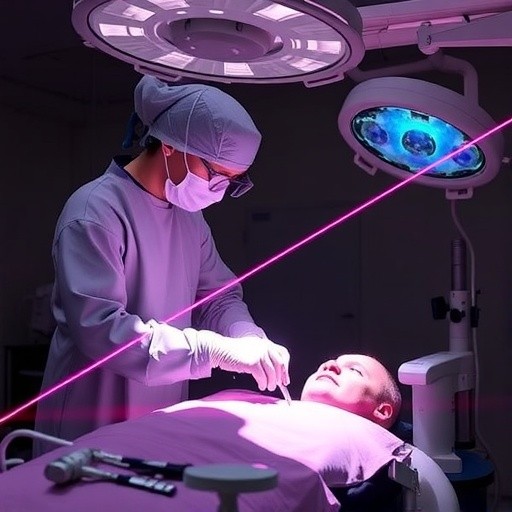
Figure 1. Laser Acoustic Imaging Technique.
Seeing Beneath the Surface During Surgery
Modern laparoscopic surgery already offers major advantages over traditional open surgery. By using small incisions, miniature cameras, and robotic instruments, surgeons can reduce patient trauma, lower pain levels, and shorten recovery times. Figure 1 shows laser acoustic imaging technique.
However, important anatomical structures such as nerves and blood vessels often remain hidden beneath layers of tissue. Even experienced surgeons can accidentally damage these structures during complex procedures, sometimes leading to severe bleeding, nerve injury, or other life-threatening complications. Dr. Zhang’s team aims to solve this problem using photoacoustic imaging — a hybrid technology that combines light and ultrasound to reveal subsurface anatomy invisible to standard surgical cameras.
The technique works by directing short laser pulses into tissue. Certain biological materials, particularly hemoglobin in blood vessels, absorb the laser energy and generate tiny ultrasonic waves through a process known as the photoacoustic effect. These sound waves are then detected by highly sensitive ultrasound sensors and converted into detailed three-dimensional images of structures hidden below the tissue surface.
Real-Time 3D Mapping of Nerves and Blood Vessels
The system is designed to create live 3D reconstructions of neurovascular bundles — tightly packed groups of nerves and blood vessels that are especially important to preserve during surgery. Sophisticated software processes the acoustic signals and overlays the resulting anatomical maps directly onto the surgeon’s laparoscopic video feed using augmented reality techniques.
This gives surgeons a combined view of both the visible surgical field and the hidden anatomy beneath it, dramatically improving spatial awareness during delicate procedures. The added visibility allows surgeons to navigate around critical structures more safely and adapt surgical strategies in real time.
A Potential Breakthrough for Minimally Invasive Surgery
The technology is currently being tested in radical prostatectomy procedures, where preserving nerves and blood vessels is essential for maintaining patient function and reducing complications after prostate cancer surgery [1]. Researchers say the approach could eventually be adapted for a wide range of minimally invasive procedures, including gynecological, urological, and abdominal surgeries.
Dr. Zhang believes future improvements could further integrate the imaging system with robotic surgical platforms, creating smarter surgical tools capable not only of precise movement but also advanced physiological awareness.
Merging Robotics, Acoustics, and Biomedical Engineering
The project highlights how multiple scientific fields — including acoustics, optics, robotics, and biomedical engineering — are converging to reshape modern medicine. As minimally invasive surgery becomes increasingly common, demand continues to grow for technologies that improve visualization and reduce risk.
Photoacoustic imaging may represent a major step toward that future, offering surgeons the ability to “see the invisible” and operate with greater confidence, accuracy, and patient safety. Researchers say the long-term goal is clear: transform surgery from a procedure guided mainly by surface vision into one informed by deep, real-time anatomical intelligence.
Reference:
- https://bioengineer.org/enhancing-surgical-safety-with-laser-induced-acoustic-imaging-asa190/
Cite this article:
Keerthana S (2026), New Laser Acoustic Imaging Technique Aims to Make Surgery Safer, AnaTechMaz, pp.461
Recent Post
-
Ditch the Clutter: This Mini PC Does the Job of Three Devices
The ViewDock Gen2 is pushing the boundaries of what a mini-PC can be—combining solid performance,...
-

“Hydrogen-Retrofit Dash 8 Could Serve 90% of Today’s Flight Routes”
Dutch start-up Conscious Aerospace is ramping up development of a ...
-

Researchers Create Twisting Light Vortex for Advanced Quantum Technologies
A new breakthrough in photonics has enabled scientists to create a ...
-

Revolutionary BNCT Technique Could Transform Cancer Treatment
In the ongoing fight against aggressive brain cancers like glioblastoma, a promising new...
-
Tiny Everyday Carry Tool Packs a 67-Layer Damascus Steel Knife and Bottle Opener into Your Keychain
The Z6 is equipped with a 67-layer Damascus steel blade,...
-

What to Read This Week: Katrina Manson’s Chilling Look Inside Project Maven
Israel’s military is already using artificial intelligence to select ...
-
SNU Engineers Introduce Ultra-Thin, Battery-Free Wearable Device
A research team from Seoul National University (SNU), led by Professor Jerald Yoo, has unveiled....
-

World’s Largest Floating Wind Turbine Goes Online, Set to Power 24,000 Homes
The massive turbine uses a semi-submersible platform with...
-
Advanced Memory Technology Promises Major Battery Life Boost
Researchers at Institute of Science Tokyo have developed an ultra-small memory device that...
-

New Brain-Guided Hearing System Succeeds in First Human Testing
Scientists at Columbia University’s Zuckerman Institute have unveiled a breakthrough...
-
New Laser Acoustic Imaging Technique Aims to Make Surgery Safer
A new imaging technology combining lasers, sound waves,...
-

AI Supercharges Ultrafast Laser Simulations, Boosting Speed by 250x
Scientists have created a powerful deep-learning model...
-
Next-Gen Resin Supports 10 Rounds of Precision 3D Reprinting
Scientists in Japan have developed a recyclable UV-sensitive resin that can be melted down and...
-
Artificial Eyes Created by U.S. Researchers Boost Machine Vision
Engineers at Penn State University have developed a groundbreaking artificial vision device that...
-
MIT Develops Diamond-Based Solution to Enhance Gallium Nitride Chip Efficiency
Researchers at the Massachusetts Institute of Technology (MIT)....