

Next-Gen Resin Supports 10 Rounds of Precision 3D Reprinting
Scientists in Japan have developed a recyclable UV-sensitive resin that can be melted down and reused multiple times for high-precision 3D printing with minimal loss in performance. The breakthrough could help reduce waste in stereolithography, a popular 3D-printing technique that relies on ultraviolet light to solidify liquid resin into detailed structures.
The research team at YOKOHAMA National University said the new material addresses a major sustainability challenge in conventional photocurable resins, which typically harden permanently after printing and cannot be recycled. Unlike standard materials, the newly developed resin can return to a liquid-like state when heated, making it possible to reuse the same material for future printing cycles.
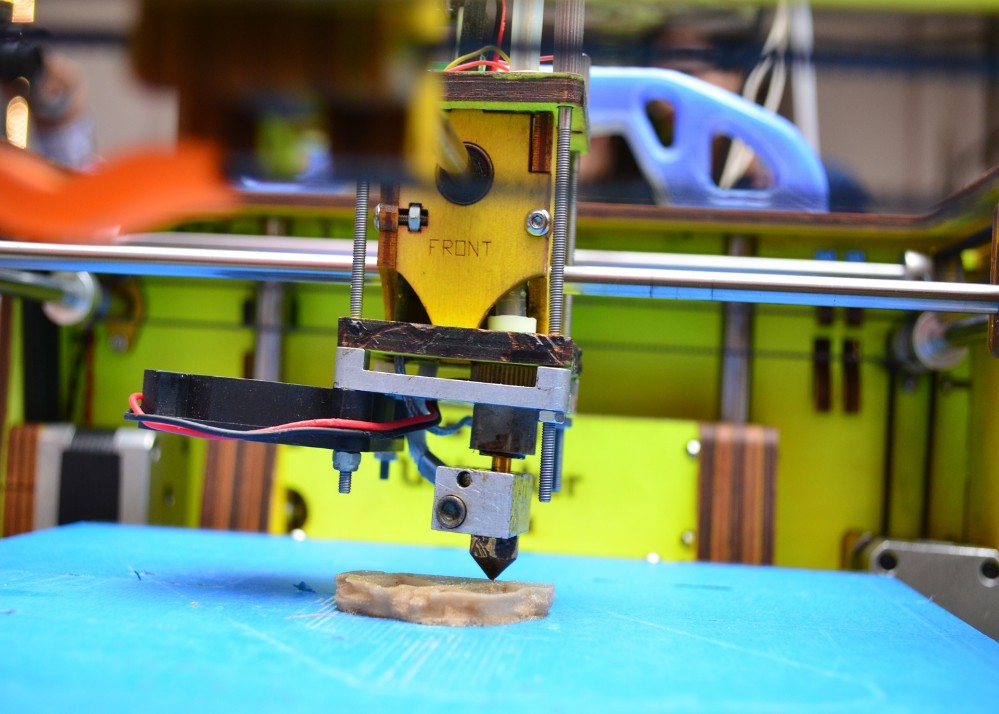
Figure 1. 3D Reprinting.
Reprint, Reuse, Repeat
To create the recyclable resin, the researchers turned to anthracene, a chemical compound known for reversible light-driven reactions. Under UV exposure, anthracene molecules form cross-linked structures through photodimerization, allowing the resin to harden. When heated, the process reverses, breaking the material back into its reusable form.
The team also eliminated the need for photoinitiators — additives commonly required in UV-curing systems. According to professor Shoji Maruo, avoiding these chemicals simplified the resin composition and reduced contamination during recycling. Figure 1. 3D Reprinting.
Precision Printing Holds Up After 10 Cycles
The researchers tested the material using both single-photon microstereolithography and two-photon lithography, advanced techniques used to fabricate microscopic structures with extreme precision.
In one experiment, the team produced a butterfly-shaped microstructure and observed print quality comparable to traditional materials. Another test repeatedly printed the letters “YNU” through 10 reuse cycles while maintaining strong performance.
Researchers also demonstrated the resin’s reshaping ability by transforming a printed cube into a disc after heating it to 150°C for 15 minutes. According to Masaru Mukai, the results confirm the resin’s suitability for precision laser-based 3D printing applications.
Toward Sustainable 3D Manufacturing
The team believes reversible anthracene chemistry could open the door to more sustainable light-based manufacturing systems. Their next goal is to adapt the recyclable resin for larger industrial-scale 3D printers while improving long-term durability and stability.
If successfully scaled, the technology could significantly reduce material waste in industries that depend on precision additive manufacturing, from electronics to biomedical engineering.
Reference:
- https://interestingengineering.com/innovation/recyclable-resin-high-precision-3d-printing
Cite this article:
Keerthana S (2026), Next-Gen Resin Supports 10 Rounds of Precision 3D Reprinting, AnaTechMaz, pp.463
Recent Post
-

Ditch the Clutter: This Mini PC Does the Job of Three Devices
The ViewDock Gen2 is pushing the boundaries of what a mini-PC can be—combining solid performance,...
-

“Hydrogen-Retrofit Dash 8 Could Serve 90% of Today’s Flight Routes”
Dutch start-up Conscious Aerospace is ramping up development of a ...
-
Researchers Create Twisting Light Vortex for Advanced Quantum Technologies
A new breakthrough in photonics has enabled scientists to create a ...
-

Revolutionary BNCT Technique Could Transform Cancer Treatment
In the ongoing fight against aggressive brain cancers like glioblastoma, a promising new...
-
Tiny Everyday Carry Tool Packs a 67-Layer Damascus Steel Knife and Bottle Opener into Your Keychain
The Z6 is equipped with a 67-layer Damascus steel blade,...
-

What to Read This Week: Katrina Manson’s Chilling Look Inside Project Maven
Israel’s military is already using artificial intelligence to select ...
-
SNU Engineers Introduce Ultra-Thin, Battery-Free Wearable Device
A research team from Seoul National University (SNU), led by Professor Jerald Yoo, has unveiled....
-

World’s Largest Floating Wind Turbine Goes Online, Set to Power 24,000 Homes
The massive turbine uses a semi-submersible platform with...
-
Advanced Memory Technology Promises Major Battery Life Boost
Researchers at Institute of Science Tokyo have developed an ultra-small memory device that...
-

New Brain-Guided Hearing System Succeeds in First Human Testing
Scientists at Columbia University’s Zuckerman Institute have unveiled a breakthrough...
-

New Laser Acoustic Imaging Technique Aims to Make Surgery Safer
A new imaging technology combining lasers, sound waves,...
-

AI Supercharges Ultrafast Laser Simulations, Boosting Speed by 250x
Scientists have created a powerful deep-learning model...
-
Next-Gen Resin Supports 10 Rounds of Precision 3D Reprinting
Scientists in Japan have developed a recyclable UV-sensitive resin that can be melted down and...
-
Artificial Eyes Created by U.S. Researchers Boost Machine Vision
Engineers at Penn State University have developed a groundbreaking artificial vision device that...
-

MIT Develops Diamond-Based Solution to Enhance Gallium Nitride Chip Efficiency
Researchers at the Massachusetts Institute of Technology (MIT)....