

Researchers Unveil Energy-Saving Display Technology
A research team led by MIT, in collaboration with Samsung, has achieved a major breakthrough in quantum dot light-emitting diode (QD-LED) technology, significantly improving the lifespan and reliability of these advanced light sources. The discovery could accelerate the adoption of brighter, more energy-efficient displays and lighting systems that deliver exceptional color accuracy.
Quantum dots are nanoscale semiconductor particles capable of producing highly pure and vibrant colors, making them an attractive technology for future televisions, smartphones, monitors, and lighting applications. Although QD-LEDs offer impressive brightness and energy efficiency, their widespread commercialization has been limited by their relatively short operational lifetimes, particularly in blue-emitting devices.
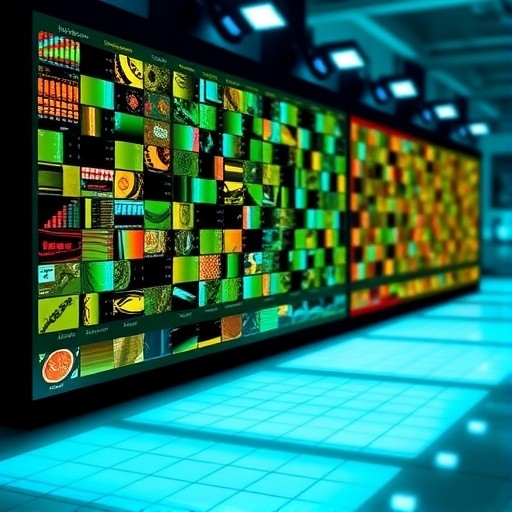
Figure 1. Energy-Saving Display.
To uncover the root cause of this limitation, the researchers conducted an in-depth analysis of blue QD-LEDs at the nanoscale. Using advanced imaging techniques at MIT.nano, they examined cross-sections of operating devices and discovered that the three primary functional layers experienced significant structural and chemical degradation over time. The study revealed that the release of hydrogen and oxygen within the devices caused layer thinning, quantum dot clustering, and other changes that reduced performance and shortened device life. Figure 1 shows energy-saving display.
To address these issues, the team developed a scalable encapsulation method using an acrylate-based resin. This protective coating effectively trapped harmful gases inside the device, preventing the internal damage responsible for performance degradation. As a result, the lifetime of blue QD-LEDs increased by more than 5,000 times, while red QD-LEDs demonstrated an eightfold improvement in operational longevity.
The encapsulation process also reduced moisture formation within the devices, helping preserve the delicate multilayer structure required for efficient light emission. By maintaining the integrity of these ultrathin layers, the technology significantly enhances both stability and long-term performance without adding substantial manufacturing complexity.
While the breakthrough represents a major milestone, the researchers note that additional improvements are still possible [1]. Future studies will focus on developing new protective materials and optimized device architectures to further extend the lifespan and efficiency of quantum dot LEDs.
The findings provide valuable insight into the degradation mechanisms that have long limited QD-LED commercialization. Beyond display technology, the improved stability of quantum dot devices could benefit a wide range of optoelectronic applications, including sensors, lasers, and advanced photonic systems.
According to the research team, understanding the nanoscale chemical processes inside QD-LEDs opens new opportunities for designing more durable and efficient devices. As these innovations continue to evolve, quantum dot technology is expected to play a central role in the next generation of ultra-thin displays and lighting solutions, delivering outstanding color quality, lower power consumption, and greater commercial viability.
Reference:
- https://bioengineer.org/new-discovery-promises-brighter-more-energy-efficient-digital-displays/
Cite this article:
Keerthana S (2026), Researchers Unveil Energy-Saving Display Technology, AnaTechMaz, pp.482.
Recent Post
-

Fast Holographic 3D Printing Produces Leak-Free Microstructures
Researchers at the University of Utah have developed an ....
-
Researchers Unveil Energy-Saving Display Technology
A research team led by MIT, in collaboration with Samsung, has achieved a major...
-
Pixel by Pixel: MIT Redefines Infrared Camera Technology
Researchers at MIT have developed a programmable infrared chip that could transform the future of thermal....
-
3D-Printed Thermal Cloak Makes Objects Invisible to Infrared Cameras
What was once the realm of science fiction is moving closer to...
-

Revolutionizing Healthcare with Flexible Wireless Polymer Sensors
As chronic diseases continue to rise worldwide, the need for continuous, real-time health monitoring....