

Revolutionary BNCT Technique Could Transform Cancer Treatment
In the ongoing fight against aggressive brain cancers like glioblastoma, a promising new approach is gaining attention: Boron Neutron Capture Therapy. Despite advances in surgery, chemotherapy, and radiation, survival rates for these tumors remain low, especially when they recur. BNCT offers a new path forward—one that targets cancer cells with remarkable precision while sparing healthy brain tissue.
The therapy works by first delivering a boron-based compound that selectively accumulates in tumor cells. Once in place, the patient is exposed to a beam of neutrons. When these neutrons interact with boron atoms, they trigger a reaction that releases high-energy particles. These particles travel only a microscopic distance—about the size of a single cell—destroying cancer cells from within while leaving surrounding tissue largely unharmed. This level of precision sets BNCT apart from conventional radiotherapy, which often damages both healthy and cancerous cells.
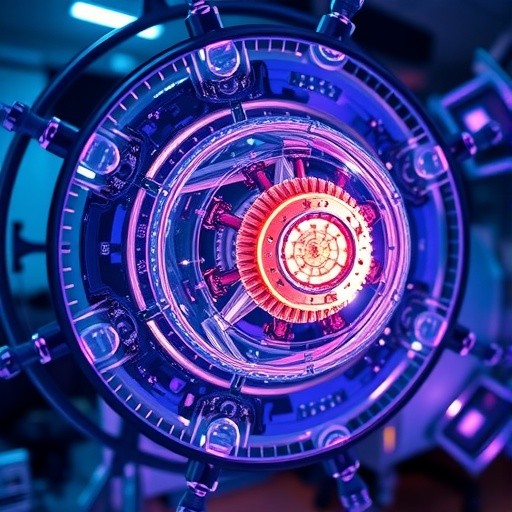
Figure 1. BNCT Technique.
A recent comprehensive review published in Research highlights decades of global clinical studies on BNCT. Led by researchers including Chunhong Wang, Zhigang Liu, and Xiao Xu, the analysis examined outcomes in patients with newly diagnosed and recurrent brain tumors. The findings suggest that BNCT can extend survival and, in some cases, achieve lasting tumor control—particularly in patients whose cancers resist standard treatments. Figure 1 shows BNCT Technique.
One of BNCT’s key strengths lies in its ability to target diverse tumor cell populations, including those in low-oxygen environments that are typically resistant to other therapies. At the same time, boron compounds used in treatment have shown minimal side effects, improved patient tolerance and opening the possibility for repeated treatments.
Beyond gliomas, BNCT is also showing potential in other cancers, including head and neck tumors, melanoma, and certain liver cancers. Advances in technology are further accelerating its development [1]. While early BNCT systems relied on nuclear reactors, newer accelerator-based neutron sources are more compact and suitable for hospital settings, making the therapy more accessible.
Equally important is the impact on quality of life. Compared to traditional treatments, BNCT appears to cause less neurological damage, helping patients maintain cognitive function and daily independence.
While challenges remain—such as standardizing treatment protocols and conducting large-scale clinical trials—the growing body of evidence points to BNCT as a transformative step in cancer care. By combining targeted drug delivery with precise nuclear reactions, it represents a new frontier in oncology—one that could redefine treatment for some of the most difficult cancers.
Reference:
- https://bioengineer.org/boron-neutron-capture-therapy-a-breakthrough-in-cancer-treatment/
Cite this article:
Keerthana S (2026), Revolutionary BNCT Technique Could Transform Cancer Treatment, AnaTechMaz, pp.454
Recent Post
-

Ditch the Clutter: This Mini PC Does the Job of Three Devices
The ViewDock Gen2 is pushing the boundaries of what a mini-PC can be—combining solid performance,...
-

“Hydrogen-Retrofit Dash 8 Could Serve 90% of Today’s Flight Routes”
Dutch start-up Conscious Aerospace is ramping up development of a ...
-
Researchers Create Twisting Light Vortex for Advanced Quantum Technologies
A new breakthrough in photonics has enabled scientists to create a ...
-
Revolutionary BNCT Technique Could Transform Cancer Treatment
In the ongoing fight against aggressive brain cancers like glioblastoma, a promising new...
-

Tiny Everyday Carry Tool Packs a 67-Layer Damascus Steel Knife and Bottle Opener into Your Keychain
The Z6 is equipped with a 67-layer Damascus steel blade,...
-

What to Read This Week: Katrina Manson’s Chilling Look Inside Project Maven
Israel’s military is already using artificial intelligence to select ...
-

SNU Engineers Introduce Ultra-Thin, Battery-Free Wearable Device
A research team from Seoul National University (SNU), led by Professor Jerald Yoo, has unveiled....
-

World’s Largest Floating Wind Turbine Goes Online, Set to Power 24,000 Homes
The massive turbine uses a semi-submersible platform with...
-
Advanced Memory Technology Promises Major Battery Life Boost
Researchers at Institute of Science Tokyo have developed an ultra-small memory device that...
-

New Brain-Guided Hearing System Succeeds in First Human Testing
Scientists at Columbia University’s Zuckerman Institute have unveiled a breakthrough...
-
New Laser Acoustic Imaging Technique Aims to Make Surgery Safer
A new imaging technology combining lasers, sound waves,...
-
AI Supercharges Ultrafast Laser Simulations, Boosting Speed by 250x
Scientists have created a powerful deep-learning model...
-
Next-Gen Resin Supports 10 Rounds of Precision 3D Reprinting
Scientists in Japan have developed a recyclable UV-sensitive resin that can be melted down and...
-
Artificial Eyes Created by U.S. Researchers Boost Machine Vision
Engineers at Penn State University have developed a groundbreaking artificial vision device that...
-

MIT Develops Diamond-Based Solution to Enhance Gallium Nitride Chip Efficiency
Researchers at the Massachusetts Institute of Technology (MIT)....