

Google DeepMind Co-Founder Warns: “The AI Industry is in a Bubble”
Speaking on the Hard Fork podcast with hosts Kevin Roose and Casey Newton, Demis Hassabis, CEO and co-founder of Google DeepMind and Isomorphic Labs, echoed concerns similar to those expressed by Sundar Pichai, CEO of Alphabet, about the AI industry’s seemingly unsustainable growth.
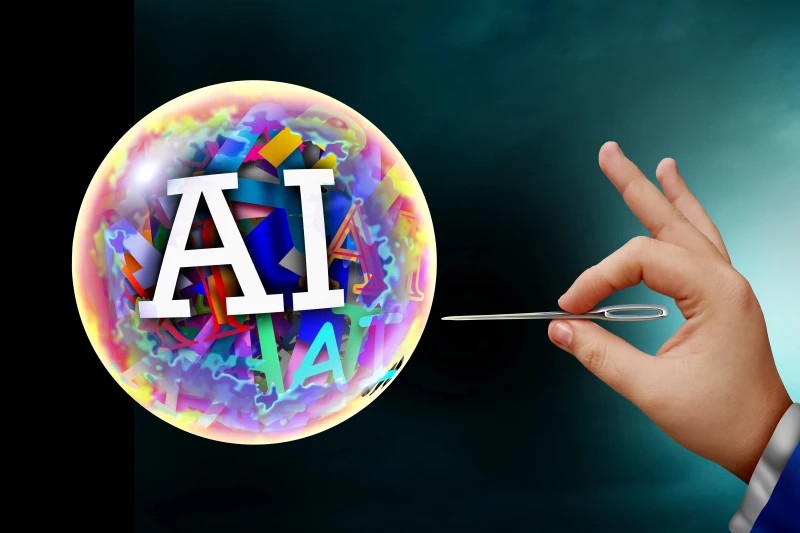
Figure 1. DeepMind Co-Founder Flags Potential Bubble in AI Industry.
“It’s too binary a question, I would say,” he responded. “In my personal view, some segments of the AI industry are probably in a bubble. For example, seed funding rounds reaching multi–ten-billion-dollar valuations for very little, despite talented teams, might be early signs of a bubble forming.” Figure 1 shows DeepMind Co-Founder Flags Potential Bubble in AI Industry.
As 2025 draws to a close, the AI bubble debate remains in the spotlight, following a year of unprecedented investment and soaring valuations for companies like Alphabet, Nvidia, and OpenAI. But according to Demis Hassabis, it’s not all cause for concern.
“I think there’s tremendous value in the work being done,” Hassabis said, pointing to new product areas such as Gemini app, NotebookLM, robotics, gaming, and drug discovery through Isomorphic and Waymo. “These are all emerging ‘greenfield’ areas. They’ll take time to grow into multi-hundred-billion-dollar businesses, but I see potential for half a dozen to a dozen of them to succeed, with Alphabet deeply involved. That’s very exciting to me.”
While it’s no secret that many AI companies are currently operating at a loss—OpenAI reportedly burned through $14 billion in this quarter alone—Hassabis remains optimistic about DeepMind’s trajectory.
“Immediate returns matter,” he explained. “At Google, we’re integrating these technologies into multi-billion-user products people use every day. We have countless ideas; it’s about execution. A lot of this will generate near-term revenue while also positioning us for the future.”
Hassabis added, “I feel confident about where we are as Alphabet, whether there’s a bubble or not. Our goal is to win in both scenarios. If there’s no bubble, we’ll seize the opportunities. If there is a bubble and the market corrects, we’ll be well-positioned to benefit from that too.”
The situation draws comparisons to the dot-com era, when countless startups were valued on little more than promise. That bubble burst in 2000, wiping out many companies and tech-sector jobs, and contributed to a brief U.S. recession in 2001.
There are growing concerns that the AI industry—fueled by unprecedented investment without guaranteed financial returns—might follow a trajectory similar to the dot-com era. This year has seen market leader’s soar: Alphabet reached a $3.5 trillion valuation, OpenAI reportedly hit $500 billion, and NVIDIA became the first company to surpass $5 trillion.
Alphabet CEO Sundar Pichai told the BBC that AI spending is in an “extraordinary moment” but acknowledged that “elements of irrationality” reminiscent of the dot-com era are now present in the market.
Hassabis’ cautious optimism seems reasonable: a bubble may exist, and if it bursts, it could prune the overcrowded AI sector and impact tech employment. Former IMF chief economist Gita Gopinath warns that a crash akin to the dot-com collapse could erase $20 trillion from U.S. households and $15 trillion from global investors. Yet, as with the internet, the AI industry is expected to emerge stronger and more sustainable. Major players like Alphabet, which continues to diversify across products, are likely to remain at the forefront of this enduring technological transformation.
In 2024, Hassabis made history alongside DeepMind director Dr. John Jumper by sharing the Nobel Prize in Chemistry for their groundbreaking work on AlphaFold, the AI system that predicts the 3D structures of proteins from their amino acid sequences.
Regarding Gemini 3, it’s certainly a major development, though many of its tools have yet to be widely released. Access to the launch model remains staggered across platforms in the U.S., so check out the video below for more details.
Source:NEW ATLAS
Cite this article:
Priyadharshini S (2025), Google DeepMind Co-Founder Warns: “The AI Industry is in a Bubble”, AnaTechMaz, pp. 322
Recent Post
-

Google Unveils Keyboard Inspired by Classic Rotary Phones
Rotary phones, once a fixture in mid-century living rooms, faded into basements and.....
-
iOS 26 Introduces a New Way to Save Battery
Modern smartphones are becoming increasingly powerful, intelligent, and versatile.....
-

Why Does This Concept Phone Feature a Robot-Arm Camera?
When activated, the robotic arm raises the camera above the top of the phone and.....
-
How to Use Visual Intelligence on iPhone Running iOS 26
By now, most iPhone users have likely upgraded to iOS 26, and it’s a major update.....
-

ChatGPT: Everything About the AI Chatbot in One Place
Since its launch in November 2022, ChatGPT, OpenAI’s text-generating AI chatbot.....
-
Google’s Gemini 3 Model Keeps AI Excitement Riding High – For Now
Google’s newest chatbot, Gemini 3, has achieved notable improvements across multiple AI benchmark tests,....
-
Google DeepMind Co-Founder Warns: “The AI Industry is in a Bubble”
Speaking on the Hard Fork podcast with hosts Kevin Roose and....
Google Reverses Decision to Block Unverified Android Developers
Google’s August proposal would have required all Android developers to verify their identities starting next....
ChatGPT’s Voice Mode is Now Fully Integrated into the Main Interface
ChatGPT’s voice mode is becoming more convenient. On Tuesday, OpenAI announced an update to the ....
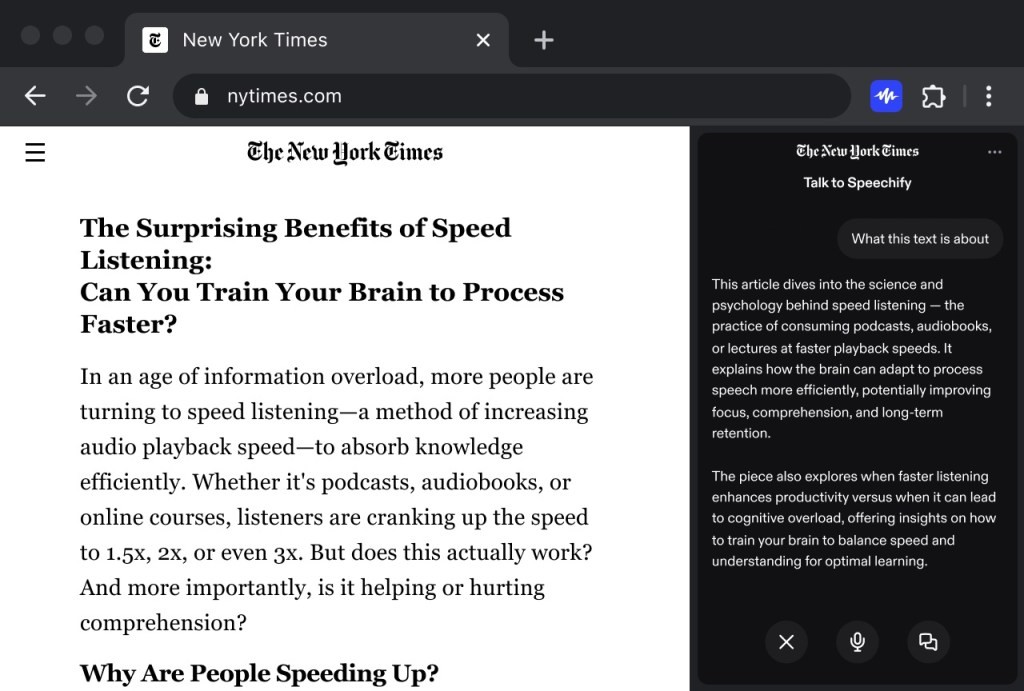
Speechify Brings Voice Typing and Assistant Features to its Chrome Extension
Speechify has primarily been a tool for listening to articles, PDFs,.....
-

Kick-Start Your Language-Learning Journey with Lifetime Access to Babbel
Now is the ideal moment to invest in yourself — and for many, that....
-
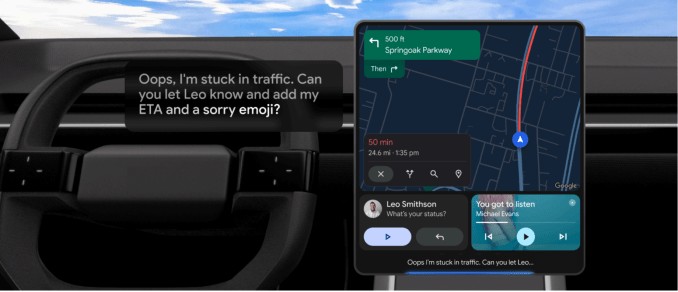
Android Auto Worldwide Now Getting Gemini Rollout
Google is rolling out Gemini to Android Auto, its smartphone projection system found in millions of cars, trucks,....
-
Meta to Roll Out Trial Premium Subscriptions Across Instagram, Facebook, and WhatsApp
Meta is preparing to test new subscription plans that offer...
-
How OpenAI and Google Expect AI to Transform Go-to-Market Strategies
For years, startups relied on traditional playbooks when launching....
-

WhatsApp Introduces New Feature Similar to Instagram Notes
WhatsApp is rolling out a feature similar to Instagram Notes, letting users post short text updates visible to....