

Sonund-Tracking Headphones Enable Eavesdropping in Multiple Languages
As an American living in Portugal and casually studying the language for about 18 months, I’ve finally reached the point where I can hold a basic conversation—provided I know the topic. At places like the supermarket checkout or the bank, I do fine. But drop me into a busy bus station, and the conversations around me dissolve into a jumble of shhhzzs and ows, making it hard to catch even a single word, let alone grasp the full meaning.
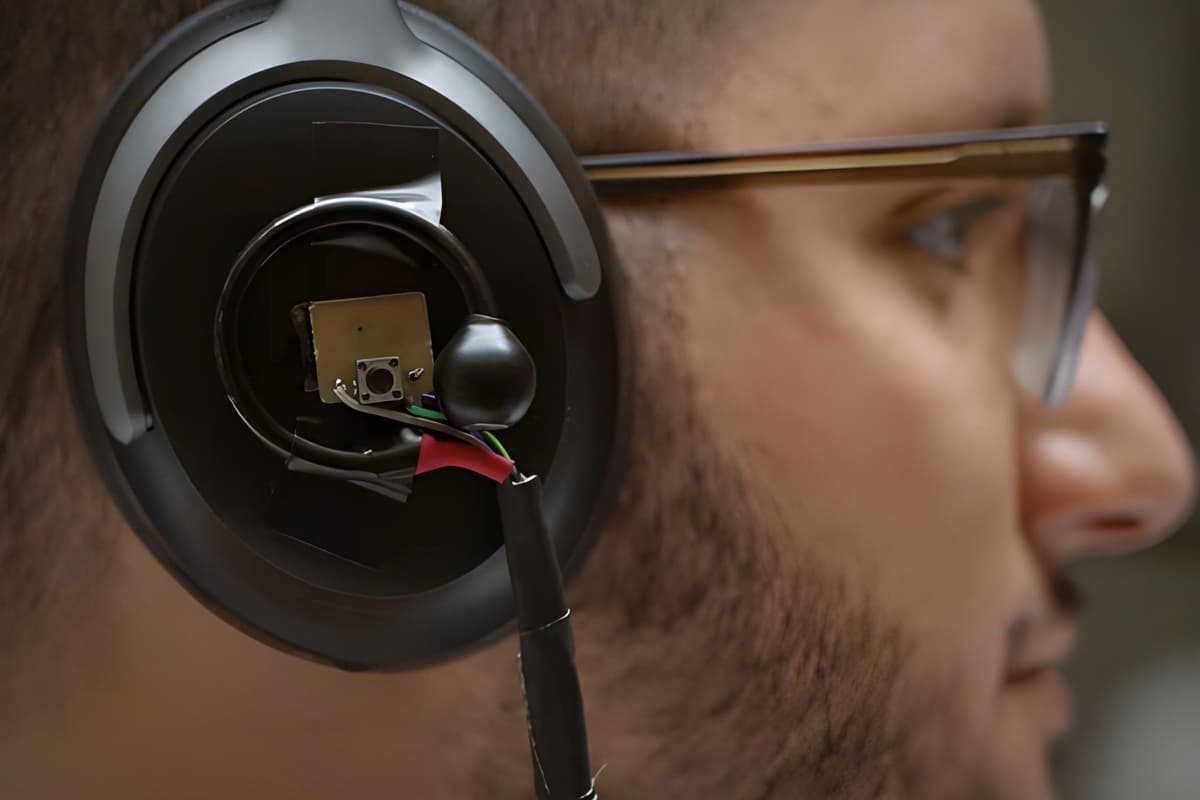
Figure 1. Multilingual Eavesdropping Made Possible with Sound-Tracking Headphones.
That’s why I was especially intrigued when I learned about a prototype headphone set that can actively monitor its surroundings, identify how many people are speaking, and translate each language thread almost in real time. Figure 1 shows Multilingual Eavesdropping Made Possible with Sound-Tracking Headphones.
Gollakota explains that once the microphones capture the sound, the audio feed is sent to a mobile device running neural network models in real time. In their tests, the team used a laptop powered by Apple’s M2 silicon chip, which is capable of running these neural networks. The processed feed is then translated and transmitted back through the headphones, with a delay as short as 1 to 2 seconds.
The system doesn’t just separate different voices in a group conversation—it also maintains the natural rhythm of speech, making the translated output sound very natural. It adapts as the wearer moves around a room or turns their head, using AI to focus on different conversational threads.
“Our algorithms work a bit like radar,” said lead study author Tuochao Chen, a doctoral student at UW’s Allen School. “They scan the environment 360 degrees, constantly detecting and updating whether there’s one speaker or six or seven.”
So far, the system has been trained on conversational Spanish, French, and German, but researchers believe it could eventually support around 100 languages. They are actively working to improve both speed and accuracy. Additionally, they’ve made the system’s code open source to encourage further experimentation.
“This is a step toward breaking down language barriers between cultures,” Chen concludes. “So, if I’m walking down the street in Mexico and don’t speak Spanish, I can still translate everyone’s voices and understand who said what.”
What Are Sound-Tracking Headphones?
Sound-tracking headphones are a new type of wearable tech designed to listen to conversations happening around you. Unlike regular headphones that only play music or calls, these headphones can monitor the sounds in your environment and pick up different voices in real time.
How Do They Work?
The headphones use built-in microphones to capture sounds nearby. These audio signals are then sent to a mobile device or laptop equipped with powerful AI models, which analyze and separate each speaker’s voice, even in noisy or crowded places.
Real-Time Translation and Delay
Once the voices are separated, the AI translates what each person is saying into your preferred language almost instantly. The translated audio is then played back through the headphones with a small delay—usually a couple of seconds—to ensure accuracy while keeping the conversation flow natural.
Tracking Multiple Speakers and Movement
The system is smart enough to track multiple speakers in a group, even as they move around or turn their heads. Using AI algorithms similar to radar scanning, the headphones lock onto different conversation threads, so you can follow who’s speaking and what they’re saying.
The Future of Language Barriers
Currently trained on a handful of languages like Spanish, French, and German, this technology has the potential to support up to 100 languages. It could revolutionize communication by breaking down language barriers—imagine walking into any foreign country and understanding everyone around you effortlessly.
Reference:
- https://newatlas.com/mobile-technology/spatial-speech-translation-headphones/
Cite this article:
Priyadharshini S (2025), Sound-Tracking Headphones Enable Eavesdropping in Multiple Languages, AnaTechMaz, pp. 252
Recent Post
-
Research Claims Facebook Is Still Experimenting on Users in Unusual Ways
The process of choosing which ads you see has long passed out of.....
-

Android Phones to Auto-Reboot Every Three Days for Security Purposes
It looks like Google has rolled out a security feature in Android......
-

Chatgpt-4.5 Surpasses the Turing Test Threshold
In 1950, Alan Turing introduced an elegant yet profoundly......
-

Experts Warn: Your DNA May Be Vulnerable to Hacking
The NGS (Next-Generation Sequencing) workflow is a complex series.....
-

Apple Introduces Emergency Satellite Features to iPhone 13 With iOS 18.5
Apple released iOS 18.5 on Monday, bringing emergency satellite......
-

What To Expect at Google I/O 2025: Updates on Gemini and Android 16
Google I/O, the tech giant's most anticipated developer......
-
Google Introduces Its New Android Design Language, Material 3 Expressive
Google revealed its new Android design language, Material 3......

Viral Outrage Over Apple’s EU Payment Alerts Overlooks Crucial Detail
Apple has responded to recent viral claims about new warning labels appearing......

OpenAI Releases AI Software Development Agent Codex in ChatGPT
Artificial intelligence is revolutionizing software development by......

Weeks After Amazon's Alexa+ AI Launch, One Question Remains: Where Are the Users?
The rollout of Amazon's AI-enhanced Alexa+ is progressing slowly......
-

Microsoft's NLWeb Project Aims to Integrate More Chatbots into Websites
As part of its push to streamline the creation of AI-powered......
-
Sonund-Tracking Headphones Enable Eavesdropping in Multiple Languages
As an American living in Portugal and casually studying the......
-
Stitch Is Google's AI-Driven Tool for App Design Assistance
At the 2025 Google I/O developer conference, Google introduced......
-

At the 2025 Google I/O developer conference, Google introduced Stitch
Give your old PC a new lease on life with a fresh OS......
-

A Social Media Disclaimer Won’t Prevent AI From Using Your Data
In an attempt to stop their data from being used to train AI, some......