

Experts Warn: Your DNA May Be Vulnerable to Hacking
Weak Points in the Sequencing Workflow
The NGS (Next-Generation Sequencing) workflow is a complex series of interlinked steps — including sample preparation, sequencing, data analysis, and interpretation — all reliant on advanced instruments, specialized software, and interconnected systems.
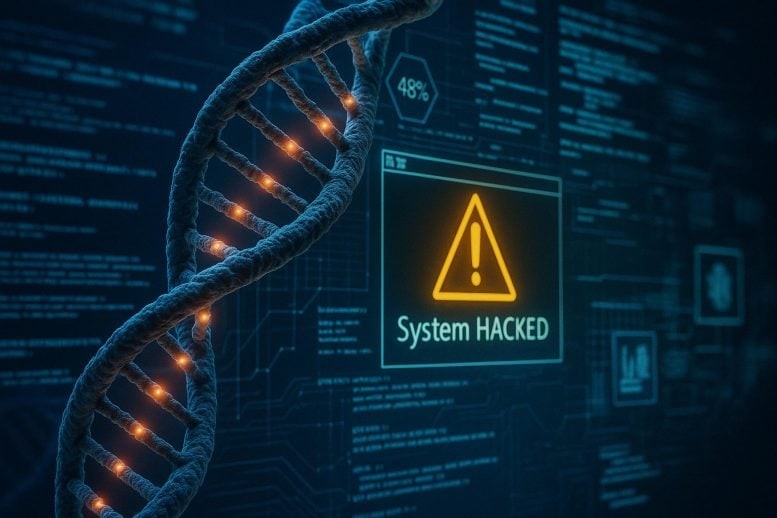
Figure 1. Your DNA Could Be the Next Target for Hackers, Experts Caution.
Although each stage is crucial for producing accurate genetic data, they also introduce multiple vulnerabilities. With many DNA datasets publicly available online, researchers warn that cybercriminals could exploit this data for surveillance, manipulation, or even harmful experimentation. Figure 1 shows Your DNA Could Be the Next Target for Hackers, Experts Caution.
Emerging Threats Highlight Urgent Need for Cyber-Biosecurity
Researchers have identified a range of evolving threats that bad actors could use to exploit genetic systems, including synthetic DNA encoded with malware, AI-powered genome data manipulation, and identity tracing through re-identification methods. These dangers extend far beyond traditional data breaches, posing serious risks to personal privacy, scientific reliability, and national security.
Dr. Anjun emphasized: “Cyber-biosecurity is critically under-researched and poorly understood, creating a dangerous gap in our global biosecurity framework. To ensure DNA data is protected and used ethically, we urgently need more research and collaboration focused on securing this powerful technology.
“Governments, regulators, funding bodies, and academic institutions must act now—by prioritizing cyber-biosecurity through targeted research, education, and robust policy-making—before the risks spiral out of control.”
Coordinated Action Needed to Prevent Genomic Data Exploitation
“Without unified efforts, genomic data is at risk of being misused for surveillance, discrimination, or even bioterrorism,” the researchers warn. Current security measures are fragmented, and crucial collaboration across fields remains limited. The key to effective prevention lies in interdisciplinary cooperation—bringing together computer scientists, bioinformaticians, biotechnologists, and security experts, who traditionally operate in isolation but must now work in unison.
The team’s research offers a comprehensive list of potential threats across the entire next-generation sequencing (NGS) process, laying the groundwork for strengthening biosecurity.
To address these risks, the paper also proposes practical measures, such as implementing secure sequencing protocols, using encrypted data storage, and leveraging AI-driven anomaly detection systems—steps that form a foundation for robust cyber-biosecurity moving forward.
DNA is no longer just biological—it's digital. Modern sequencing turns your genetic code into data files that are stored, analyzed, and sometimes shared online.
This data is used for medical research, ancestry tracing, and disease prediction—but it also becomes a potential cyber target.
The process of Next-Generation Sequencing (NGS) involves multiple digital touchpoints: sample prep, sequencing machines, cloud-based data analysis, and interpretation tools.
Each step introduces vulnerabilities—especially where software, networks, or cloud storage are involved.
Source: SciTECHDaily
Cite this article:
Priyadharshini S (2025), Experts Warn: Your DNA May Be Vulnerable to Hacking, AnaTechMaz, pp. 244
Recent Post
-

Research Claims Facebook Is Still Experimenting on Users in Unusual Ways
The process of choosing which ads you see has long passed out of.....
-

Android Phones to Auto-Reboot Every Three Days for Security Purposes
It looks like Google has rolled out a security feature in Android......
-
Chatgpt-4.5 Surpasses the Turing Test Threshold
In 1950, Alan Turing introduced an elegant yet profoundly......
-
Experts Warn: Your DNA May Be Vulnerable to Hacking
The NGS (Next-Generation Sequencing) workflow is a complex series.....
-

Apple Introduces Emergency Satellite Features to iPhone 13 With iOS 18.5
Apple released iOS 18.5 on Monday, bringing emergency satellite......
-

What To Expect at Google I/O 2025: Updates on Gemini and Android 16
Google I/O, the tech giant's most anticipated developer......
-
Google Introduces Its New Android Design Language, Material 3 Expressive
Google revealed its new Android design language, Material 3......
Viral Outrage Over Apple’s EU Payment Alerts Overlooks Crucial Detail
Apple has responded to recent viral claims about new warning labels appearing......

OpenAI Releases AI Software Development Agent Codex in ChatGPT
Artificial intelligence is revolutionizing software development by......

Weeks After Amazon's Alexa+ AI Launch, One Question Remains: Where Are the Users?
The rollout of Amazon's AI-enhanced Alexa+ is progressing slowly......
-
Microsoft's NLWeb Project Aims to Integrate More Chatbots into Websites
As part of its push to streamline the creation of AI-powered......
-

Sonund-Tracking Headphones Enable Eavesdropping in Multiple Languages
As an American living in Portugal and casually studying the......
-
Stitch Is Google's AI-Driven Tool for App Design Assistance
At the 2025 Google I/O developer conference, Google introduced......
-

At the 2025 Google I/O developer conference, Google introduced Stitch
Give your old PC a new lease on life with a fresh OS......
-

A Social Media Disclaimer Won’t Prevent AI From Using Your Data
In an attempt to stop their data from being used to train AI, some......