

UCLA Researchers Develop Scalable Method to Regulate Building Temperatures Year-Round
As global temperatures continue to rise, the demand for sustainable cooling solutions is more urgent than ever. A team of researchers led by Aaswath Raman, an associate professor at UCLA's Samueli School of Engineering, has developed an affordable and scalable method to cool buildings in the summer and heat them in the winter. This breakthrough, recently published in Cell Reports Physical Science, reveals a novel way to manipulate radiant heat transfer through common building materials to optimize thermal management.
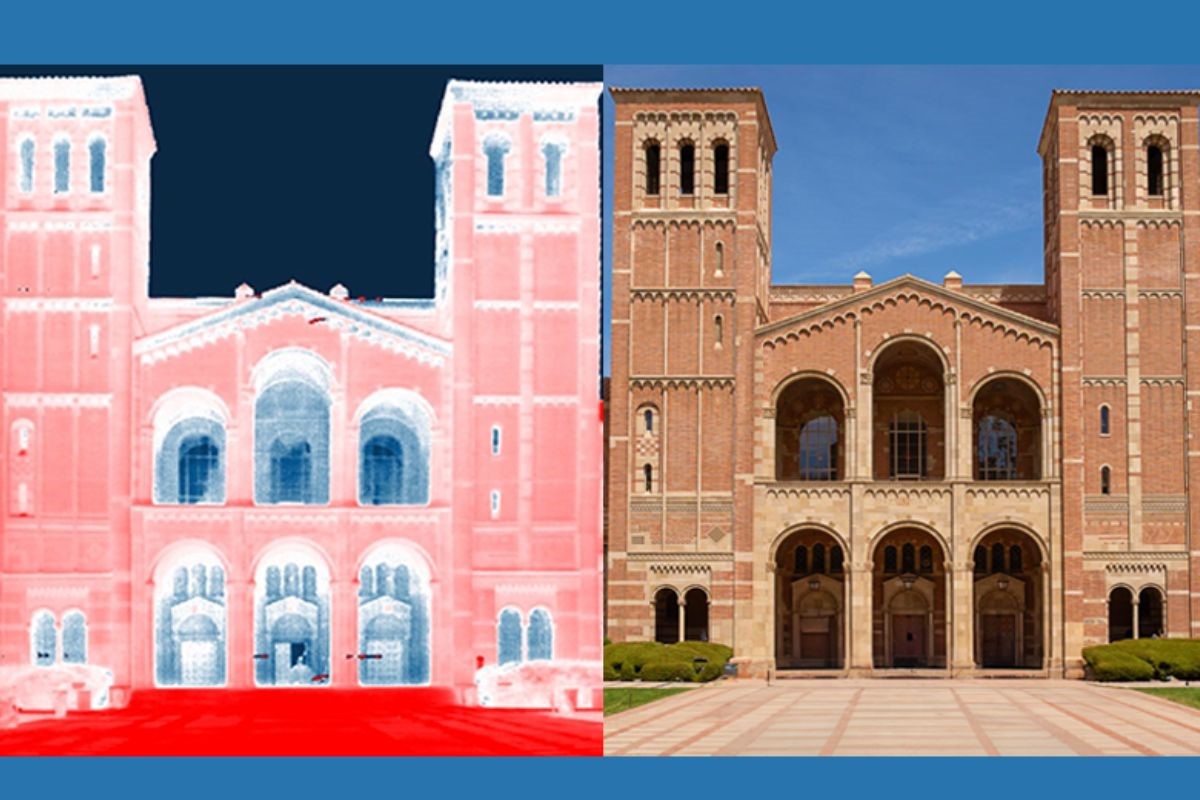
Figure 1. Thermal Infrared Image of UCLA Royce Hall. (Credit: Raman Lab/UCLA)
Radiant heat, which we feel when warm surfaces heat our bodies and homes, is carried by electromagnetic waves across a broad spectrum at ground level. While heat moves between buildings and the sky in a narrow portion of the infrared spectrum known as the atmospheric transmission window, this difference in heat transfer has made cooling buildings with limited skyward-facing surfaces challenging. Such buildings tend to retain heat from surrounding structures during the summer and lose heat in the winter. Figure 1 shows a Royce Hall thermal infrared image reveals radiant heat. The facade absorbs heat (white to pale red) from the ground (red) while some heat from the ground/building radiates up to the cold sky (blue).
“If we look at historical cities like Santorini in Greece or Jodhpur in India, we find that cooling buildings by making roofs and walls reflect sunlight has been practiced for centuries,” said Raman. “In recent years, there has been massive interest in cool roof coatings that reflect sunlight. But cooling walls and windows is a much more subtle and complex challenge.” [3]
Inspired by the success of super white paint for cooling roofs, the researchers aimed to achieve a similar passive radiative cooling effect by coating walls and windows with materials that better manage heat exchange between buildings and their surroundings at ground level. Their findings show that materials capable of selectively absorbing and emitting radiant heat within the atmospheric window can stay cooler in summer and warmer in winter compared to conventional materials.
“We were particularly excited when we found that materials like polypropylene, which we sourced from household plastics, can selectively radiate or absorb heat in the atmospheric window very effectively,” said Raman. “These materials border on the mundane, but the same scalability that makes them common also means that we could see them thermoregulating buildings in the near future.” [1]
This approach not only leverages cost-effective materials but also offers the potential to reduce energy consumption by lessening the need for air conditioners and heaters, which are both expensive to operate and major contributors to carbon dioxide emissions.
“The mechanism we proposed is completely passive, which makes it a sustainable way to cool and heat buildings with the seasons and yield untapped energy savings,” said Jyotirmoy Mandal, the study’s first author and now an assistant professor at Princeton University [2].
The researchers believe that this scalable methodology will be particularly beneficial for low-income communities with limited access to cooling and heating systems, which are increasingly vulnerable to extreme weather events. Raman and his team are now exploring ways to implement this technology on a larger scale, particularly in heat-vulnerable communities in Southern California.
This groundbreaking work was supported by several prestigious institutions, including the Schmidt Science fellowship, the Rhodes Trust, the Alfred P. Sloan Foundation, and the National Science Foundation.
Source: University of California - Los Angeles
References:
- https://phys.org/news/2024-08-mechanism-cool-energy.html
- https://scienmag.com/researchers-discover-new-mechanism-to-cool-buildings-while-saving-energy/
- https://www.eurekalert.org/news-releases/1054239
Cite this article:
Hana M (2024), UCLA Researchers Develop Scalable Method to Regulate Building Temperatures Year-Round, AnaTechMaz, pp. 43
Recent Post
-
Revolutionizing Bacterial Cellulose Production: A Milestone in Sustainable Materials Science
Bacteria produce materials of interest to humans, such as cellulose, silk, and ...
-
Terasaki Institute Develops Egg White-Derived Bioink for Advanced Tissue Engineering
Scientists at the Terasaki Institute have developed an innovative technology...
-
UBC's Accidental Discovery Unveils Nxylon: The Darkest Wood Ever Created
Researchers at the University of British Columbia have stumbled upon ...
-

Scientists Develop Extraordinary Material That Can Transform Sunlight and Water into Clean Energy
Researchers at Oregon State University have developed a groundbreaking...
-

World's Fastest Supercomputer Derives Recipe for Otherworldly Diamond
BC8 super diamonds, which are harder than any known material, are believed...
-

Natural Graphene Has Been Discovered on The Moon
In December 2020, the Chang'e 5 mission landed on the Moon, collected a ...
-
Machine Learning Unveils Next-Gen Membrane Materials
Chemical separation, including gas separation, plays a crucial role in ...
-
University of Virginia Engineers Harness Plant-Based Nanomaterial for Stronger, Greener Buildings
A pioneering research team from the University of Virginia School of Engineering...
-

New Substrate Material for Flexible Electronics Could Aid in Reducing E-Waste
Electronic waste is an increasing issue, but this degradable material could...
-

A Novel Method for Optimizing Quantum Materials
An MIT-led team demonstrates how to precisely control the properties of Weyl ...
-
Graphene, A Wonder Material, Has Been Discovered in Lunar Soil Samples from A Chinese Moon Mission
This graphene, composed of several thin layers, may have formed billions of years ...
-

Revolutionizing Battery Efficiency: Helical Peptide Polymers Outshine Traditional Electrolytes
For decades, solid-state electrolytes have been a focal point in the quest for...
-
UCLA Researchers Develop Scalable Method to Regulate Building Temperatures Year-Round
As global temperatures continue to rise, the demand for sustainable cooling solutions...
-
UCLA Engineers Develop Revolutionary Dynamic Material Inspired by Push Puppet Toys
A team of engineers at UCLA has created an innovative type of tunable dynamic...
-
Unlocking the Future of Lithium-Metal Batteries: A Breakthrough in Predicting Battery Lifespan
In the rapidly advancing world of battery technology, predicting battery life ...