

Revolutionizing Bacterial Cellulose Production: A Milestone in Sustainable Materials Science
Bacteria produce materials of interest to humans, such as cellulose, silk, and minerals. The advantage of this bacterial production is its sustainability, as it occurs at room temperature and in water. However, the process is time-consuming and yields quantities too small for industrial use.
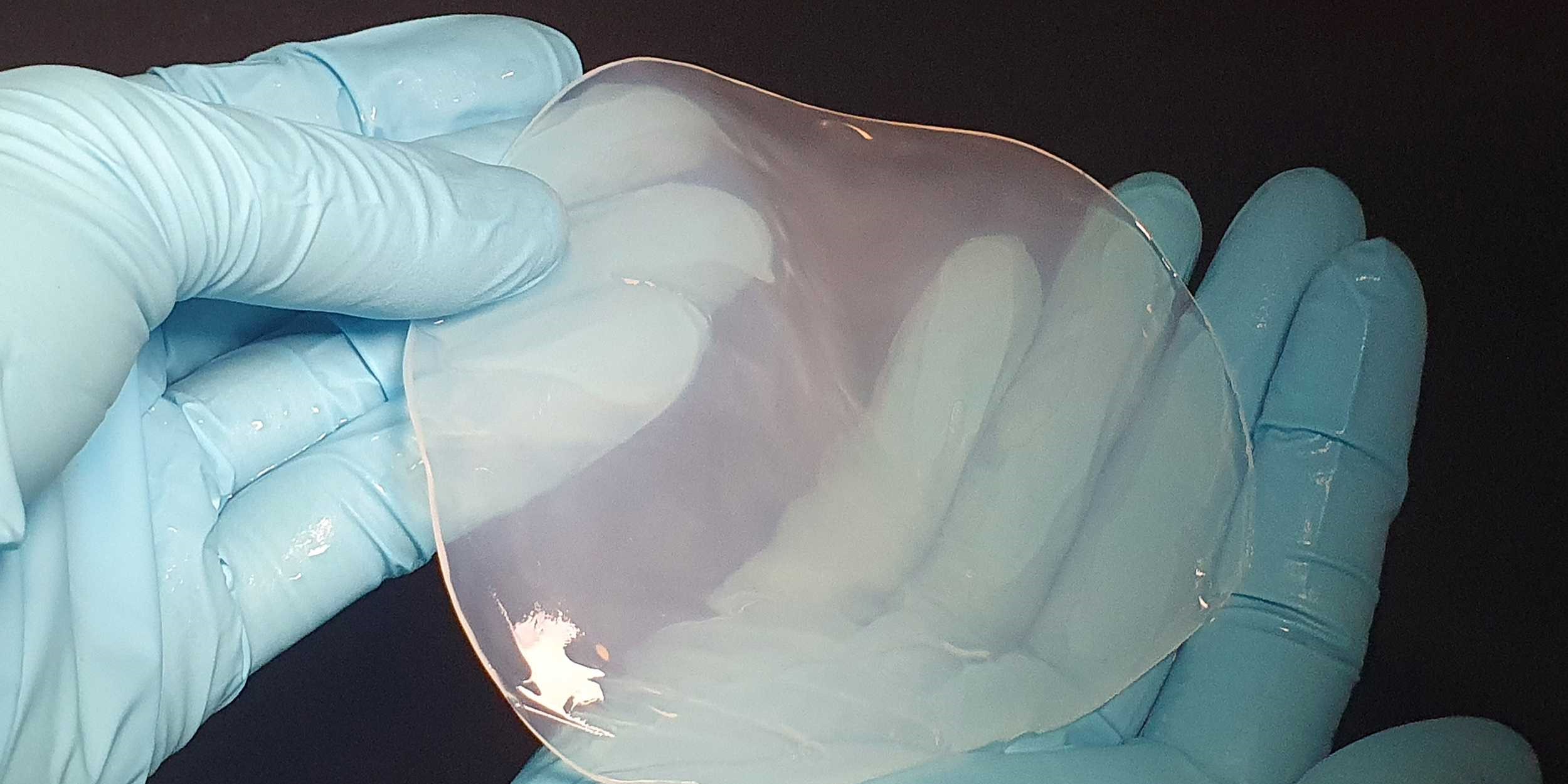
Figure 1. Bacterial Cellulose [1]. (Credit: Peter Rüegg / ETH Zurich)
Researchers have long aimed to transform microorganisms into living mini-factoriaes capable of producing larger quantities of desired products more quickly. This involves either targeted genetic intervention or cultivating the most suitable bacterial strains. Figure 1 shows Bacterial cellulose in the wet state [1].
A new approach from André Studart's research group at ETH Zurich uses the cellulose-producing bacterium Komagataeibacter sucrofermentans. This method, based on natural selection principles, allows scientists to produce tens of thousands of bacterial variants rapidly and select those that produce the most cellulose.
K. sucrofermentans naturally generates high-purity cellulose, a material highly sought for biomedical applications, packaging, and textiles. This type of cellulose supports wound healing and prevents infections. However, as Julie Laurent, a doctoral student in Studart's group and the first author of a study published in PNAS, explains, “the bacteria grow slowly and produce limited amounts of cellulose. We therefore had to find a way to boost production.”
Laurent's approach has succeeded in producing a small number of Komagataeibacter variants that generate up to seventy percent more cellulose than their original form.
Accelerating Evolution with UV Light
Laurent first created new variants of the wild-type bacterium by irradiating the bacterial cells with UV-C light, which causes random DNA damage. She then placed the bacteria in a dark room to prevent DNA repair and induce mutations.
Using a miniature apparatus, each bacterial cell was encapsulated in a droplet of nutrient solution to produce cellulose for a set time. After incubation, Laurent used fluorescence microscopy to analyze which cells had produced significant amounts of cellulose and which had produced little or none.
With a sorting system developed by ETH chemist Andrew De Mello’s group, Studart’s team automatically sorted out cells that had evolved to produce exceptionally large amounts of cellulose. This system, fully automated and very fast, can scan half a million droplets with a laser in minutes and sort those containing the most cellulose. Only four remained, producing 50 to 70 percent more cellulose than the wild type.
The evolved K. sucrofermentans cells can grow and produce cellulose mats in glass vials at the air-water interface. These mats typically weigh two to three milligrams and are about 1.5 millimeters thick. The cellulose mats of the new variants are almost twice as heavy and thick as the wild type.
Laurent and her colleagues genetically analyzed the four variants to identify the UV-C-induced genetic changes that led to increased cellulose production. All four variants had the same mutation in the same gene, which codes for a protein-degrading enzyme, a protease. Surprisingly, the genes directly controlling cellulose production were unchanged. “We suspect that this protease degrades proteins that regulate cellulose production. Without this regulation, the cell can no longer stop the process,” Laurent explains.
Patents Pending
This versatile new approach can be applied to bacteria producing other materials. Initially developed for creating bacteria that produce specific proteins or enzymes, this is the first use of such a method to enhance the production of non-protein materials, according to ETH Professor André Studart: “For me, this work is a milestone.”
The researchers have applied for a patent for their approach and the mutated bacterial variants. Next, they plan to collaborate with companies producing bacterial cellulose to test the new microorganism under real industrial conditions.
Source: ETH Zurich
References:
- https://www.eurekalert.org/news-releases/1052844
Cite this article:
Hana M (2024), Revolutionizing Bacterial Cellulose Production: A Milestone in Sustainable Materials Science, AnaTechMaz, pp. 31
Recent Post
-
Revolutionizing Bacterial Cellulose Production: A Milestone in Sustainable Materials Science
Bacteria produce materials of interest to humans, such as cellulose, silk, and ...
-
Terasaki Institute Develops Egg White-Derived Bioink for Advanced Tissue Engineering
Scientists at the Terasaki Institute have developed an innovative technology...
-
UBC's Accidental Discovery Unveils Nxylon: The Darkest Wood Ever Created
Researchers at the University of British Columbia have stumbled upon ...
-
Scientists Develop Extraordinary Material That Can Transform Sunlight and Water into Clean Energy
Researchers at Oregon State University have developed a groundbreaking...
-

World's Fastest Supercomputer Derives Recipe for Otherworldly Diamond
BC8 super diamonds, which are harder than any known material, are believed...
-

Natural Graphene Has Been Discovered on The Moon
In December 2020, the Chang'e 5 mission landed on the Moon, collected a ...
-
Machine Learning Unveils Next-Gen Membrane Materials
Chemical separation, including gas separation, plays a crucial role in ...
-
University of Virginia Engineers Harness Plant-Based Nanomaterial for Stronger, Greener Buildings
A pioneering research team from the University of Virginia School of Engineering...
-

New Substrate Material for Flexible Electronics Could Aid in Reducing E-Waste
Electronic waste is an increasing issue, but this degradable material could...
-
A Novel Method for Optimizing Quantum Materials
An MIT-led team demonstrates how to precisely control the properties of Weyl ...
-
Graphene, A Wonder Material, Has Been Discovered in Lunar Soil Samples from A Chinese Moon Mission
This graphene, composed of several thin layers, may have formed billions of years ...
-
Revolutionizing Battery Efficiency: Helical Peptide Polymers Outshine Traditional Electrolytes
For decades, solid-state electrolytes have been a focal point in the quest for...
-

UCLA Researchers Develop Scalable Method to Regulate Building Temperatures Year-Round
As global temperatures continue to rise, the demand for sustainable cooling solutions...
-
UCLA Engineers Develop Revolutionary Dynamic Material Inspired by Push Puppet Toys
A team of engineers at UCLA has created an innovative type of tunable dynamic...
-
Unlocking the Future of Lithium-Metal Batteries: A Breakthrough in Predicting Battery Lifespan
In the rapidly advancing world of battery technology, predicting battery life ...