

Machine Learning Unveils Next-Gen Membrane Materials
Chemical separation, including gas separation, plays a crucial role in manufacturing and research, consuming 15 percent of U.S. energy and contributing millions of tons in carbon emissions [2].
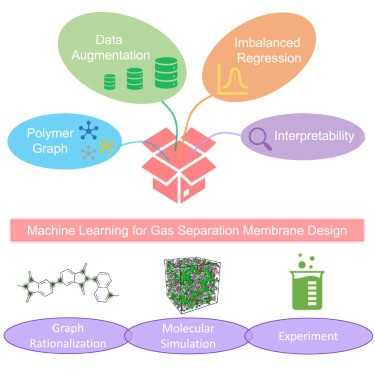
Figure 1. The Proposed Method. (Credit: Cell Reports Physical Science (2024). DOI: 10.1016/j.xcrp.2024.102067)
Figure 1 shows a graphical representation of the proposed method. A promising solution to these challenges is the development of gas separation membranes. However, finding the perfect materials for these membranes has been a significant hurdle—until now.
A groundbreaking study by chemical and mechanical engineers and computer scientists at the University of Notre Dame has changed the game. Their innovative graph-based machine learning approach led to the discovery, synthesis, and testing of polymer membranes that outperform existing ones by up to 6.7 times. This research, featured in Cell Reports Physical Science, marks a significant leap in membrane technology [1].
“What determines the membrane’s performance is the material’s microscopic porosity,” explained Agboola Suleiman, a doctoral student in Ruilan Guo’s lab. “The ideal membrane material strikes a balance between selectivity and permeability — permeable enough to let gases in, but selective enough to keep some out.”
To pinpoint this optimal material, the team employed graph neural networks (GNN), a machine learning method adept at representing molecular structures and their interactions. After training on various datasets, GNN identified two polymers with superior properties compared to previous membranes.
“Our machine learning algorithms led us to materials that had previously only been used for electronics applications,” noted Tengfei Luo, the Dorini Family Professor for Energy Studies and associate chair of the Department of Aerospace and Mechanical Engineering. “Then we synthesized and tested these materials in the lab, verifying their high performance in separating gases. It was like finding hidden gems.”
Synthesizing polymers can be both expensive and time-consuming, and data on their molecular structures and chemical properties is often limited. Yet, co-authors Meng Jiang and Gang Liu, along with computer scientists, overcame this challenge through algorithmic innovations.
“By using machine learning techniques, we were able to augment and improve our data,” said Jiaxin Xu, a doctoral student in Luo’s lab. “The graph-based model, enriched with information about each material’s molecular properties, allowed us not only to predict the best membrane materials but also to explain why they’re the best.”
The team’s newly identified top-performing polymers have the potential to create membranes that efficiently separate several critical gas pairs, paving the way for advances in various industrial applications.
Source: University of Notre Dame
References:
- https://www.technologynetworks.com/applied-sciences/news/machine-learning-discovers-hidden-gem-materials-for-heat-free-gas-separation-389413
- https://phys.org/news/2024-08-machine-hidden-gem-materials-free.html
Cite this article:
Hana M (2024), Machine Learning Unveils Next-Gen Membrane Materials, AnaTechMaz, pp. 37
Recent Post
-
Revolutionizing Bacterial Cellulose Production: A Milestone in Sustainable Materials Science
Bacteria produce materials of interest to humans, such as cellulose, silk, and ...
-
Terasaki Institute Develops Egg White-Derived Bioink for Advanced Tissue Engineering
Scientists at the Terasaki Institute have developed an innovative technology...
-
UBC's Accidental Discovery Unveils Nxylon: The Darkest Wood Ever Created
Researchers at the University of British Columbia have stumbled upon ...
-
Scientists Develop Extraordinary Material That Can Transform Sunlight and Water into Clean Energy
Researchers at Oregon State University have developed a groundbreaking...
-

World's Fastest Supercomputer Derives Recipe for Otherworldly Diamond
BC8 super diamonds, which are harder than any known material, are believed...
-

Natural Graphene Has Been Discovered on The Moon
In December 2020, the Chang'e 5 mission landed on the Moon, collected a ...
-
Machine Learning Unveils Next-Gen Membrane Materials
Chemical separation, including gas separation, plays a crucial role in ...
-
University of Virginia Engineers Harness Plant-Based Nanomaterial for Stronger, Greener Buildings
A pioneering research team from the University of Virginia School of Engineering...
-

New Substrate Material for Flexible Electronics Could Aid in Reducing E-Waste
Electronic waste is an increasing issue, but this degradable material could...
-
A Novel Method for Optimizing Quantum Materials
An MIT-led team demonstrates how to precisely control the properties of Weyl ...
-
Graphene, A Wonder Material, Has Been Discovered in Lunar Soil Samples from A Chinese Moon Mission
This graphene, composed of several thin layers, may have formed billions of years ...
-
Revolutionizing Battery Efficiency: Helical Peptide Polymers Outshine Traditional Electrolytes
For decades, solid-state electrolytes have been a focal point in the quest for...
-

UCLA Researchers Develop Scalable Method to Regulate Building Temperatures Year-Round
As global temperatures continue to rise, the demand for sustainable cooling solutions...
-
UCLA Engineers Develop Revolutionary Dynamic Material Inspired by Push Puppet Toys
A team of engineers at UCLA has created an innovative type of tunable dynamic...
-
Unlocking the Future of Lithium-Metal Batteries: A Breakthrough in Predicting Battery Lifespan
In the rapidly advancing world of battery technology, predicting battery life ...