

China Unveils Record-Breaking Quantum Memory to Bridge Traditional Data and Quantum Computing
Researchers at Zhejiang University have developed the world’s first superfast quantum random access memory (QRAM), a breakthrough that could accelerate the practical deployment of quantum computers. The new technology addresses one of the biggest challenges in quantum computing—efficiently connecting traditional binary data with quantum processors.
Quantum computers are widely regarded as the next generation of computing technology. Unlike classical computers, which store information as binary bits (0s and 1s), quantum systems use qubits that can represent multiple states simultaneously. This unique capability enables quantum computers to perform certain calculations far faster than even the most powerful supercomputers.
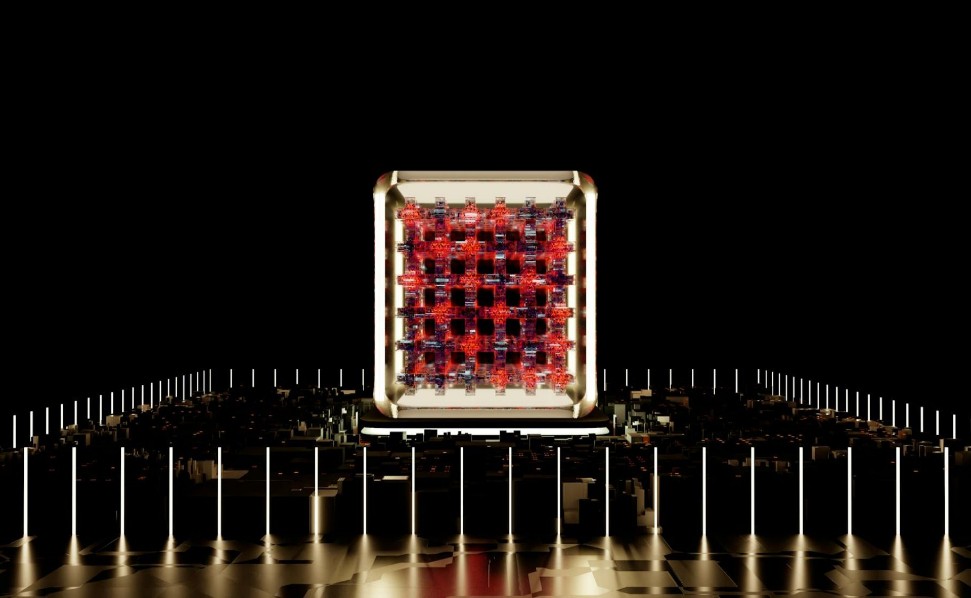
Figure 1. Quantum RAM.
Despite their immense potential, quantum computers face a significant obstacle: most real-world data is stored in classical binary formats. Before quantum processors can analyze this information, it must first be converted into a quantum-compatible form—a process that has long been a bottleneck for practical applications. Figure 1 shows Quantum RAM.
The newly developed QRAM serves as a critical bridge between these two worlds. Implemented on a superconducting quantum processor, the system allows data to be accessed and retrieved in quantum superposition, enabling multiple pieces of information to be processed simultaneously. During testing, the researchers successfully demonstrated the transfer of both 4-bit and 8-bit data formats between the QRAM and a quantum chip.
This capability could significantly expand the real-world usefulness of quantum computers. In drug discovery, for example, QRAM could rapidly load vast chemical databases into quantum systems, allowing millions of molecular configurations to be analyzed in parallel. Such an approach could dramatically reduce the time required to identify promising drug candidates.
The technology may also benefit artificial intelligence applications, helping quantum systems process massive datasets used in natural language processing, image recognition, and other data-intensive tasks [1]. By overcoming a key data-access challenge, QRAM brings quantum computing one step closer to handling practical workloads beyond laboratory environments.
As quantum hardware continues to mature, innovations like superfast QRAM could play a vital role in unlocking the full potential of quantum computing, paving the way for breakthroughs in science, medicine, and AI.
References:
- https://interestingengineering.com/innovation/worlds-first-superfast-quantum-ram-china
Cite this article:
Keerthana S (2026), China Unveils Record-Breaking Quantum Memory to Bridge Traditional Data and Quantum Computing, AnaTechMaz, pp.521
Recent Post
-
Neutral Atoms Offer Scalable and Connected Quantum Computing
A new white paper from the EuRyQa consortium argues that neutral-atom quantum computing has moved...

Quantum Algorithms Solve Industrial Problems Using Fewer Qubits
Researchers from West Virginia University and Cornell University....

Physicists Measure “Negative Time” in Unusual Quantum Experiment
Quantum physicists have reported a strange effect in which photons...
Scientists Develop Tiny Chip That Processes Information Using Light Instead of Electricity
Researchers have developed a tiny chip capable of manipulating....

New Magnon Breakthrough May Drastically Reduce Quantum Computer Size
Physicists at the University of Vienna have identified magnons with....
-
Beyond Atoms: How Quantum Physics Explains Bonding
In a remarkable breakthrough that is redefining the foundations of chemical science, researchers at...
-

Breakthrough May Enable Coin-Sized Quantum Computers
For years, scientists have viewed magnons as one of the most promising building blocks for...
-
Quantum Computing Breakthrough: Majorana 2 Keeps Qubits Stable for 20 Seconds
Microsoft has unveiled Majorana 2, its latest quantum computing chip,....
-

A Major Step Toward Scalable Quantum Photonics
Researchers have developed a new quantum photonic platform that could accelerate the arrival of....
-
The Future of Networking is Quantum, Says Cisco
At Cisco Live 2026, Cisco Research head and Cisco Fellow Ramana Kompella outlined the company's....
-
China Unveils Record-Breaking Quantum Memory to Bridge Traditional Data and Quantum Computing
Researchers at Zhejiang....
-

Quantum Technology Pushes Terahertz Sensing to New Heights
Researchers have developed a novel quantum detector that dramatically improves the detection....