

The Future of Networking is Quantum, Says Cisco
At Cisco Live 2026, Cisco Research head and Cisco Fellow Ramana Kompella outlined the company's vision for quantum networking, arguing that interconnected quantum systems—not standalone quantum processors—will unlock the true potential of quantum computing.
While quantum computing relies on principles such as entanglement, superposition, and quantum teleportation, Kompella emphasized that networking technologies will be essential for scaling these systems into practical, real-world platforms. Drawing parallels with the evolution of the internet, he suggested that a distributed, scale-out architecture could accelerate the arrival of useful quantum computing by decades.

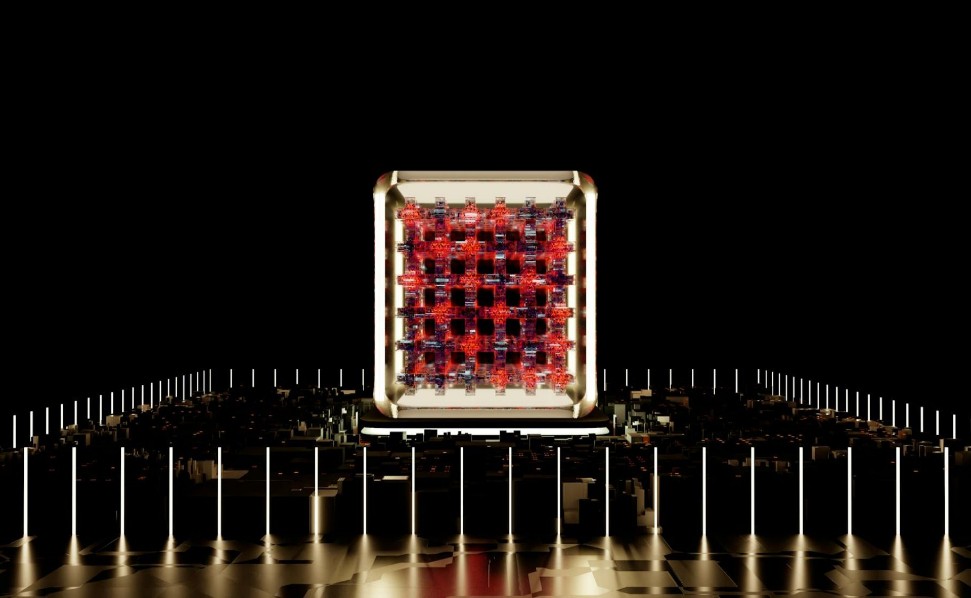
Figure 1. Quantum Networking Hardware Prototype.
Unlike traditional networks that move data packets between devices, quantum networks distribute entangled photon pairs among nodes. These entangled particles enable the transfer of quantum information, or qubits, through a process known as quantum teleportation. Although the quantum state transfer appears instantaneous, classical communication channels are still required to complete the process, ensuring that information cannot travel faster than the speed of light. Figure 1 shows quantum networking hardware prototype.
To support this emerging infrastructure, Cisco has developed two major technologies. The first is an entanglement source capable of generating 200 million entangled photon pairs per second using standard telecommunications fiber at room temperature. The second is the Universal Quantum Switch, a thin-film lithium niobate chip designed to preserve delicate quantum states while routing information across a network.
A distinguishing feature of the Universal Quantum Switch is its ability to translate between different quantum computing modalities, including superconducting, neutral-atom, ion-trap, and photonic systems. This interoperability allows diverse quantum platforms to communicate within a single network fabric rather than being restricted to a specific vendor ecosystem.
Cisco's broader vision resembles a quantum version of today's data centers, where quantum processors and shared resources are organized into interconnected pods. Specialized entanglement protocols and a distributed quantum compiler would coordinate computations across multiple processors while maintaining error correction throughout the network.
Beyond quantum computing itself, Cisco sees immediate opportunities for quantum networking in classical applications. One example is Quantum Sync, which could enable geographically separated financial trading systems to make coordinated decisions with significantly lower latency than conventional networking methods [1]. Another is Quantum Alert, a security technology designed to detect fiber-optic eavesdropping attempts by monitoring disruptions in entangled photon measurements.
Cisco has already begun testing these concepts outside laboratory environments, conducting entanglement-swapping experiments over live fiber networks in New York. The company has also expanded collaborations with IBM and Atom Computing to advance distributed quantum computing, error correction, and quantum transduction technologies.
Rather than betting on a single quantum computing architecture, Cisco aims to build the networking layer that can connect all major quantum platforms. According to Kompella, quantum networking is not merely a future requirement for quantum computing but a technology with practical commercial applications that can enhance conventional networks today.
References:
- https://www.networkworld.com/article/4180842/cisco-sees-quantum-networking-as-the-future-of-networking.html
Cite this article:
Keerthana S (2026), The Future of Networking is Quantum, Says Cisco, AnaTechMaz, pp.520
Recent Post
-
Neutral Atoms Offer Scalable and Connected Quantum Computing
A new white paper from the EuRyQa consortium argues that neutral-atom quantum computing has moved...

Quantum Algorithms Solve Industrial Problems Using Fewer Qubits
Researchers from West Virginia University and Cornell University....

Physicists Measure “Negative Time” in Unusual Quantum Experiment
Quantum physicists have reported a strange effect in which photons...
Scientists Develop Tiny Chip That Processes Information Using Light Instead of Electricity
Researchers have developed a tiny chip capable of manipulating....

New Magnon Breakthrough May Drastically Reduce Quantum Computer Size
Physicists at the University of Vienna have identified magnons with....
-
Beyond Atoms: How Quantum Physics Explains Bonding
In a remarkable breakthrough that is redefining the foundations of chemical science, researchers at...
-

Breakthrough May Enable Coin-Sized Quantum Computers
For years, scientists have viewed magnons as one of the most promising building blocks for...
-
Quantum Computing Breakthrough: Majorana 2 Keeps Qubits Stable for 20 Seconds
Microsoft has unveiled Majorana 2, its latest quantum computing chip,....
-

A Major Step Toward Scalable Quantum Photonics
Researchers have developed a new quantum photonic platform that could accelerate the arrival of....
-
The Future of Networking is Quantum, Says Cisco
At Cisco Live 2026, Cisco Research head and Cisco Fellow Ramana Kompella outlined the company's....
-
China Unveils Record-Breaking Quantum Memory to Bridge Traditional Data and Quantum Computing
Researchers at Zhejiang....
-
Quantum Technology Pushes Terahertz Sensing to New Heights
Researchers have developed a novel quantum detector that dramatically improves the detection....