

Neutral Atoms Offer Scalable and Connected Quantum Computing
A new white paper from the EuRyQa consortium argues that neutral-atom quantum computing has moved beyond a promising research concept and is now one of the most credible approaches for building practical, scalable quantum computers.
The report comes as the European Commission prepares the proposed European Quantum Act, highlighting the challenge of turning years of quantum research investment into long-term industrial and technological leadership.
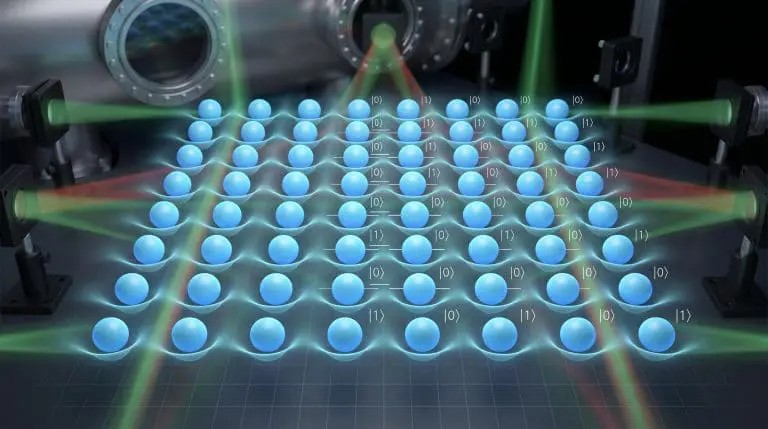
Figure 1. Neutral Atoms Enable Both Connectivity and Scalability in Quantum Technology
Unlike some other quantum technologies that depend heavily on external supply chains, neutral-atom systems draw on Europe’s existing strengths in photonics, precision laser systems, and atomic physics. This gives the region a potential advantage in building a self-reliant quantum technology ecosystem. Figure 1 shows Neutral Atoms Enable Both Connectivity and Scalability in Quantum Technology.
The white paper also stresses that useful quantum computing will require a full end-to-end technology stack, and suggests that Europe is well positioned to develop it thanks to its strong capabilities in the underlying enabling technologies.
Neutral-Atom Quantum Computing as a Route to Scalability
The challenge of quantum computing has now moved beyond basic scientific breakthroughs to building scalable systems, strong industrial capacity, and secure supply chains capable of supporting the technology for decades.
Only a few years ago, neutral atoms were mainly viewed as tools for analogue quantum simulation. However, rapid improvements in qubit fidelity and control have significantly shifted this perception. The report notes that all the essential building blocks for fault-tolerant quantum computing have already been demonstrated within neutral-atom platforms, even though major engineering and scientific hurdles still remain.
The EuRyQa consortium emphasizes that progress will require a full systems-level approach that goes beyond qubits alone, incorporating control electronics, software, error correction, and classical high-performance computing. The white paper stresses that practical quantum computers will depend on an integrated technology stack working in coordination.
It further highlights that Europe is well positioned to contribute to this ecosystem due to its strengths in deep-tech engineering and scientific collaboration, provided efforts are effectively coordinated and aligned with long-term industrial strategy.
EuRyQa Report Emphasizes Europe’s Technological Sovereignty
After a decade of major investment in quantum science, Europe now faces the challenge of turning strong research output into long-term industrial and technological leadership. The forthcoming European Quantum Act is expected to play a key role in enabling this transition.
The report highlights Neutral Atom Quantum Computing as a promising route for building both advanced scientific capability and more secure, independent supply chains compared to other quantum approaches. It stresses that progress will require more than just developing qubits, calling for a full systems-level strategy that includes control electronics, software, and integration with classical high-performance computing.
Another key advantage noted is that neutral-atom systems may reduce dependence on energy-intensive cryogenic cooling, which becomes increasingly important as quantum technologies scale.
The report concludes that Europe has the necessary talent, research base, and industrial strength to lead in this field, but success will depend on coordinated policy action and strategic support to transform excellent science into a unified and competitive quantum industry.
A Quantum Act Is Needed to Align Science and Industry
The race to develop practical quantum computers is accelerating, and researchers within the EuRyQa consortium emphasize that Europe’s focus is now shifting from purely scientific progress toward building strong industrial capabilities.
The report highlights that Europe already has globally competitive strengths in photonics, precision lasers, industrial engineering, and scientific instrumentation, supported by a growing ecosystem of startups and academic collaborations in quantum technologies [1]. However, the consortium warns that fragmentation could weaken Europe’s position, especially given the large-scale, industrially driven quantum programs in the United States and China.
The proposed European Quantum Act is seen as a potential mechanism to unify strategy across research, supply chains, manufacturing, and workforce development, helping to create a more coherent quantum industry.
The report stresses that scaling quantum computing is not only a physics challenge but also an engineering and systems-integration problem involving software and hardware ecosystems. It also notes that no single hardware approach is expected to dominate entirely.
Finally, it highlights the potential energy efficiency of Neutral Atom Quantum Computing, which may require less cryogenic cooling than other platforms—an advantage likely to become increasingly important as quantum systems scale.
References:
- https://quantumzeitgeist.com/neutral-atoms-combine-connectivity-scalability/
Cite this article:
Janani R (2026), Neutral Atoms Offer Scalable and Connected Quantum Computing, AnaTechMaz, pp.511
Recent Post
-
Neutral Atoms Offer Scalable and Connected Quantum Computing
A new white paper from the EuRyQa consortium argues that neutral-atom quantum computing has moved...

Quantum Algorithms Solve Industrial Problems Using Fewer Qubits
Researchers from West Virginia University and Cornell University....

Physicists Measure “Negative Time” in Unusual Quantum Experiment
Quantum physicists have reported a strange effect in which photons...
Scientists Develop Tiny Chip That Processes Information Using Light Instead of Electricity
Researchers have developed a tiny chip capable of manipulating....

New Magnon Breakthrough May Drastically Reduce Quantum Computer Size
Physicists at the University of Vienna have identified magnons with....
-
Beyond Atoms: How Quantum Physics Explains Bonding
In a remarkable breakthrough that is redefining the foundations of chemical science, researchers at...
-

Breakthrough May Enable Coin-Sized Quantum Computers
For years, scientists have viewed magnons as one of the most promising building blocks for...
-
Quantum Computing Breakthrough: Majorana 2 Keeps Qubits Stable for 20 Seconds
Microsoft has unveiled Majorana 2, its latest quantum computing chip,....
-

A Major Step Toward Scalable Quantum Photonics
Researchers have developed a new quantum photonic platform that could accelerate the arrival of....
-

The Future of Networking is Quantum, Says Cisco
At Cisco Live 2026, Cisco Research head and Cisco Fellow Ramana Kompella outlined the company's....
-
China Unveils Record-Breaking Quantum Memory to Bridge Traditional Data and Quantum Computing
Researchers at Zhejiang....
-
Quantum Technology Pushes Terahertz Sensing to New Heights
Researchers have developed a novel quantum detector that dramatically improves the detection....