

Scientists Develop Tiny Chip That Processes Information Using Light Instead of Electricity
Researchers have developed a tiny chip capable of manipulating light-based quantum information with extraordinary precision, marking a major advance for future photonic and quantum technologies.
Scientists at Monash University say the device brings computing powered by light instead of electricity a step closer to reality. The compact chip can generate, control, and detect light-based signals within a single integrated platform.
The innovation is based on an emerging field called Valleytronics, which explores using quantum properties in advanced materials to store and process information. Researchers believe the technology could eventually enable faster computers, lower energy consumption, and more advanced communication systems. Until now, however, combining all of these essential functions into one small device had remained a major obstacle.
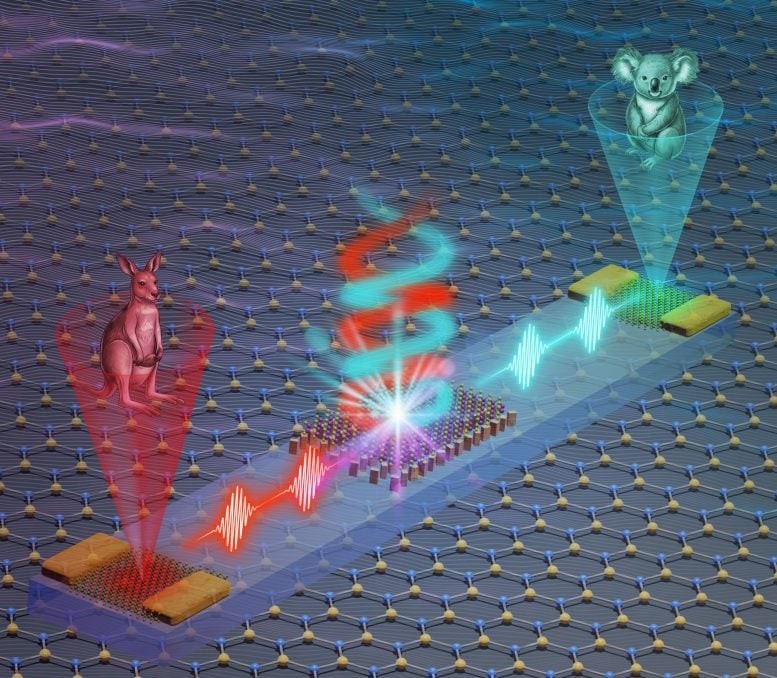
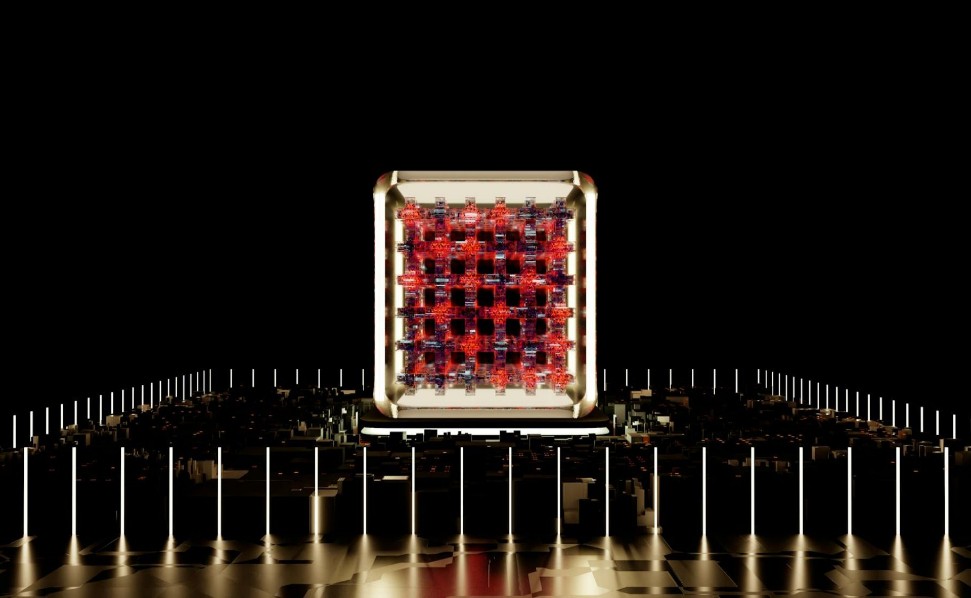
Figure 1. Tiny Light-Powered Chip Could Replace Electricity in Future Computing
In a study published in Nature Photonics, researchers unveiled a nanoscale circuit that can generate specialized light signals, precisely direct them, and convert them into electrical signals — all within a single chip. The device relies on the “valley degree of freedom,” a quantum property in certain materials that allows information to be encoded in ways beyond the limits of conventional electronics. Figure 1 shows Tiny Light-Powered Chip Could Replace Electricity in Future Computing.
Unlike traditional chips that move electrons through circuits, photonic technologies use light to transmit data. Because light travels faster and produces far less heat, scientists believe future photonic systems could greatly boost computing speeds while lowering energy consumption in data centers, AI technologies, and communication networks.Lead author Chi Li said the breakthrough resolves a major limitation in Valleytronics research. “Until now, we could generate or detect these signals, but not do everything in one integrated device,” Li explained. “What we’ve built is a complete on-chip system that can create, route, and read this information with extremely high precision.”
Ultra- Materials Unlock Powerful New Capabilities Thin
The new technology combines ultra-thin materials just a few atoms thick with specially engineered nanostructures called metasurfaces, which can precisely control light at scales smaller than the width of a human hair.
Co-first author Kaijian Xing said the team used a layered stacking technique to merge the materials without damaging their fragile structure — a major challenge that has limited earlier attempts to create practical Valleytronics devices.
“We employ a straightforward stacking approach to integrate ultra-thin materials with metasurfaces, overcoming the technical challenges of direct material growth on photonic structures, and enabling further advances in valleytronics,” Xing explained.
A key advantage of the system is that it works at room temperature. Many experimental quantum technologies depend on extremely cold operating conditions that require costly and complex cooling systems. By eliminating that requirement, the new chip becomes far more realistic for practical applications.
The device also achieves a high level of miniaturization, which researchers say could help move future photonic and quantum technologies from laboratory experiments into commercial products.
The Big Promise Behind Light-Based Computing
Senior author Haoran Ren, an ARC Future Fellow and leader of the Monash NanoMeta Group, said the breakthrough could pave the way for a new generation of compact, programmable photonic technologies.
“This is a significant step toward scalable, chip-based technologies that use light instead of electricity to process information,” Ren said. He explained that photonic devices can deliver enormous bandwidth, ultra-fast data transmission, and lower energy consumption, giving the technology strong potential for future applications in quantum computing, advanced imaging, and next-generation optical communication systems.
To showcase the chip’s abilities, the researchers successfully encoded and processed two separate images at the same time, demonstrating that the system can handle multiple streams of information simultaneously [1].
Stefan A. Maier, head of the School of Physics and Astronomy and the Nanophotonics Laboratory at Monash University, said the achievement marks a major advance toward practical Valleytronics technologies.
“This is an important step toward fully integrated valleytronic systems,” Maier said. “By combining light and quantum materials on a chip, we can access entirely new ways of encoding and processing information.”
References:
- https://scitechdaily.com/scientists-create-tiny-chip-that-uses-light-instead-of-electricity-to-process-information/
Cite this article:
Janani R (2026), Scientists Develop Tiny Chip That Processes Information Using Light Instead of Electricity, AnaTechMaz, pp.514
Recent Post
-
Neutral Atoms Offer Scalable and Connected Quantum Computing
A new white paper from the EuRyQa consortium argues that neutral-atom quantum computing has moved...

Quantum Algorithms Solve Industrial Problems Using Fewer Qubits
Researchers from West Virginia University and Cornell University....

Physicists Measure “Negative Time” in Unusual Quantum Experiment
Quantum physicists have reported a strange effect in which photons...
Scientists Develop Tiny Chip That Processes Information Using Light Instead of Electricity
Researchers have developed a tiny chip capable of manipulating....

New Magnon Breakthrough May Drastically Reduce Quantum Computer Size
Physicists at the University of Vienna have identified magnons with....
-
Beyond Atoms: How Quantum Physics Explains Bonding
In a remarkable breakthrough that is redefining the foundations of chemical science, researchers at...
-

Breakthrough May Enable Coin-Sized Quantum Computers
For years, scientists have viewed magnons as one of the most promising building blocks for...
-
Quantum Computing Breakthrough: Majorana 2 Keeps Qubits Stable for 20 Seconds
Microsoft has unveiled Majorana 2, its latest quantum computing chip,....
-

A Major Step Toward Scalable Quantum Photonics
Researchers have developed a new quantum photonic platform that could accelerate the arrival of....
-

The Future of Networking is Quantum, Says Cisco
At Cisco Live 2026, Cisco Research head and Cisco Fellow Ramana Kompella outlined the company's....
-
China Unveils Record-Breaking Quantum Memory to Bridge Traditional Data and Quantum Computing
Researchers at Zhejiang....
-
Quantum Technology Pushes Terahertz Sensing to New Heights
Researchers have developed a novel quantum detector that dramatically improves the detection....