

Beyond Atoms: How Quantum Physics Explains Bonding
In a remarkable breakthrough that is redefining the foundations of chemical science, researchers at Ludwig-Maximilians-Universität München (LMU) have unveiled a revolutionary quantum-based framework that explains how chemical bonds naturally arise through quantum entanglement. The discovery introduces a powerful new way of understanding molecular interactions, offering scientists a deeper and more precise picture of the invisible forces that hold matter together.

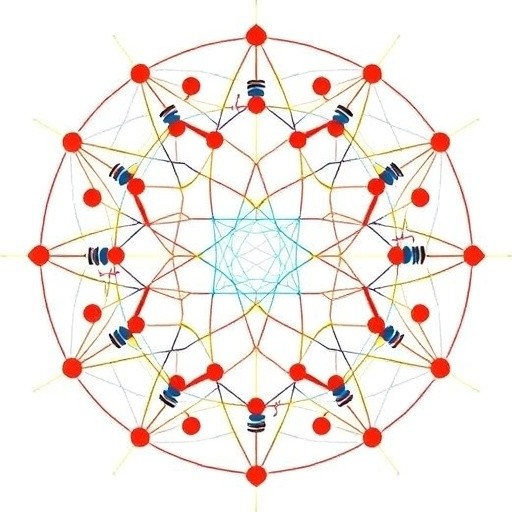
Figure 1. Science of Bonding.
Chemical bonding lies at the heart of chemistry and physics, governing how atoms combine to create molecules, materials, and ultimately the physical world around us. For decades, scientists have relied on classical models such as Lewis structures and valence bond theory to explain these interactions. While effective for basic understanding, these traditional approaches often struggle to fully describe complex molecular behavior because chemical bonds themselves are not directly observable within quantum mechanics. Instead, they are considered emergent phenomena that arise from the collective behavior of electrons. Figure 1 shows science of bonding.
To overcome the limitations of traditional bonding theories, researchers at LMU Munich, led by physicist Christian Schilling, developed a new quantum-based framework called “maximally entangled atomic orbitals” (MEAOs). Using principles of quantum entanglement, the team discovered a way to explain chemical bonding through the deep quantum relationships between electrons.
The MEAO framework helps scientists identify and classify complex bonding patterns, including multicenter bonds, aromatic structures like benzene, and temporary bonds formed during reactions [1]. Unlike conventional models that use separate theories for different systems, this approach provides a single quantum mechanical language for understanding all types of chemical bonding.
Beyond theory, the framework offers practical benefits for computational chemistry and materials science by enabling more accurate analysis of difficult molecular systems. It also allows researchers to track bond formation and breaking in real time, which could improve catalyst design, drug discovery, renewable energy technologies, and advanced materials research.
References:
- https://bioengineer.org/unraveling-the-mysteries-of-quantum-physics-the-science-of-bonding/
Cite this article:
Keerthana S (2026), Beyond Atoms: How Quantum Physics Explains Bonding, AnaTechMaz, pp.516
Recent Post
-
Neutral Atoms Offer Scalable and Connected Quantum Computing
A new white paper from the EuRyQa consortium argues that neutral-atom quantum computing has moved...

Quantum Algorithms Solve Industrial Problems Using Fewer Qubits
Researchers from West Virginia University and Cornell University....

Physicists Measure “Negative Time” in Unusual Quantum Experiment
Quantum physicists have reported a strange effect in which photons...
Scientists Develop Tiny Chip That Processes Information Using Light Instead of Electricity
Researchers have developed a tiny chip capable of manipulating....
New Magnon Breakthrough May Drastically Reduce Quantum Computer Size
Physicists at the University of Vienna have identified magnons with....
-
Beyond Atoms: How Quantum Physics Explains Bonding
In a remarkable breakthrough that is redefining the foundations of chemical science, researchers at...
-

Breakthrough May Enable Coin-Sized Quantum Computers
For years, scientists have viewed magnons as one of the most promising building blocks for...
-

Quantum Computing Breakthrough: Majorana 2 Keeps Qubits Stable for 20 Seconds
Microsoft has unveiled Majorana 2, its latest quantum computing chip,....
-

A Major Step Toward Scalable Quantum Photonics
Researchers have developed a new quantum photonic platform that could accelerate the arrival of....
-

The Future of Networking is Quantum, Says Cisco
At Cisco Live 2026, Cisco Research head and Cisco Fellow Ramana Kompella outlined the company's....
-
China Unveils Record-Breaking Quantum Memory to Bridge Traditional Data and Quantum Computing
Researchers at Zhejiang....
-
Quantum Technology Pushes Terahertz Sensing to New Heights
Researchers have developed a novel quantum detector that dramatically improves the detection....