

Sandia Harnesses Chiplet Technology to Advance AI and Quantum Computing
MESA and Cutting-Edge Chip Innovation
Sandia has a long-standing track record in semiconductor research, driven by its Microsystems Engineering, Science and Applications (MESA) facility and state-of-the-art cleanrooms dedicated to next-generation technologies. Through partnerships within the National Semiconductor Technology Center (NSTC), Sandia aims to boost U.S. semiconductor manufacturing and R&D, strengthen national security production, and spark innovations that give the nation a competitive edge on the global stage.
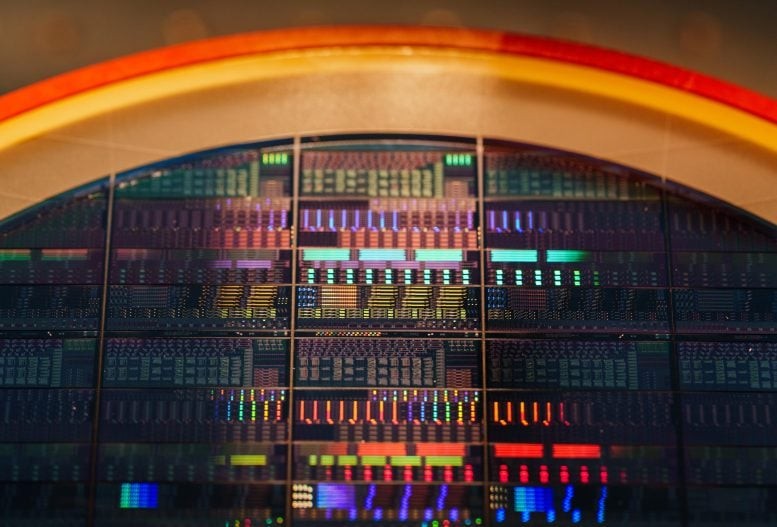
Figure 1. Sandia Taps Chiplet Tech to Drive AI and Quantum Breakthroughs.
“The big goal is to strengthen capabilities,” said Monson. “Industry is moving fast, so we are keeping pace with every development and integrating what helps us deliver more efficiently on our national security mission. It’s about finding innovative ways to partner and speed up the process.” Figure 1 shows Sandia Taps Chiplet Tech to Drive AI and Quantum Breakthroughs.
Chip Shortages and Global Competition
The pandemic exposed the fragility of the chip supply chain, leaving car dealerships empty and manufacturing lines halted while companies waited for crucial components.
“An average car contains about 1,400 chips, and electric vehicles use more than 3,000,” noted Rick McCormick, Sandia’s senior scientist for semiconductor technology strategy and a leader in the lab’s expanded role. “Globally, other nations are investing more than $300 billion to dominate semiconductor manufacturing. The U.S. CHIPS Act is our way of ‘keeping up with the Joneses.’ One goal is to ensure the U.S. controls over 25% of global capacity for state-of-the-art chips by 2032.”
Next-Generation Chips and Chiplet Innovation
“More than $12 billion in research and development is planned under the CHIPS Act, including a $3 billion program to create an ecosystem for packaging assemblies of chiplets,” explained McCormick. “These chiplets communicate at low energy and high speed, functioning as if they were a single, large, and expensive chip.”
This modular approach is already used in cutting-edge commercial AI processors. By leveraging Sandia’s capabilities and partnerships, the technology can be extended to benefit smaller companies and critical national security applications. MESA is already producing high-reliability chiplet assemblies for the U.S. nuclear stockpile and nonproliferation efforts.
Building the Semiconductor Workforce
McCormick also emphasized the urgent need to train the workforce that will power this next era of manufacturing. Billions have been invested in new fabrication facilities—but they all require skilled STEM talent.
“There’s a looming crisis,” McCormick warned. “The Semiconductor Industry Association estimates the U.S. will need 60,000 to 70,000 more workers. We have to help engage the STEM workforce. That will also strengthen Sandia’s own staffing pipeline.”
Sharing Facilities and Driving Tech Transfer
As an NSTC member, Sandia will open select facilities to other partners, encouraging collaboration and innovation. Technology transfer has long been central to Sandia’s mission, and this effort will not only help private companies expand their industry presence but also allow Sandia to deepen its impact in advancing national security and semiconductor leadership.
Source: SciTECHDaily
Cite this article:
Priyadharshini S (2025), Sandia Harnesses Chiplet Technology to Advance AI and Quantum Computing, AnaTechMaz, pp.345
Recent Post
-
Blue Laser Cracks a 150-Year-Old Physics Puzzle
For more than 100 years, physicists suspected that a strange magnetic signal was present in...
-
Physicists Set New Record for Qubit Coherence, Pushing Quantum Limits
On July 8, 2025, researchers at Aalto University in Finland announced...
-

fortios: Ensuring Quantum-Safe Security in the Era of Advanced Computing
Traditional encryption has safeguarded data for years, but the emergence of...
-
Breakthrough in Measurement Tech: New System Approaches Physics' Theoretical Boundaries
Fast, precise, and field-ready—a quantum-level optical frequency...
-

New Quantum Technology May Finally Prove the Existence of the Multiverse
Imagine a gamma ray laser so precise that it can destroy cancer cells...
-
Harvard Engineers Pack a Quantum Computer into a Tiny Chip
In a breakthrough that could reshape the future of quantum technology, engineers at Harvard have developed...
-
Quantum Leap: Scientists Uncover Hidden Clue to Solving a 60-Year-Old Superconducting Puzzle
A team in Copenhagen has discovered an ingenious “backdoor” method...
-

U.S. Mathematicians Transform ‘Pure’ Math Once Deemed Impractical into a Quantum Computing Breakthrough
Researchers at the University...
-
Physicists Astonished by Groundbreaking Room-Temperature Quantum Discovery
In a groundbreaking leap for quantum science, researchers have shown ...
-

Physicists Develop a “Quantum Lie Detector” to Expose Fake Quantum Computers
Is it possible to verify whether a large quantum system genuinely follows...
-

Chinese Scientists Reveal Atom Array 10 Times Larger, Paving Way for Next-Generation Quantum Processors
Chinese scientists have made a...
-

Harnessing Sound Waves: A Breakthrough Route to Practical Quantum Computing
Caltech researchers have designed a new kind of hybrid quantum...
-
Quantum Guitar: Scientists Resolve 90-Year-Old Puzzle of the Damped Harmonic Oscillator
Imagine plucking a guitar string. It vibrates, the sound lingers, and ...
-

Scientists Create ‘World’s Smallest Cat Video’ to Push Quantum Computing Forward
A team of physicists in Shanghai has made what they call the...
Sandia Harnesses Chiplet Technology to Advance AI and Quantum Computing
Sandia has a long-standing track record in semiconductor research, driven by...