

Breakthrough in Measurement Tech: New System Approaches Physics' Theoretical Boundaries
Fast, precise, and field-ready—a quantum-level optical frequency comb system has been developed that can measure distances as small as 0.34 nanometers in just 25 microseconds.
The Korea Research Institute of Standards and Science (KRISS) has unveiled a cutting-edge length measurement system that approaches the fundamental quantum limit of precision.
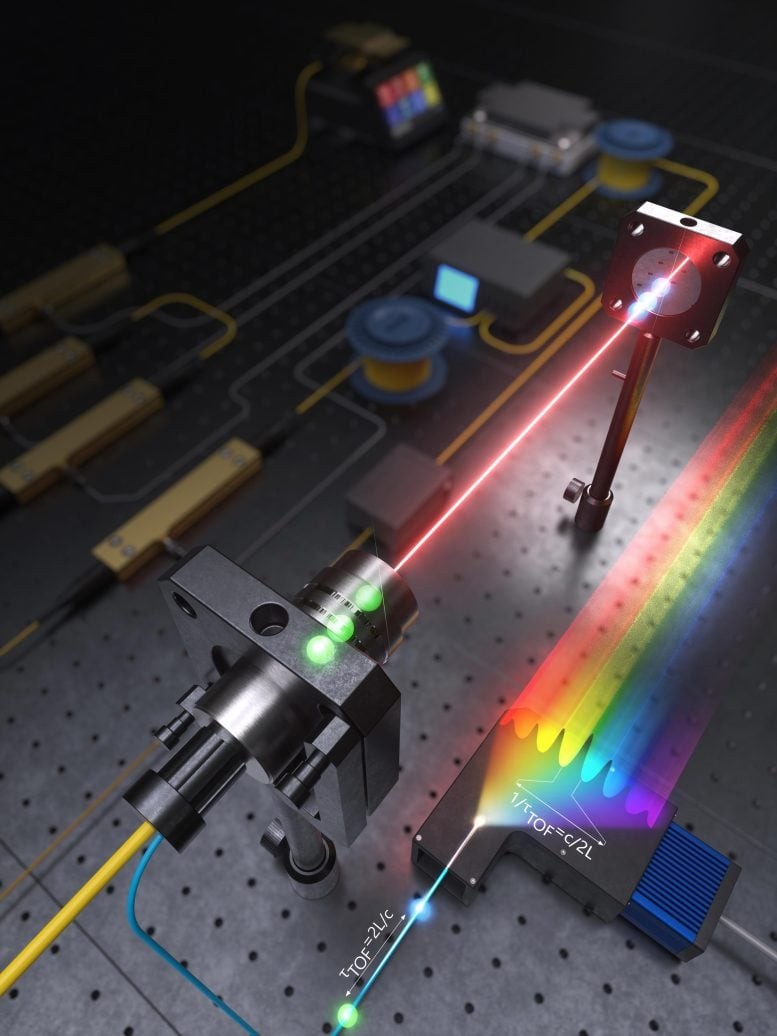
Figure 1. New System Approaches Physics.
Designed for both accuracy and durability, the system combines high-performance capabilities with a compact, rugged build, making it ideal for use beyond the controlled environment of a laboratory. Its groundbreaking performance makes it a strong contender to define the next generation of standards in advanced length metrology. Figure 1 represents new system approaches physics.
Currently, the most accurate length measurements are provided by national length measurement standards, which underpin the definition of the meter. These systems, operated by leading metrology institutions such as KRISS, typically use interferometers with single-wavelength lasers to achieve nanometer-scale precision.
The Limitations of Single-Wavelength Lasers
Single-wavelength lasers generate highly uniform wave patterns—similar to the evenly spaced markings on a finely crafted ruler—allowing for measurements with nanometer-level precision (1–10 nm, or one-billionth of a meter).
However, despite their precision, these systems are limited in the range they can measure at once. Because single-wavelength lasers operate within a narrow spectral bandwidth, their “ruler” may be extremely precise, but it’s also quite short.
To measure longer distances, multiple measurements must be taken and then stitched together. This process not only increases the overall measurement time but also requires mechanically stable components to ensure the interferometer remains perfectly aligned. As a result, both temporal efficiency and spatial scalability are compromised.
The Trade-off with Absolute Distance Measurement Systems
In contrast, absolute distance measurement systems are capable of gauging long distances in a single measurement, though they do so with lower precision [1]. These systems operate by emitting a light pulse from a known origin to a target and then measuring the time it takes for the light to return.
Their straightforward design supports compact form factors and enables fast measurements over extended ranges, making them widely used in industrial applications. However, their accuracy is generally limited to the micrometer scale (µm), as current technologies face challenges in resolving the time of flight (ToF) of light with the precision necessary for nanometer-level measurements.
Quantum-enhanced absolute distance measurement
The Length and Dimensional Metrology Group at KRISS has successfully enhanced the precision of absolute distance measurement systems to the level of national length standards by employing an interferometer based on an optical frequency comb (OFC). The research team devised a method to integrate an OFC into a spectral interferometry based absolute distance measurement setup.
A Breakthrough in Absolute Distance Measurement
The absolute distance measurement system developed by the KRISS research team, based on optical frequency comb spectral interferometry, bridges the gap between the ultra-high precision of national length standards and the practicality of absolute measurement systems.
This innovative system delivers an exceptional precision of 0.34 nanometers, placing it among the most accurate technologies available and bringing it close to the quantum-limited precision dictated by fundamental physics. With a measurement speed of just 25 microseconds (μs), it offers both speed and reliability, making it well-suited for field applications. This advancement holds significant promise for elevating precision metrology across various high-tech industries.
Future Development and National Significance
The research team aims to advance the system further by evaluating its measurement uncertainty and enhancing its overall performance, with the ultimate goal of establishing it as a next-generation national length standard.
Dr. Jang Yoon-Soo, senior researcher at the Length and Dimensional Metrology Group at KRISS, highlighted the broader significance of this achievement:
“The competitiveness of future industries—such as AI semiconductors and quantum technologies—depends on our ability to precisely measure and control distances at the nanometer scale. This milestone represents a major step forward in positioning Korea as a global leader in developing next-generation length standards.”
Reference:
- test test 2, “test tierethik doi test,” TIERethik, pp. 10001–1002, 2023, doi: 10.58848/te.2022.4.1000.
Cite this article:
Keerthana S (2025), Breakthrough in Measurement Tech: New System Approaches Physics' Theoretical Boundaries, AnaTechMaz, pp.334
Recent Post
-
Blue Laser Cracks a 150-Year-Old Physics Puzzle
For more than 100 years, physicists suspected that a strange magnetic signal was present in...
-

Physicists Set New Record for Qubit Coherence, Pushing Quantum Limits
On July 8, 2025, researchers at Aalto University in Finland announced...
-

fortios: Ensuring Quantum-Safe Security in the Era of Advanced Computing
Traditional encryption has safeguarded data for years, but the emergence of...
-
Breakthrough in Measurement Tech: New System Approaches Physics' Theoretical Boundaries
Fast, precise, and field-ready—a quantum-level optical frequency...
-

New Quantum Technology May Finally Prove the Existence of the Multiverse
Imagine a gamma ray laser so precise that it can destroy cancer cells...
-

Harvard Engineers Pack a Quantum Computer into a Tiny Chip
In a breakthrough that could reshape the future of quantum technology, engineers at Harvard have developed...
-
Quantum Leap: Scientists Uncover Hidden Clue to Solving a 60-Year-Old Superconducting Puzzle
A team in Copenhagen has discovered an ingenious “backdoor” method...
-

U.S. Mathematicians Transform ‘Pure’ Math Once Deemed Impractical into a Quantum Computing Breakthrough
Researchers at the University...
-
Physicists Astonished by Groundbreaking Room-Temperature Quantum Discovery
In a groundbreaking leap for quantum science, researchers have shown ...
-

Physicists Develop a “Quantum Lie Detector” to Expose Fake Quantum Computers
Is it possible to verify whether a large quantum system genuinely follows...
-

Chinese Scientists Reveal Atom Array 10 Times Larger, Paving Way for Next-Generation Quantum Processors
Chinese scientists have made a...
-

Harnessing Sound Waves: A Breakthrough Route to Practical Quantum Computing
Caltech researchers have designed a new kind of hybrid quantum...
-

Quantum Guitar: Scientists Resolve 90-Year-Old Puzzle of the Damped Harmonic Oscillator
Imagine plucking a guitar string. It vibrates, the sound lingers, and ...
-

Scientists Create ‘World’s Smallest Cat Video’ to Push Quantum Computing Forward
A team of physicists in Shanghai has made what they call the...

Sandia Harnesses Chiplet Technology to Advance AI and Quantum Computing
Sandia has a long-standing track record in semiconductor research, driven by...