

Quantum Leap: Scientists Uncover Hidden Clue to Solving a 60-Year-Old Superconducting Puzzle
A team in Copenhagen has discovered an ingenious “backdoor” method to explore rare quantum states once considered nearly impossible to study.
Researchers at the Niels Bohr Institute, University of Copenhagen, have developed a novel strategy for probing elusive quantum states found within superconducting vortices—phenomena first theorized in the 1960s. These states have remained largely unconfirmed due to their incredibly low energy levels, which are typically too faint to detect with conventional experimental techniques.The breakthrough stems from a blend of innovative thinking and the advanced fabrication of custom materials at the Institute’s cutting-edge labs.
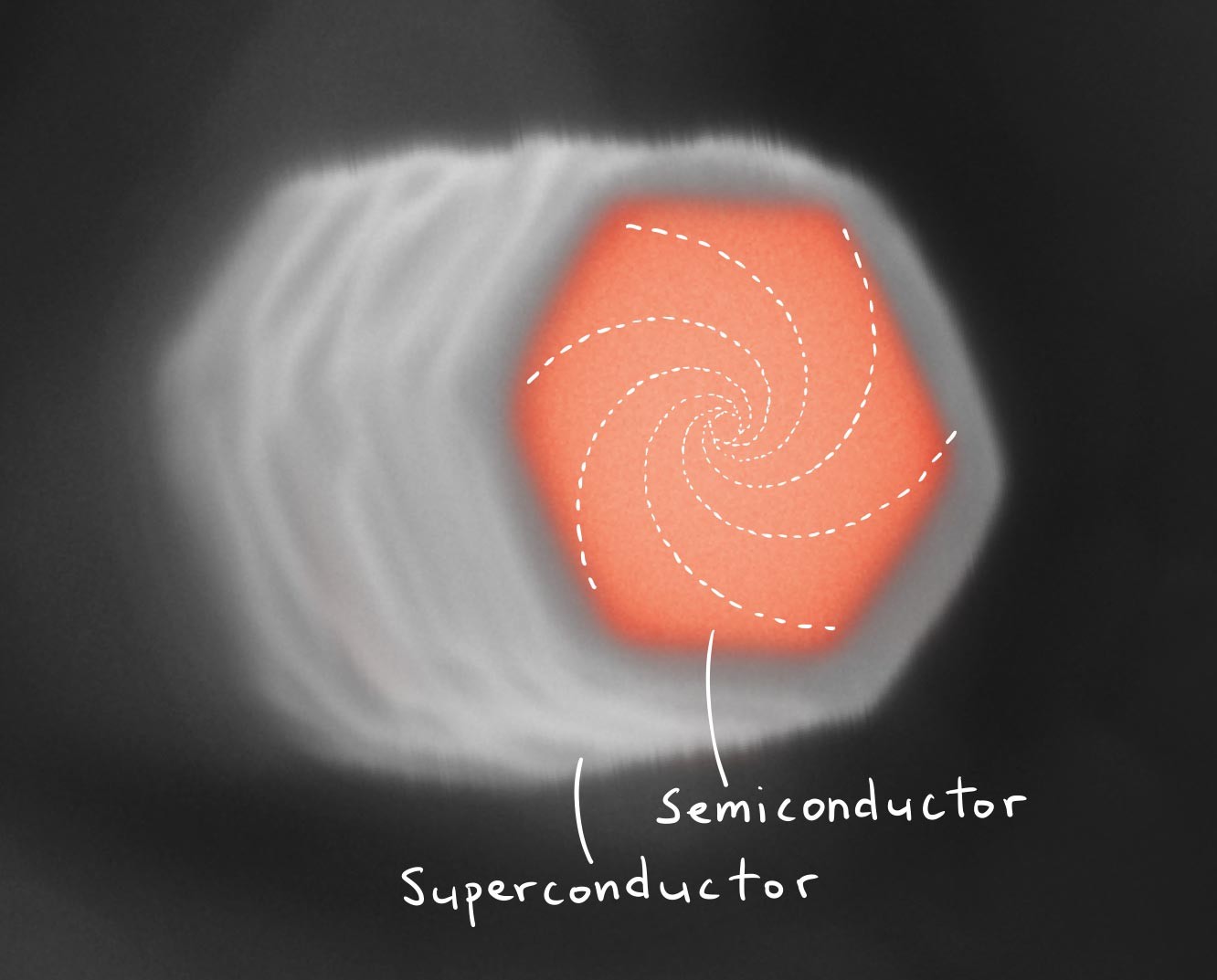
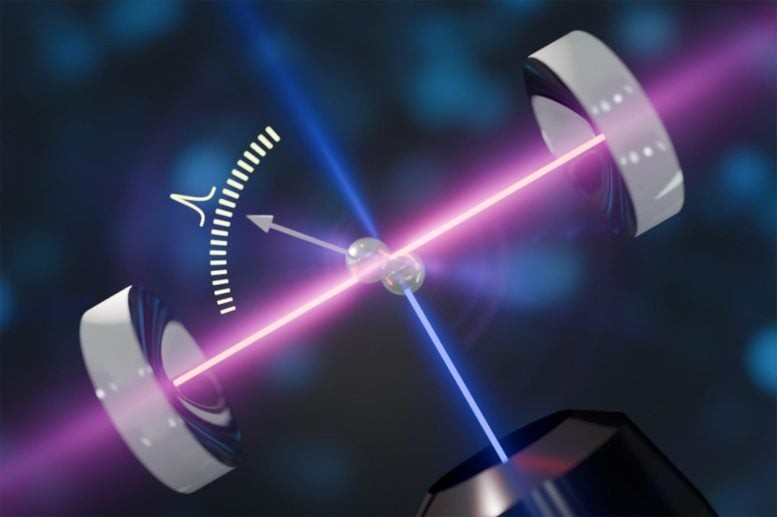
Figure 1. Superconducting Puzzle.
Creating Synthetic Superconducting Vortices
Rather than attempting to detect these rare states directly in their natural environments, the research team—led by Professor Saulius Vaitiekėnas—engineered an entirely new material platform that replicates the necessary conditions. Figure 1 represents Superconducting Puzzle.
By constructing a tiny superconducting cylinder and applying a controlled magnetic flux, they successfully recreated the underlying physics [1]. This creative workaround allowed them to sidestep previous experimental barriers—much like slipping through a hidden backdoor—to access the long-sought quantum behavior.
“This setup gives us the ability to explore these quantum states on our own terms,” explains Saulius Vaitiekėnas. “By designing the system ourselves, we set the rules of the game.”
From Fundamental Research to Future Applications
While studying these rare quantum states is a form of fundamental research, the implications reach further. In today’s fast-paced and highly competitive quantum research landscape, the work highlights the flexibility of the semiconductor–superconductor platform for discovering and investigating entirely new quantum phenomena.
Interestingly, this platform itself—a fusion of semiconductors and superconductors—was pioneered in Copenhagen roughly a decade ago.
“We actually stumbled upon these states by chance—like many important scientific discoveries,” Saulius notes. “But once we recognized what we were seeing, it became clear this wasn’t just a curiosity. These states may play a key role in building hybrid quantum simulators, which are essential tools for exploring and understanding the next generation of complex materials.”
Reference:
- https://journals.aps.org/prl/abstract/10.1103/PhysRevLett.134.206302
Cite this article:
Keerthana S (2025), Quantum Leap: Scientists Uncover Hidden Clue to Solving a 60-Year-Old Superconducting Puzzle, AnaTechMaz, pp.337
Recent Post
-
Blue Laser Cracks a 150-Year-Old Physics Puzzle
For more than 100 years, physicists suspected that a strange magnetic signal was present in...
-

Physicists Set New Record for Qubit Coherence, Pushing Quantum Limits
On July 8, 2025, researchers at Aalto University in Finland announced...
-

fortios: Ensuring Quantum-Safe Security in the Era of Advanced Computing
Traditional encryption has safeguarded data for years, but the emergence of...
-
Breakthrough in Measurement Tech: New System Approaches Physics' Theoretical Boundaries
Fast, precise, and field-ready—a quantum-level optical frequency...
-

New Quantum Technology May Finally Prove the Existence of the Multiverse
Imagine a gamma ray laser so precise that it can destroy cancer cells...
-
Harvard Engineers Pack a Quantum Computer into a Tiny Chip
In a breakthrough that could reshape the future of quantum technology, engineers at Harvard have developed...
-
Quantum Leap: Scientists Uncover Hidden Clue to Solving a 60-Year-Old Superconducting Puzzle
A team in Copenhagen has discovered an ingenious “backdoor” method...
-

U.S. Mathematicians Transform ‘Pure’ Math Once Deemed Impractical into a Quantum Computing Breakthrough
Researchers at the University...
-
Physicists Astonished by Groundbreaking Room-Temperature Quantum Discovery
In a groundbreaking leap for quantum science, researchers have shown ...
-

Physicists Develop a “Quantum Lie Detector” to Expose Fake Quantum Computers
Is it possible to verify whether a large quantum system genuinely follows...
-

Chinese Scientists Reveal Atom Array 10 Times Larger, Paving Way for Next-Generation Quantum Processors
Chinese scientists have made a...
-

Harnessing Sound Waves: A Breakthrough Route to Practical Quantum Computing
Caltech researchers have designed a new kind of hybrid quantum...
-

Quantum Guitar: Scientists Resolve 90-Year-Old Puzzle of the Damped Harmonic Oscillator
Imagine plucking a guitar string. It vibrates, the sound lingers, and ...
-

Scientists Create ‘World’s Smallest Cat Video’ to Push Quantum Computing Forward
A team of physicists in Shanghai has made what they call the...

Sandia Harnesses Chiplet Technology to Advance AI and Quantum Computing
Sandia has a long-standing track record in semiconductor research, driven by...