

Act Fibernet's Zippy AI Aims to Make Your Home Wi-Fi Smarter: Here's How
If I had a rupee for every time I heard or said, "the Wi-Fi's acting up again," whether at work or home, I'd be a crorepati by now. A true modern-day nuisance, ACT Fibernet is putting its faith in AI to tackle this digital dilemma once and for all, making your Wi-Fi seamlessly operate in the background, doing its job without you even noticing.

Figure 1. Act Fibernet's Zippy AI: Revolutionizing Smart Home Wi-Fi.
At the heart of their solution is ACT Zippy, an AI-powered system embedded within your home network or Wi-Fi router. It continuously monitors, learns, and adjusts your home network to ensure smooth streaming on Netflix, uninterrupted Teams calls, and stable connections for your smart devices. Figure 1 shows Act Fibernet's Zippy AI: Revolutionizing Smart Home Wi-Fi.
And when something goes awry – like your neighbor’s router hogging the same frequency or your gaming console competing with your smart TV for bandwidth – Zippy doesn’t ask for help. It takes action. Quietly. Immediately.
“It leverages AI/ML models to analyze these factors in real-time and generate a composite Wi-Fi score for each home,” explains Ravi. Consider it a health check, constantly diagnosing your network and offering the right solution.
To make this possible, ACT teamed up with deep-tech startup Aprecomm.ai to develop what they refer to as a “smart, self-healing Wi-Fi experience.” It may sound like a marketing gimmick, but according to Ravi Karthik, it's anything but.
What makes ACT Zippy clever is that it doesn’t try to do everything in the cloud. Doing so would add delay, and when it comes to real-time Wi-Fi fixes, latency is the enemy.
“Zippy uses a hybrid data processing approach,” explains Ravi. Real-time issues – such as selecting a better Wi-Fi channel or switching you to a 5 GHz band – are handled directly on your router. However, more complex tasks, like long-term performance optimization or predicting future congestion patterns, are sent to the cloud.
In essence, your Wi-Fi has a local technician with backup support from a data scientist in the cloud. Together, they observe your habits – like when you typically stream 4K TV or when the kids start their online classes – and adjust the network accordingly.
One of the most frustrating things about routers is when devices stick to the slower 2.4 GHz band, even though a faster 5 GHz option is available. But Zippy takes care of that. “Zippy evaluates device capabilities, environmental conditions, and application types,” says Ravi. So, if your 4×4 MIMO laptop is binge-watching Stranger Things, Zippy knows to switch it to the 5 GHz band. Meanwhile, your smart doorbell stays on 2.4 GHz, where it's content with a few occasional pings.
Behavioral Analysis with Privacy Protection
A key feature of well-trained AI is its ability to improve over time, and ACT Zippy does just that. By learning your household’s behavior – like who logs in when, which apps consume the most bandwidth, and when your Wi-Fi tends to get congested – it continually fine-tunes its decisions for a smoother experience. More importantly, Zippy doesn’t just react to issues, but starts to predict potential problems based on past behavior.
“ACT Zippy uses AI-driven predictive adjustments, rather than just reacting,” Ravi explains. “The system carefully times channel switching and other optimizations to avoid unnecessary latency or packet loss.”
Perhaps more importantly, ACT claims that “the AI-powered optimization directed over 80% of Smart TVs, 70% of laptops, and 60% of mobile devices to optimal Wi-Fi channels.” In today’s increasingly smart home – with devices like light bulbs, vacuum cleaners, fridges, and doorbells all online – such intelligent orchestration is crucial. And the fact that it's happening at the network level feels like pure magic.
ACT Zippy vs Other ISPs: The Long Game
In a market dominated by telecom giants like Reliance Jio and Airtel, ACT’s differentiation is key. Unlike the telcos, ACT’s focus is purely on broadband, betting that the user experience matters more than additional perks. By zeroing in on the one thing everyone wants from their Wi-Fi – reliability – ACT is aiming to win hearts, not just speed tests, suggests Ravi Karthik.
“We believe AI and machine learning are essential for delivering the best in-home experience,” Ravi emphasizes. The company has plans to evolve Zippy over the next 12–18 months, with plans for “more advanced predictive analytics, deeper congestion management, and better support for mesh networking.”
The Wi-Fi router, once a simple box in the corner of the room, has become the lifeline of modern life. And yet, we expect it to just work – without a second thought. What ACT is achieving with Zippy is aiming to make that expectation a reality. After all, the best technology is the kind that fades into the background. If ACT Zippy continues to perform as it has, you may never again need to say, “the Wi-Fi’s acting up again.”
Now, let’s address the big question – how much does ACT Zippy actually know about you? Ravi is quick to clarify. “Zippy doesn’t have access to any personal user data. Only anonymized metadata and system telemetry are sent to the cloud.” Everything else stays local and encrypted.
In other words, the system isn’t snooping through your emails or browsing history – it’s simply monitoring the network, ensuring everything flows smoothly without any interruptions.
Source: digit.in
Cite this article:
Priyadharshini S (2025), Act Fibernet's Zippy AI Aims to Make Your Home Wi-Fi Smarter: Here's How, AnaTechMaz, pp. 161
Recent Post
-
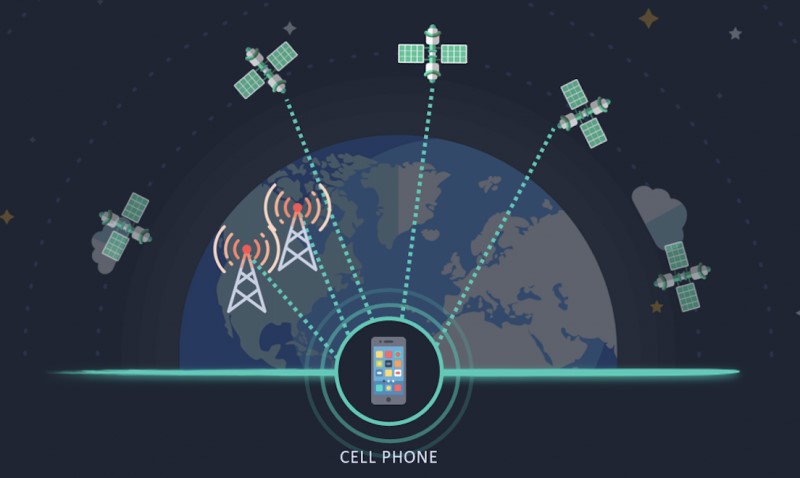
Lynk and Turkcell Conduct Tests for Satellite-Based Direct-To-Device Connectivity
Satellite company Lynk Global announced the successful demonstration of .....
-

ZTE Advances AI Integration In 5G-A Core Networks
As artificial intelligence (AI) continues to advance, its impact on the.....
-

Fortinet Strengthens OT Network Security Platform
Fortinet has enhanced its OT Security Platform to help.....
-

Cato Networks Introduces Next-Generation Firewall
The SASE provider claims its NGFW enhances security by.....
-

Jio Partners With AMD, Cisco, and Nokia to Develop AI-Powered Telecom Platform
The initiative, spearheaded by Jio Platforms Limited.....
-

Alcatel-Lucent Enterprise Introduces Private 5G Solution for IoT and Industrial Networks
Alcatel-Lucent Enterprise (ALE) has teamed up with Celona to deliver a comprehensive private.....
-

Build These Marble Runs and Connect Them to Your Smart Home Via Wi-Fi
Marblelous is currently available through a Kickstarter crowdfunding campaign .....
-

NetBox Labs Embraces the Fusion of Network Management And AI
Over the past several years, NetBox has become a widely adopted open-source .....
-

Audi India Broadens Electric Vehicle Charging Network
Audi India has significantly expanded its electric vehicle .....
-

Alcatel-Lucent Enterprise Aims at IoT and Industrial Networks with Private 5G Solution
Alcatel-Lucent Enterprise (ALE) has teamed up with Celona to deliver .....
-
Act Fibernet's Zippy AI Aims to Make Your Home Wi-Fi Smarter: Here's How
If I had a rupee for every time I heard or said, "the Wi-Fi's acting up.....
-

Intel Reportedly Considering Sale of Its Networking and Edge Division
Intel CEO Lip-Bu Tan is continuing efforts to realign the company .....
-

IP Fabric Integrates Advanced Firewall Discovery into Its Network Assurance Platform
IP Fabric 7.2 launches firewall filtering simulation, transparent firewall.....
-

DriveNets Expands AI Networking Fabric to Support Multi-Site Distributed GPU Clusters
DriveNets upgrades its Network Cloud-AI platform with multi-tenancy.....
-

AWS Ends Private 5G Offering, Leaves Market to Telecom Giants and Industry Leaders
Despite early promises of private 5G delivering significant .....