

New Eco-Friendly Hydrogen Technique Transforms Wastewater and Agricultural Waste into Clean Fuel
Green hydrogen is widely seen as a key clean fuel for the future, offering zero emissions when produced using renewable energy. However, its production typically requires large amounts of purified freshwater—a significant hurdle in regions facing water scarcity.
At the same time, over 80% of the world’s wastewater is discharged untreated into the environment, causing major ecological harm. Now, researchers at RMIT University have developed a solution that tackles both challenges at once.
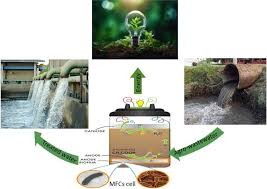
Figure 1. Hydrogen Technique.
Their experimental technology leverages contaminants found in wastewater as catalysts to produce green hydrogen, paving the way for sustainable fuel generation without depending on freshwater sources. Figure 1 shows Hydrogen Technique.
The project, carried out in collaboration with the University of Melbourne, Australian Synchrotron, and the University of New South Wales, aims to transform wastewater—a global environmental burden—into a valuable resource.
Turning metal waste into an asset
The team’s innovation makes use of metals like platinum, chromium, and nickel, naturally present in wastewater, to enhance hydrogen production. Rather than removing these metals, the system captures and utilizes them [1]. “What sets our approach apart is that it makes direct use of wastewater’s existing materials, eliminating the need for purified water or extra processing,” explained Associate Professor Nasir Mahmood from RMIT’s School of Science.
The researchers designed specialized electrodes with an absorbent carbon surface that pulls metals from wastewater. These metals then become stable catalysts that conduct electricity and speed up the water-splitting process.
“The metals interact with other elements in the wastewater, enhancing the electrochemical reactions needed to separate water into hydrogen and oxygen,” Mahmood noted. Adding to its sustainability, the carbon material for these electrodes is derived from agricultural waste, keeping the system cost-effective and eco-friendly
Producing clean fuel and treating water
In laboratory tests, the team placed two of these electrodes into a container filled with partially treated wastewater and applied renewable electricity. At the cathode, water molecules gained electrons, producing hydrogen gas; at the anode, they lost electrons, releasing oxygen.
“The oxygen produced can be reintegrated into wastewater treatment plants to help reduce organic content and boost treatment efficiency,” Mahmood said. The system operated continuously for 18 days with little performance loss. The wastewater used had been pre-treated to remove solids, organic matter, and nutrients—similar to the conditions found in real treatment facilities.
This innovation is part of RMIT’s broader efforts to develop catalytic systems capable of producing clean hydrogen from challenging water sources like wastewater and seawater.
“Our method offers a dual benefit—reducing pollution and addressing water scarcity, which supports both the energy and water sectors,” said Professor Nicky Eshtiaghi from RMIT’s School of Engineering. “By reusing wastewater, the process turns waste materials into useful resources.”
The researchers are now seeking industry and government partners to help scale up their technology. Co-researcher Dr. Muhammad Haris emphasized that further studies are needed to test its performance across different types of wastewaters.
Reference:
- https://interestingengineering.com/energy/clean-hydrogen-from-contaminated-water
Cite this article:
Keerthana S (2025), New Eco-Friendly Hydrogen Technique Transforms Wastewater and Agricultural Waste into Clean Fuel, AnaTechMaz, pp.345
Recent Post
-
U.S. Startup Unveils World’s First Supersonic Artillery Shell, Capable of Reaching Mach 3.5 Speeds
A major breakthrough in artillery technology was announced at the...
-

A Digital Twin Reveals Overlooked Battery Blind Spot in Energy Storage Systems
A recent case study has introduced digital twins as a promising tool...
-
Point-of-Care to Precision: Carbon Nanodots Driving the Next MedTech Revolution
In an era where precision, personalization, and portability...
-

Inside the Chat: Can Governments Hack WhatsApp? Expert Explains the Possibilities
Earlier today, Iranian officials called on citizens to delete WhatsApp from..
-

World’s First Solar-Powered Drone with Boeing 747-Sized Wingspan Can Stay Airborne for a Month
In an effort to revolutionize long-range maritime surveillance and strategic....
-

Chinese Researchers Test Neural Implant Enabling Amputee to Control Cursor Using Only Their Mind
China has become the second....
-
China Begins Producing Yttrium-90 For Cancer Treatment Using Commercial Nuclear Reactor
China has taken a major step forward in cancer therapy by...
-

Magnetic Field Innovation May Pave the Way for Low-Cost MRIs in Rural Hospitals
German researchers have achieved a major breakthrough in magnetic field...
-
World’s First Biodegradable Cooling Film Cuts Energy Consumption By 20%—No Electricity Required
A team of researchers from....
-

Airbus Upgrades A400M Into a Combat-Ready Powerhouse with Drones and Electronic Warfare Tools
Airbus is evolving the A400M from....
-

World’s First Hybrid Solar Cargo Ship Set to Sail, Equipped With 192 Panels Generating 37,500 Kwh of Power Annually
Dutch solar innovator Wattlab and...
-
U.S. Engineer Develops One-Step Process to Produce Plastic Alternatives Using Bacteria
Amid growing concerns over plastic pollution, a U.S. engineer....
-

New Diagnostic Technology Harnesses Coffee-Ring Effect to Detect Deadly Diseases in Just 12 Minutes
Researchers at the University of...
-
Boosting RAM: New Magnetic Memory Cuts Write Power by 35% While Setting Speed Record
In a major leap toward ultra-efficient, high-speed memory...
-
Robotic Metabolism Could Enable Machines to Self-Repair Without Needing Human Assistance
We’ve witnessed robots perform some truly remarkable feats....