

Point-of-Care to Precision: Carbon Nanodots Driving the Next MedTech Revolution
Introduction
In an era where precision, personalization, and portability are redefining the landscape of healthcare delivery, nanotechnology is no longer just a scientific curiosity—it is a transformative force. One of the most promising materials at the forefront of this evolution is the Carbon Nanodot (C-dot). These ultrasmall, photoluminescent nanoparticles, composed primarily of carbon, have attracted global attention for their unique blend of physicochemical, optical, and biological properties. Typically less than 10 nanometers in size, C-dots stand out due to their bright fluorescence, excellent biocompatibility, and easy surface functionalization, which make them ideal for integration into medical devices and therapeutic platforms.
Unlike conventional quantum dots containing toxic heavy metals, C-dots can be synthesized from eco-friendly sources—including plant extracts, food waste, and even natural polymers—through low-cost, green chemistry techniques. This gives them a clear sustainability advantage, aligning with the global push toward safer, greener healthcare technologies.
In medical technology, C-dots are already showing potential to revolutionize point-of-care diagnostics, enabling rapid and highly sensitive detection of biomarkers at the bedside or even at home. They are being explored as non-invasive fluorescent tags for real-time imaging, as smart nanocarriers for targeted drug delivery, and as integral components of theranostic platforms—where diagnosis and therapy converge in a single system [1].
As we shift toward a next-generation MedTech ecosystem—driven by AI, miniaturization, and personalized interventions—carbon nanodots are poised to serve as multifunctional, intelligent tools bridging laboratory research and real-world clinical applications. Their journey from natural waste to high-impact medical applications reflects not just scientific ingenuity, but also the future direction of medicine: smart, sustainable, and centered on the patient.
What Makes Carbon Nanodots Ideal for Medical Applications?
Carbon Nanodots, typically less than 10 nm in size, exhibit strong fluorescence, high water solubility, low toxicity, and excellent biocompatibility. Unlike conventional quantum dots containing heavy metals, C-dots are derived from carbon sources—often natural or waste materials—making them safe for biological systems. Their surface can be functionalized with targeting ligands, enabling them to selectively bind to biomolecules, cells, or tissues [2].
This surface tunability also allows C-dots to interact with specific cellular environments, responding to changes in pH, redox states, or enzyme activity—an essential feature for responsive drug delivery systems. Furthermore, their stable photoluminescence under physiological conditions makes them reliable fluorescent markers for long-term imaging applications. Their ultra-small size ensures rapid cellular uptake and even potential penetration across biological barriers like the blood–brain barrier. C-dots have also demonstrated minimal interference with native cellular functions, an important advantage over metal-based counterparts. Recent studies show that carbon nanodots can be co-loaded with diagnostic and therapeutic agents, enabling dual-function or theranostic applications within a single nano-platform.
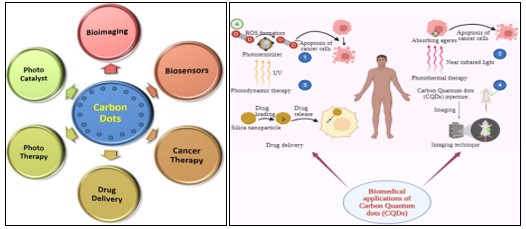
Figure 1. Biomedical applications of carbon quantum dots [3,4].
Next-Gen Applications In Medical Technology
- Fluorescence Bioimaging and Diagnostics
- Point-of-Care (PoC) Biosensors
- Targeted Drug Delivery and Theranostics
- Antimicrobial and Wound Healing Applications
C-dots are revolutionizing the way we visualize biological processes at the cellular and molecular level. Their bright and tunable photoluminescence allows them to serve as contrast agents in real-time bioimaging. In oncology, they are being used to identify tumors with greater specificity and resolution. Researchers are developing dual-mode imaging systems using C-dots to simultaneously capture fluorescence and magnetic resonance images—enhancing diagnostic accuracy.
The integration of C-dots into portable biosensors has enabled rapid, accurate, and low-cost detection of biomarkers such as glucose, cholesterol, dopamine, and viral antigens. Their signal-enhancing properties improve the sensitivity and selectivity of detection systems, making them ideal for PoC devices in rural or resource-limited settings. Some prototypes now allow visual fluorescent readouts—eliminating the need for complex equipment.
Carbon nanodots are being engineered as smart drug carriers that release therapeutic agents in response to stimuli such as pH, temperature, or enzyme activity. This site-specific release minimizes side effects and improves therapeutic outcomes. In the field of theranostics, C-dots serve dual roles—imaging the disease and delivering treatment simultaneously—especially in cancers and neurodegenerative disorders [5].
Recent studies have shown that carbon nanodots synthesized from herbal and natural precursors exhibit antimicrobial properties. They are being explored for incorporation in wound dressings, coatings for medical devices, and injectable hydrogels for skin regeneration.
Future Outlook
As research advances, carbon nanodots are likely to become central to personalized and predictive medicine. Their ability to integrate diagnostic and therapeutic capabilities in a single platform makes them valuable in cancer nanomedicine, neuroscience, and infectious disease monitoring. Efforts are underway to develop C-dot-enabled lab-on-a-chip systems that can analyze multiple biomarkers on a single drop of blood—revolutionizing home diagnostics.
Challenges to Overcome
Despite the promising trajectory, certain limitations remain:
- Need for standardized synthesis protocols
- Comprehensive toxicity profiling for chronic exposure
- Stability and reproducibility in biological systems
- Regulatory approval and commercialization pathways
Addressing these challenges through interdisciplinary collaboration will be critical to translating lab-scale innovations into clinical solutions.
Conclusion
From early detection to precision therapy, carbon nanodots are redefining the medical technology landscape. Their versatility, biocompatibility, and sustainability offer a unique combination for building futuristic MedTech tools. As we move toward more connected, predictive, and patient-centric healthcare, C-dots will likely illuminate the path—both literally and scientifically—for the next MedTech revolution.
Their ability to integrate with emerging platforms like wearable biosensors, implantable devices, and AI-powered diagnostic systems makes them vital components of next-generation healthcare. With ongoing advancements in synthesis, functionalization, and clinical validation, C-dots may soon become ubiquitous in hospital diagnostics and home-based medical monitoring. More importantly, their green credentials ensure that this innovation is not only clinically impactful but also environmentally responsible. The coming decade may well see C-dots embedded in the very fabric of modern medicine.
References:
- Sharma, A. & Lee, N.Y. Comprehensive review on fluorescent carbon dots and their applications in nucleic acid detection, nucleolus-targeted imaging and gene delivery. Analyst 2024, 149, 4095–4115.
- Lim, S.Y.; Shen, W.; Gao, Z. Carbon quantum dots: A systematic overview of recent developments… therapeutic applications. Inorg. Chem. Commun. 2024, 165, 112492.
- Sharma, A., & Das, J. Carbon Dots: A New Generation Materials for Advanced Applications. In A. S. Biris (Ed.), Carbon Nanomaterials. 2021, IntechOpen.
- Salvi, A., Kharbanda, S., Thakur, P., Shandilya, M., & Thakur, A. Biomedical application of carbon quantum dots: A review. Carbon Trends, 2024, 17, 100407.
- Verma, S.; Bhatt, M.; Das, B. Effect of carbon nanodots on the cellular redox reaction and immune system. Nanoscale Advances. 2025, 7, 1784–1802.
Cite this article:
Smrithi S P (2025), Point-of-Care to Precision: Carbon Nanodots Driving the Next MedTech Revolution, AnaTechMaz, pp.333
Recent Post
-

U.S. Startup Unveils World’s First Supersonic Artillery Shell, Capable of Reaching Mach 3.5 Speeds
A major breakthrough in artillery technology was announced at the...
-

A Digital Twin Reveals Overlooked Battery Blind Spot in Energy Storage Systems
A recent case study has introduced digital twins as a promising tool...
-
Point-of-Care to Precision: Carbon Nanodots Driving the Next MedTech Revolution
In an era where precision, personalization, and portability...
-

Inside the Chat: Can Governments Hack WhatsApp? Expert Explains the Possibilities
Earlier today, Iranian officials called on citizens to delete WhatsApp from..
-

World’s First Solar-Powered Drone with Boeing 747-Sized Wingspan Can Stay Airborne for a Month
In an effort to revolutionize long-range maritime surveillance and strategic....
-

Chinese Researchers Test Neural Implant Enabling Amputee to Control Cursor Using Only Their Mind
China has become the second....
-
China Begins Producing Yttrium-90 For Cancer Treatment Using Commercial Nuclear Reactor
China has taken a major step forward in cancer therapy by...
-
Magnetic Field Innovation May Pave the Way for Low-Cost MRIs in Rural Hospitals
German researchers have achieved a major breakthrough in magnetic field...
-
World’s First Biodegradable Cooling Film Cuts Energy Consumption By 20%—No Electricity Required
A team of researchers from....
-

Airbus Upgrades A400M Into a Combat-Ready Powerhouse with Drones and Electronic Warfare Tools
Airbus is evolving the A400M from....
-

World’s First Hybrid Solar Cargo Ship Set to Sail, Equipped With 192 Panels Generating 37,500 Kwh of Power Annually
Dutch solar innovator Wattlab and...
-
U.S. Engineer Develops One-Step Process to Produce Plastic Alternatives Using Bacteria
Amid growing concerns over plastic pollution, a U.S. engineer....
-

New Diagnostic Technology Harnesses Coffee-Ring Effect to Detect Deadly Diseases in Just 12 Minutes
Researchers at the University of...
-
Boosting RAM: New Magnetic Memory Cuts Write Power by 35% While Setting Speed Record
In a major leap toward ultra-efficient, high-speed memory...
-
Robotic Metabolism Could Enable Machines to Self-Repair Without Needing Human Assistance
We’ve witnessed robots perform some truly remarkable feats....